Stories of the Cambridge River

Landmarks Along the Punting Route

Stories of the Cambridge River

Landmarks Along the Punting Route

Magdalene College Cambridge

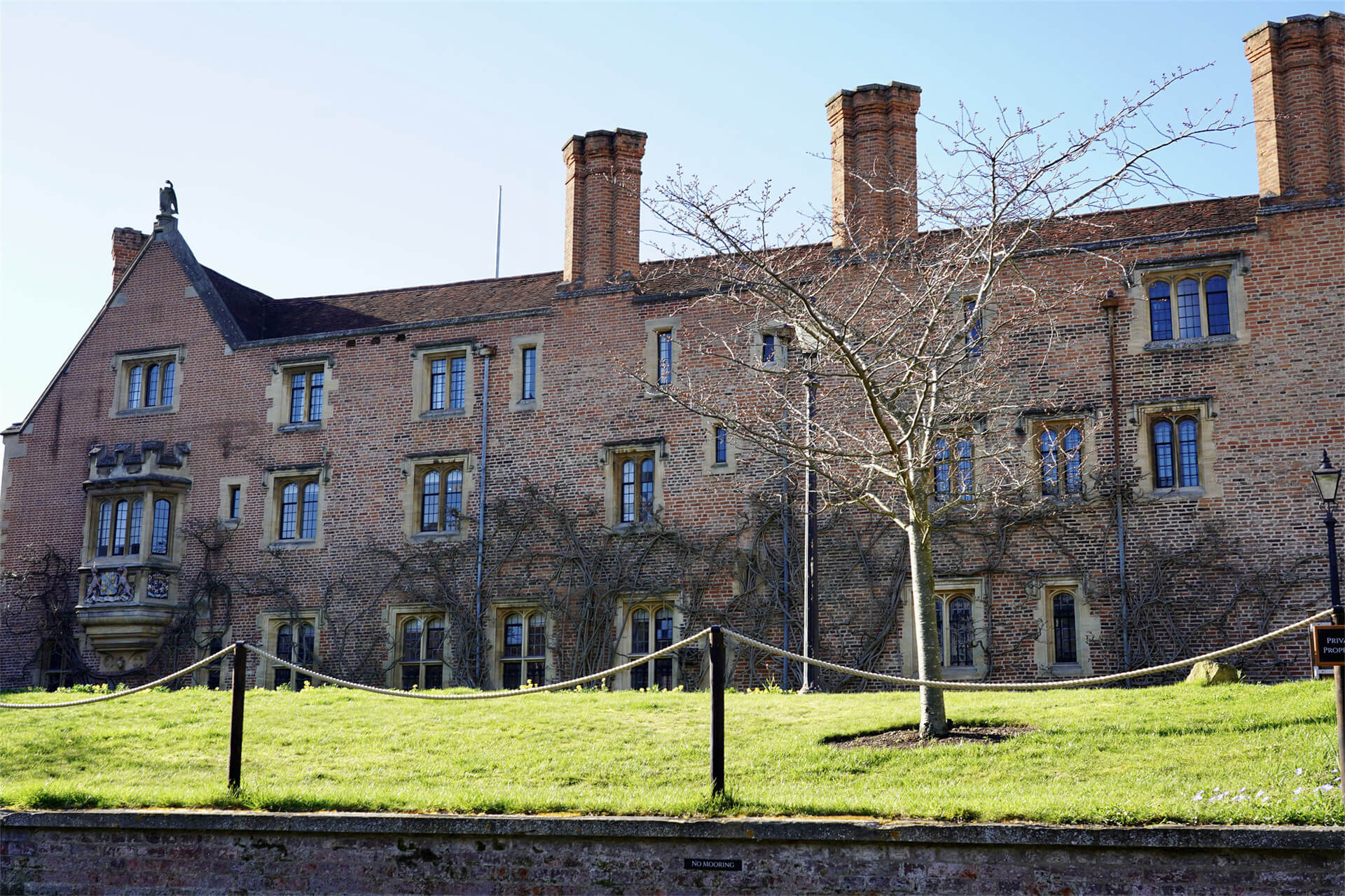
In the city centre on the River Cam, Magdalene College Cambridge began life in 1428 and was refounded in 1542, making it one of Cambridge’s most historic riverside colleges. It is famous worldwide for the Pepys Library, where Samuel Pepys’s original diaries and his carefully catalogued collection are preserved exactly as he left them, including the original bookcases. The college also has a major modern landmark: the New Library by Níall McLaughlin Architects, completed in 2021 and awarded the 2022 RIBA Stirling Prize, one of the UK’s top architecture honours. For visitors, Magdalene is a classic “College Backs” view from the river, mixing medieval Cambridge atmosphere with a standout piece of contemporary design. Fun fact: The Pepys Library is arranged exactly as Samuel Pepys specified in his will, right down to the bookcases and shelf order, and visitors still see the diaries displayed in the same sequence Pepys himself designed over 300 years ago.

Magdalene College Cambridge

In the city centre on the River Cam, Magdalene College Cambridge began life in 1428 and was refounded in 1542, making it one of Cambridge’s most historic riverside colleges. It is famous worldwide for the Pepys Library, where Samuel Pepys’s original diaries and his carefully catalogued collection are preserved exactly as he left them, including the original bookcases. The college also has a major modern landmark: the New Library by Níall McLaughlin Architects, completed in 2021 and awarded the 2022 RIBA Stirling Prize, one of the UK’s top architecture honours. For visitors, Magdalene is a classic “College Backs” view from the river, mixing medieval Cambridge atmosphere with a standout piece of contemporary design. Fun fact: The Pepys Library is arranged exactly as Samuel Pepys specified in his will, right down to the bookcases and shelf order, and visitors still see the diaries displayed in the same sequence Pepys himself designed over 300 years ago.

Magdalene College Cambridge
Virginia Creeper Cambridge

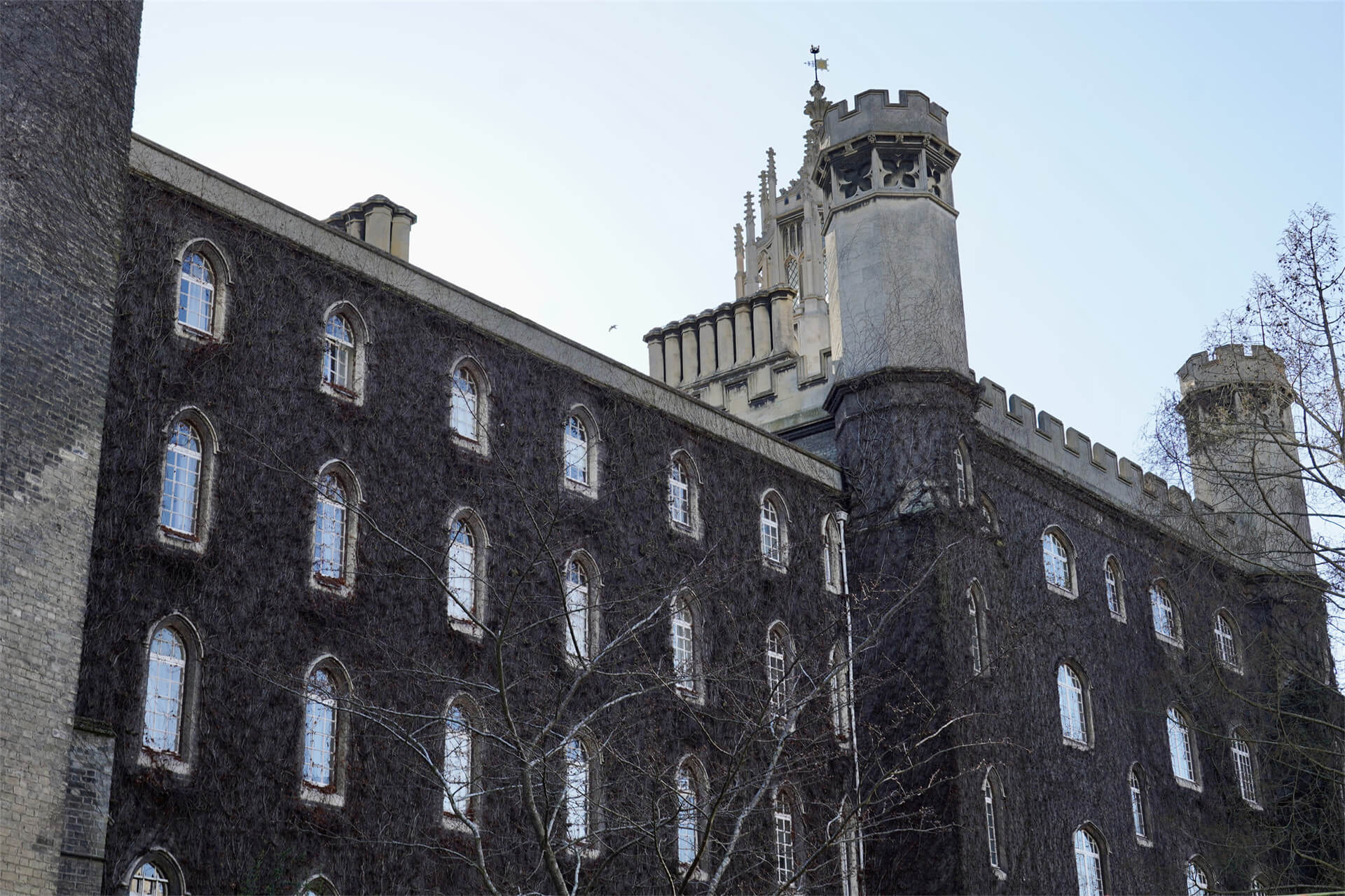
If you want the most “wow” river view in Cambridge, St John’s College is the one people remember. Founded in 1511 by Lady Margaret Beaufort, it sits right on the River Cam and dominates the classic College Backs scenery. In autumn, the college’s famous Virginia creeper (often nicknamed Cambridge’s “red ivy”) turns a deep scarlet and can cover large sections of the riverside buildings, making it one of the most photographed seasonal sights on a punting in Cambridge route. Pair that with the college’s iconic covered Bridge of Sighs (built 1831) and you get a spot that looks cinematic from the water, especially on a chauffeured punting tour where you can slow down for photos. Fun fact: In the 1960s, St John’s students famously hung a full car beneath the Bridge of Sighs as a prank. It happened more than once, and the bridge survived without damage, which only added to its legend.

Virginia Creeper Cambridge

If you want the most “wow” river view in Cambridge, St John’s College is the one people remember. Founded in 1511 by Lady Margaret Beaufort, it sits right on the River Cam and dominates the classic College Backs scenery. In autumn, the college’s famous Virginia creeper (often nicknamed Cambridge’s “red ivy”) turns a deep scarlet and can cover large sections of the riverside buildings, making it one of the most photographed seasonal sights on a punting in Cambridge route. Pair that with the college’s iconic covered Bridge of Sighs (built 1831) and you get a spot that looks cinematic from the water, especially on a chauffeured punting tour where you can slow down for photos. Fun fact: In the 1960s, St John’s students famously hung a full car beneath the Bridge of Sighs as a prank. It happened more than once, and the bridge survived without damage, which only added to its legend.

Virginia Creeper Cambridge
Bridge of Sighs Cambridge

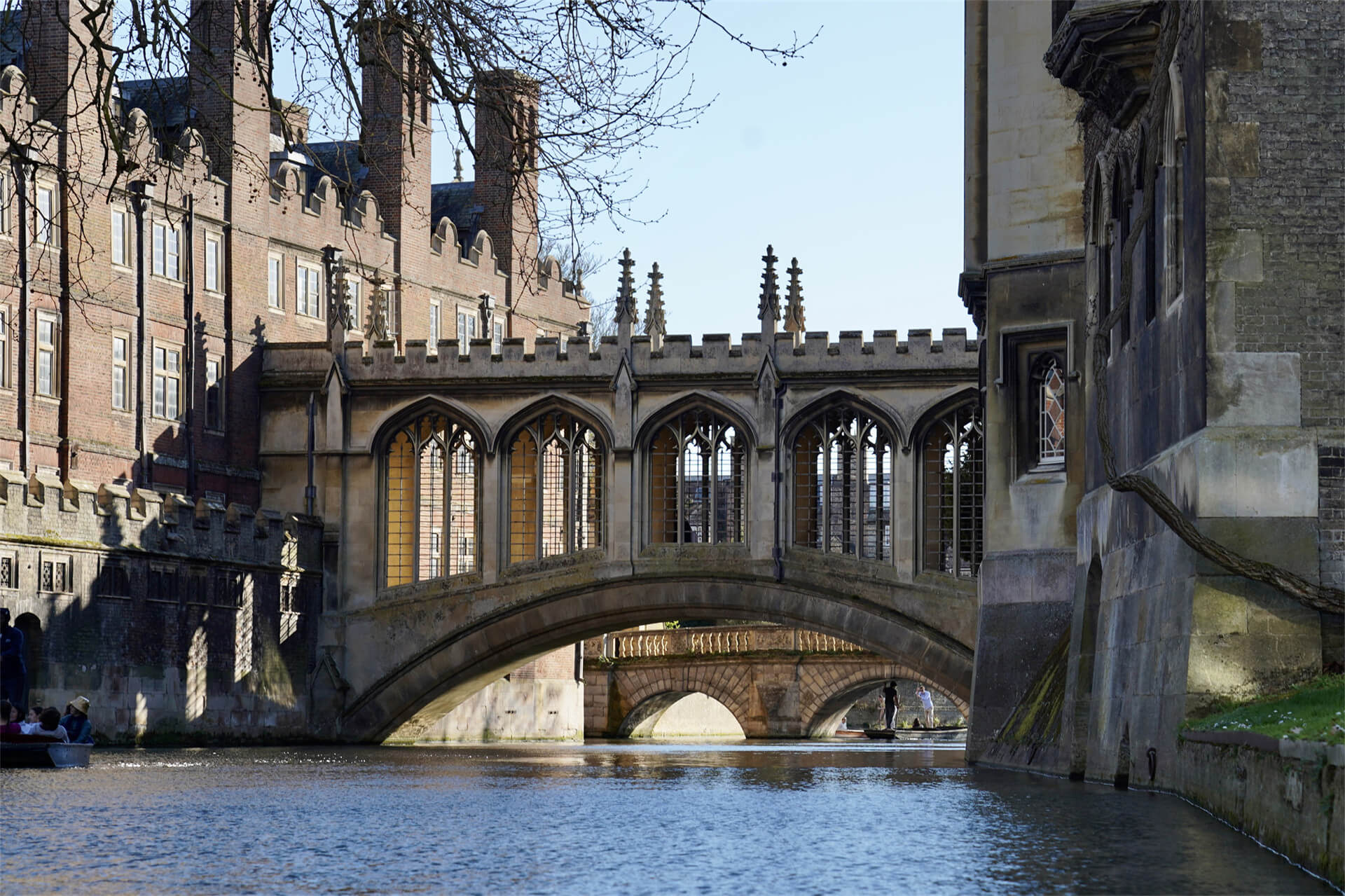
The Bridge of Sighs in Cambridge (officially the New Court Bridge) is St John’s College’s most famous landmark and the city’s best-known covered bridge. Built in 1831 in a Gothic Revival style, it links Third Court to New Court and sits right on the classic River Cam / College Backs punting route, so it’s one of the most photographed moments on any chauffeured punt. It’s also a Grade I–listed structure, protected for its historic and architectural importance. Film fans may recognise it from The Theory of Everything (and other productions), which is why it often feels “cinematic” even in real life. Fun fact: Cambridge students famously dangled a car under the bridge as a prank (multiple times, in the 1960s), and the bridge still wasn’t damaged. 

Bridge of Sighs Cambridge

The Bridge of Sighs in Cambridge (officially the New Court Bridge) is St John’s College’s most famous landmark and the city’s best-known covered bridge. Built in 1831 in a Gothic Revival style, it links Third Court to New Court and sits right on the classic River Cam / College Backs punting route, so it’s one of the most photographed moments on any chauffeured punt. It’s also a Grade I–listed structure, protected for its historic and architectural importance. Film fans may recognise it from The Theory of Everything (and other productions), which is why it often feels “cinematic” even in real life. Fun fact: Cambridge students famously dangled a car under the bridge as a prank (multiple times, in the 1960s), and the bridge still wasn’t damaged. 

Bridge of Sighs Cambridge
Kitchen Bridge Cambridge

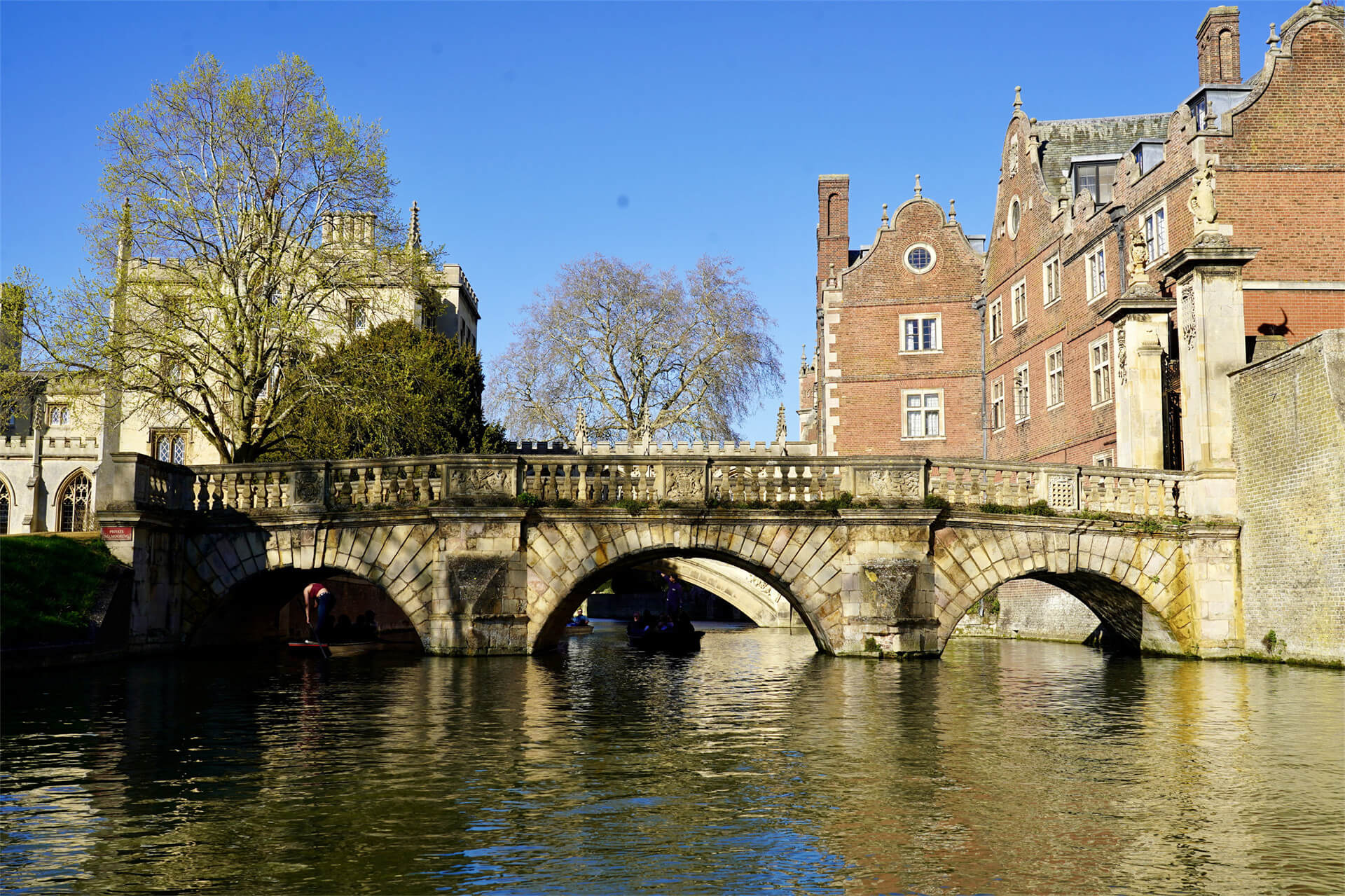
The Kitchen Bridge in Cambridge (also called the Wren Bridge) is one of the classic sights on the River Cam / College Backs punting route at St John’s College. Built in the early 1700s (commonly dated 1709–1713), it follows designs associated with Sir Christopher Wren, with construction overseen by local master mason Robert Grumbold, who also worked on the Wren Library at Trinity. The bridge links the older courts to the riverside side of the college, and its nickname comes from student life: it was the practical route “towards Hall” when food needed moving between kitchens and dining spaces. From a chauffeured punt, it reads as pure Cambridge: elegant stonework, calm water, and that instantly recognisable St John’s riverside backdrop. Fun fact: Look out for the high-water marks carved into the stone, recording historic Cambridge floods.

Kitchen Bridge Cambridge

The Kitchen Bridge in Cambridge (also called the Wren Bridge) is one of the classic sights on the River Cam / College Backs punting route at St John’s College. Built in the early 1700s (commonly dated 1709–1713), it follows designs associated with Sir Christopher Wren, with construction overseen by local master mason Robert Grumbold, who also worked on the Wren Library at Trinity. The bridge links the older courts to the riverside side of the college, and its nickname comes from student life: it was the practical route “towards Hall” when food needed moving between kitchens and dining spaces. From a chauffeured punt, it reads as pure Cambridge: elegant stonework, calm water, and that instantly recognisable St John’s riverside backdrop. Fun fact: Look out for the high-water marks carved into the stone, recording historic Cambridge floods.

Kitchen Bridge Cambridge
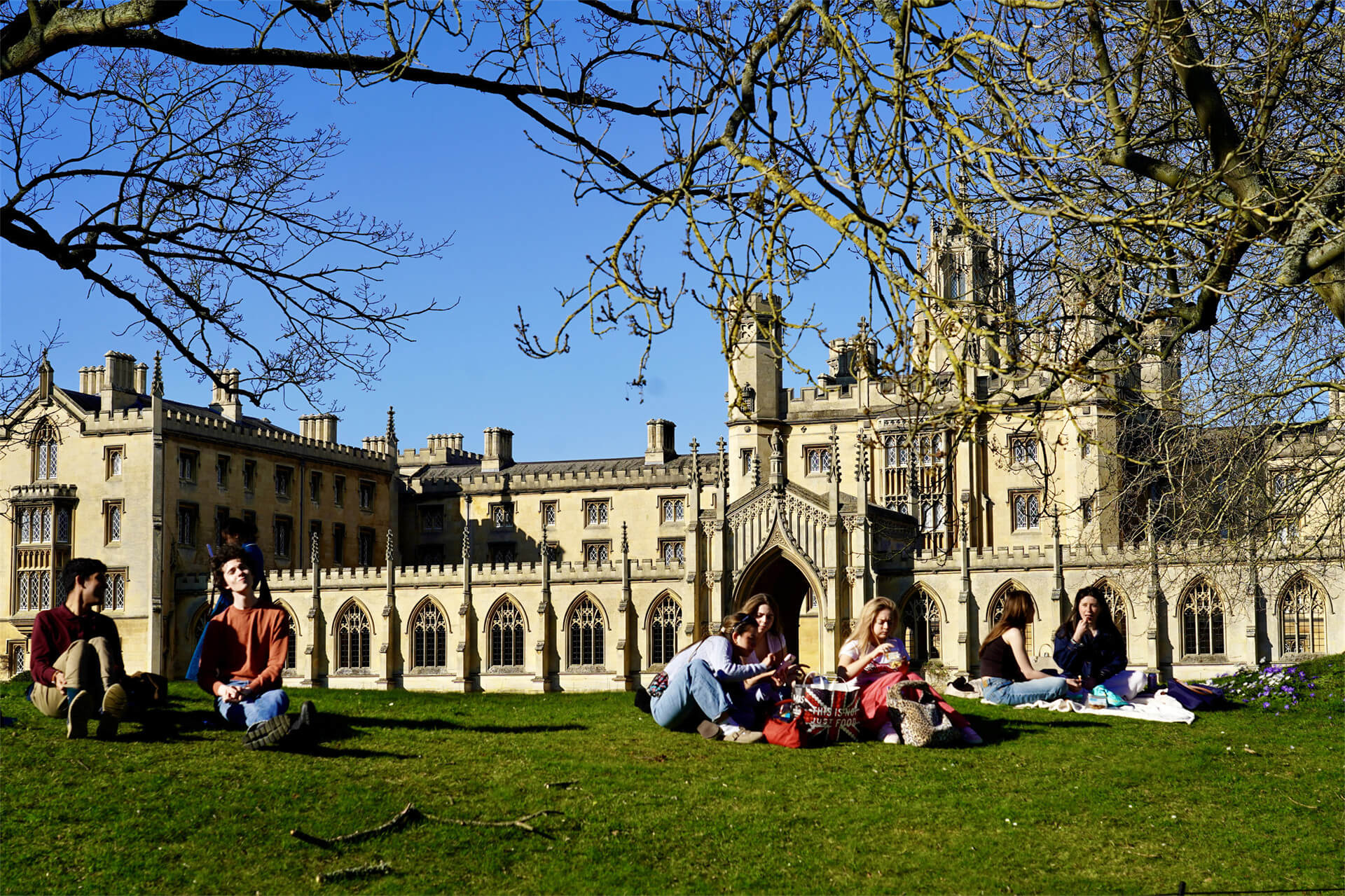
St John’s College Cambridge

Founded in 1511 by Lady Margaret Beaufort, St John’s College Cambridge is one of the headline sights on punting in Cambridge along the River Cam. From the water, you get the full “Cambridge postcard”: wide riverside lawns, grand courts, and two standout bridges on the College Backs route. The best-known is the Bridge of Sighs (built 1831), Cambridge’s iconic covered bridge linking Third Court and New Court. Nearby is the earlier Kitchen Bridge (often called the Wren Bridge), completed in 1713 and tied to designs associated with Christopher Wren. St John’s combines elite scholarship with living tradition: formal dining in Hall, and its world-famous May Ball staged across the historic courts and river gardens. Notable alumni include Nobel-winning physicist Paul Dirac and Douglas Adams of The Hitchhiker’s Guide to the Galaxy. Fun fact: St John’s motto is in Old French: “Souvent me Souvient” (“I often remember” / “Remember me often”). 

St John’s College Cambridge

Founded in 1511 by Lady Margaret Beaufort, St John’s College Cambridge is one of the headline sights on punting in Cambridge along the River Cam. From the water, you get the full “Cambridge postcard”: wide riverside lawns, grand courts, and two standout bridges on the College Backs route. The best-known is the Bridge of Sighs (built 1831), Cambridge’s iconic covered bridge linking Third Court and New Court. Nearby is the earlier Kitchen Bridge (often called the Wren Bridge), completed in 1713 and tied to designs associated with Christopher Wren. St John’s combines elite scholarship with living tradition: formal dining in Hall, and its world-famous May Ball staged across the historic courts and river gardens. Notable alumni include Nobel-winning physicist Paul Dirac and Douglas Adams of The Hitchhiker’s Guide to the Galaxy. Fun fact: St John’s motto is in Old French: “Souvent me Souvient” (“I often remember” / “Remember me often”). 

St John’s College Cambridge
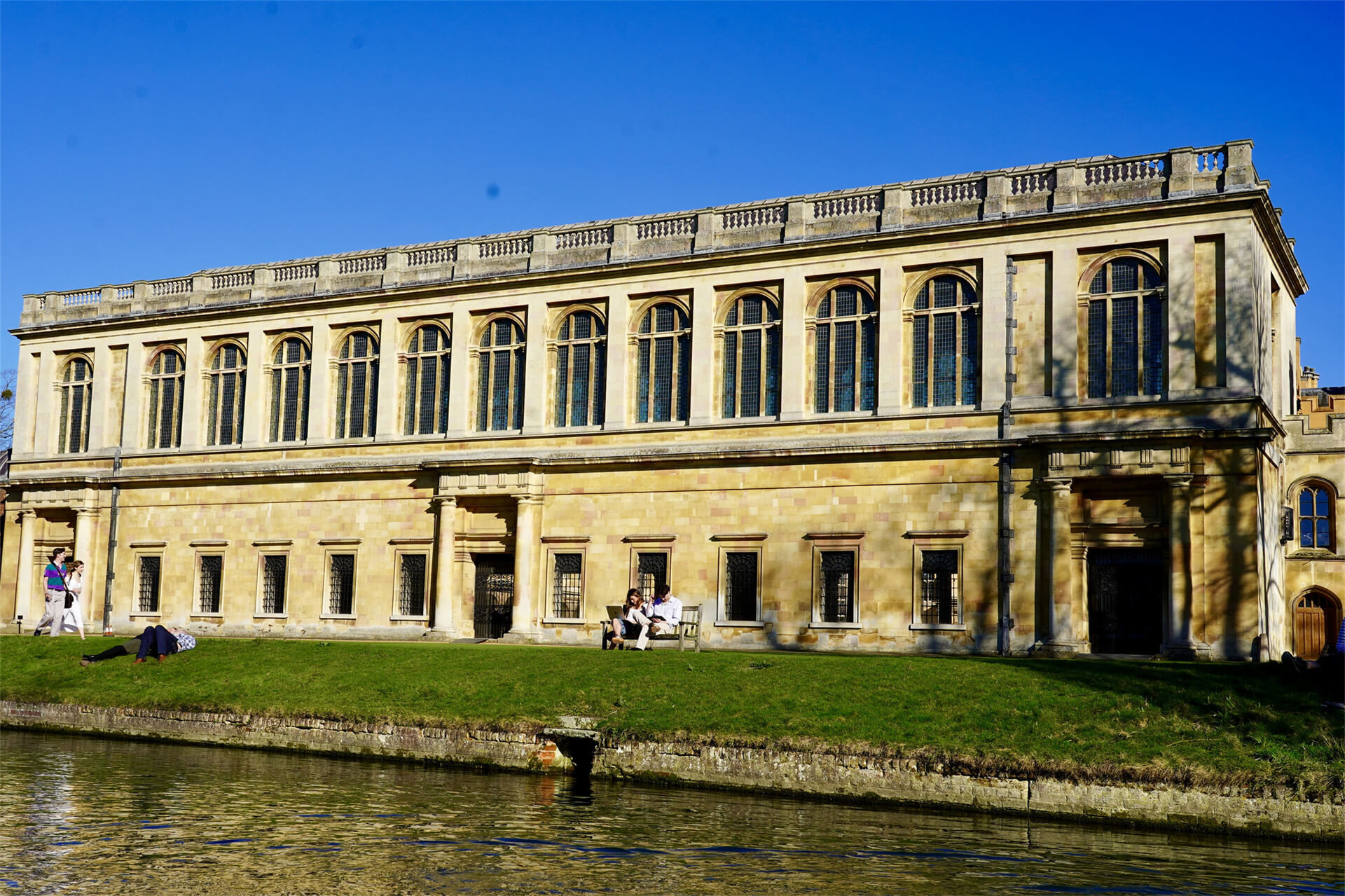
Trinity College Cambridge

Founded in 1546 by Henry VIII, Trinity College Cambridge is the university’s largest college and one of the most famous sights on the River Cam along the College Backs punting route. Its jewel is the Wren Library, designed by Sir Christopher Wren and celebrated for its calm, bright proportions and huge windows that flood the room with natural light. Inside, Trinity holds world-class treasures, including Newton’s own first edition of Principia Mathematica with handwritten corrections, alongside other rare manuscripts and early editions that make the library feel more like a museum of ideas than a typical reading room. If you want a single stop that says “Cambridge intellectual history”, this is it: grand riverside setting outside, and quiet, awe-filled scholarship inside. Fun fact: The Wren Library also holds A. A. Milne’s original Winnie-the-Pooh manuscripts, donated to Trinity, which is always a surprise hit even for visitors who came “just for Newton”.

Trinity College Cambridge

Founded in 1546 by Henry VIII, Trinity College Cambridge is the university’s largest college and one of the most famous sights on the River Cam along the College Backs punting route. Its jewel is the Wren Library, designed by Sir Christopher Wren and celebrated for its calm, bright proportions and huge windows that flood the room with natural light. Inside, Trinity holds world-class treasures, including Newton’s own first edition of Principia Mathematica with handwritten corrections, alongside other rare manuscripts and early editions that make the library feel more like a museum of ideas than a typical reading room. If you want a single stop that says “Cambridge intellectual history”, this is it: grand riverside setting outside, and quiet, awe-filled scholarship inside. Fun fact: The Wren Library also holds A. A. Milne’s original Winnie-the-Pooh manuscripts, donated to Trinity, which is always a surprise hit even for visitors who came “just for Newton”.

Trinity College Cambridge
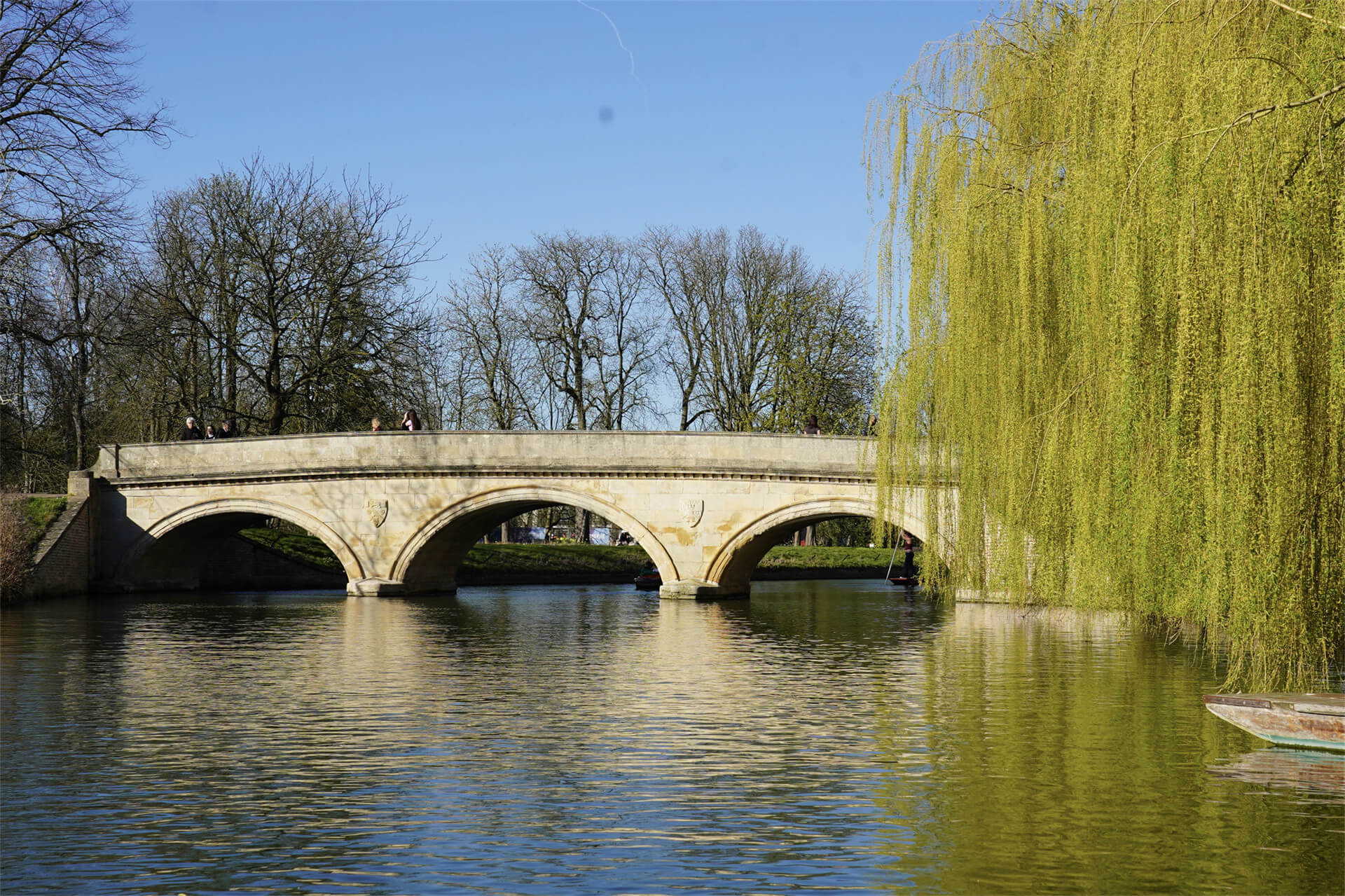
Trinity Bridge Cambridge

Trinity Bridge is one of the calmest photo stops on punting in Cambridge, sitting right on the River Cam beside Trinity College. Completed in 1765 to designs by Cambridge architect James Essex, the bridge is a handsome triple-arch Georgian stone crossing that replaced earlier bridges on the same spot. Step onto it (or drift under it on a chauffeured punt) and you get a perfectly framed river scene: Trinity’s lawns and gardens to one side, and the classic College Backs panorama stretching along the water. It’s also Grade I listed, which tells you just how historically important this “simple” bridge really is. Fun fact: Look for the carved Hooper family coat of arms on the bridge. The build was funded by a bequest from Dr Francis Hooper, a Trinity Senior Fellow. 

Trinity Bridge Cambridge

Trinity Bridge is one of the calmest photo stops on punting in Cambridge, sitting right on the River Cam beside Trinity College. Completed in 1765 to designs by Cambridge architect James Essex, the bridge is a handsome triple-arch Georgian stone crossing that replaced earlier bridges on the same spot. Step onto it (or drift under it on a chauffeured punt) and you get a perfectly framed river scene: Trinity’s lawns and gardens to one side, and the classic College Backs panorama stretching along the water. It’s also Grade I listed, which tells you just how historically important this “simple” bridge really is. Fun fact: Look for the carved Hooper family coat of arms on the bridge. The build was funded by a bequest from Dr Francis Hooper, a Trinity Senior Fellow. 

Trinity Bridge Cambridge
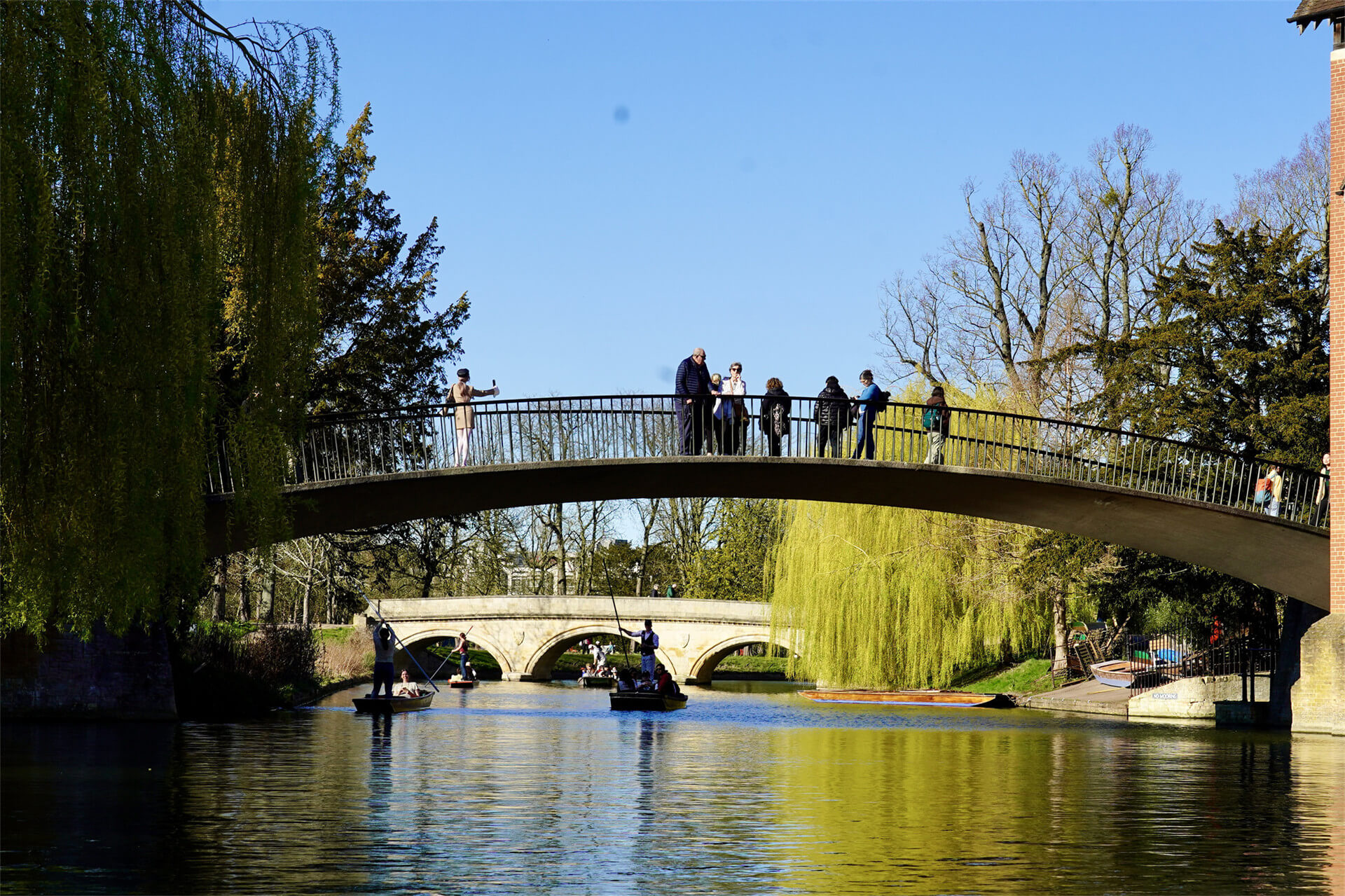
Garret Hostel Bridge Cambridge

Garret Hostel Bridge is Cambridge’s sleek modern contrast to the medieval and Georgian bridges nearby, spanning the River Cam between Clare Bridge and Trinity Bridge. Completed in 1960, this prestressed concrete foot-and-cycle bridge is officially listed for its architectural interest, and it is one of the most useful crossings linking the city centre with the riverside colleges on the Backs. Its smooth, shallow arch makes it a favourite spot to pause for wide river views, especially when the light is low and the Cam turns mirror-like at sunrise or sunset. If you want a “quietly spectacular” photo without the crowds, this is one of the best places to stand. Fun fact: It was designed by Timothy (Guy) Morgan while he was still a Cambridge architecture student and he reportedly didn’t live to see it completed. 

Garret Hostel Bridge Cambridge

Garret Hostel Bridge is Cambridge’s sleek modern contrast to the medieval and Georgian bridges nearby, spanning the River Cam between Clare Bridge and Trinity Bridge. Completed in 1960, this prestressed concrete foot-and-cycle bridge is officially listed for its architectural interest, and it is one of the most useful crossings linking the city centre with the riverside colleges on the Backs. Its smooth, shallow arch makes it a favourite spot to pause for wide river views, especially when the light is low and the Cam turns mirror-like at sunrise or sunset. If you want a “quietly spectacular” photo without the crowds, this is one of the best places to stand. Fun fact: It was designed by Timothy (Guy) Morgan while he was still a Cambridge architecture student and he reportedly didn’t live to see it completed. 

Garret Hostel Bridge Cambridge
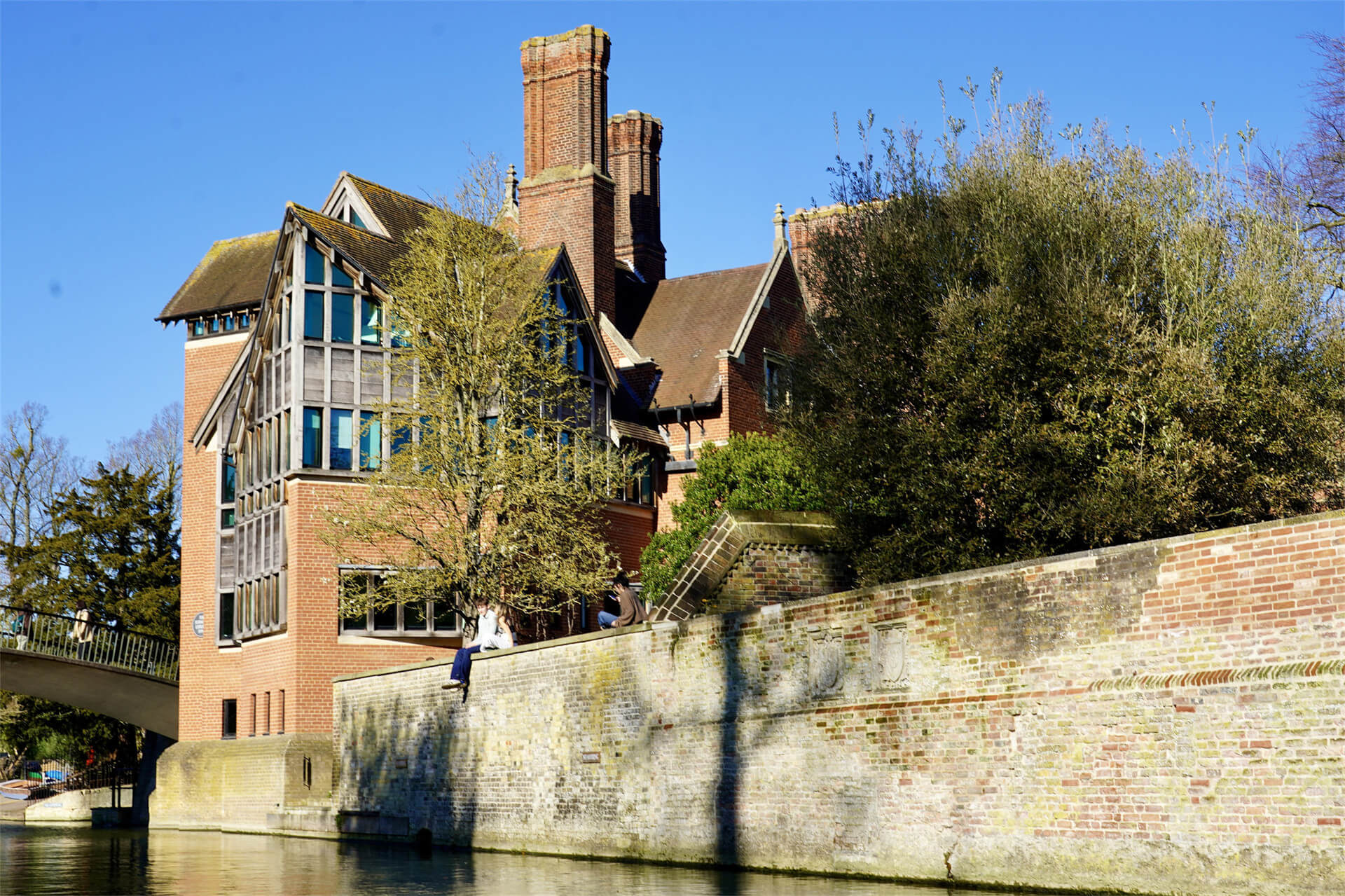
Jerwood Library Cambridge

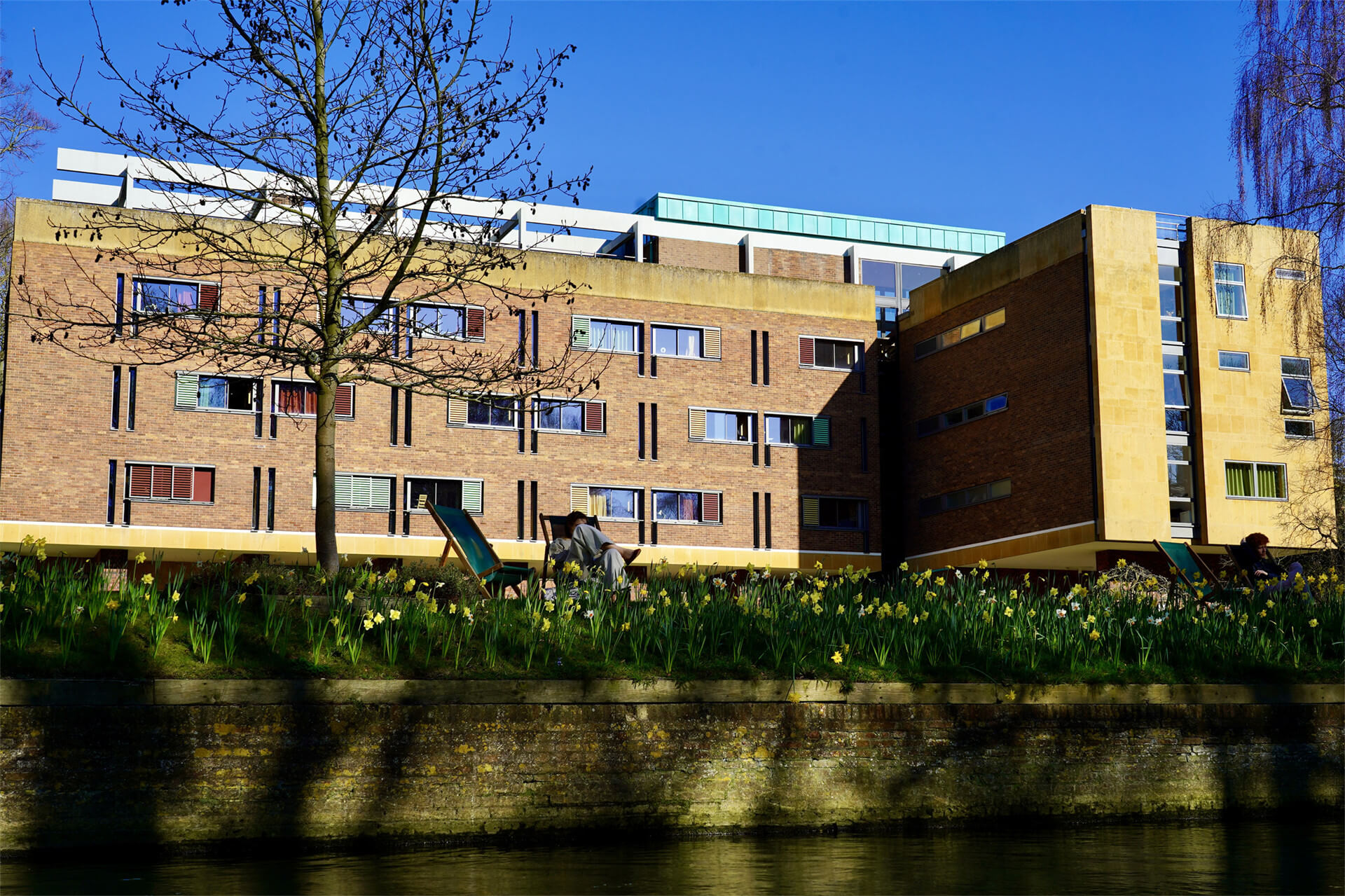
The Jerwood Library at Trinity Hall is one of the most striking modern buildings on the River Cam, sitting right beside Garret Hostel Bridge on the classic punting in Cambridge / College Backs route. Built in 1998 (with construction starting in 1997 and opening for Michaelmas 1998), it was designed by Freeland Rees Roberts as a bold glass-and-steel extension that literally overhangs the river, so from a punt you see contemporary Cambridge meeting medieval courts in one frame. The project was supported by a major grant from the Jerwood Foundation, and the library’s collection is around 30,000 books with space for over 100 readers, making it both a practical student hub and a landmark visitors always notice on the water. Fun fact: It became a “tourist attraction” almost immediately and is regularly pointed out on chauffeured punt tours because it’s one of the few Cambridge college buildings that feels designed to be seen from the river. 

Jerwood Library Cambridge

The Jerwood Library at Trinity Hall is one of the most striking modern buildings on the River Cam, sitting right beside Garret Hostel Bridge on the classic punting in Cambridge / College Backs route. Built in 1998 (with construction starting in 1997 and opening for Michaelmas 1998), it was designed by Freeland Rees Roberts as a bold glass-and-steel extension that literally overhangs the river, so from a punt you see contemporary Cambridge meeting medieval courts in one frame. The project was supported by a major grant from the Jerwood Foundation, and the library’s collection is around 30,000 books with space for over 100 readers, making it both a practical student hub and a landmark visitors always notice on the water. Fun fact: It became a “tourist attraction” almost immediately and is regularly pointed out on chauffeured punt tours because it’s one of the few Cambridge college buildings that feels designed to be seen from the river. 

Jerwood Library Cambridge
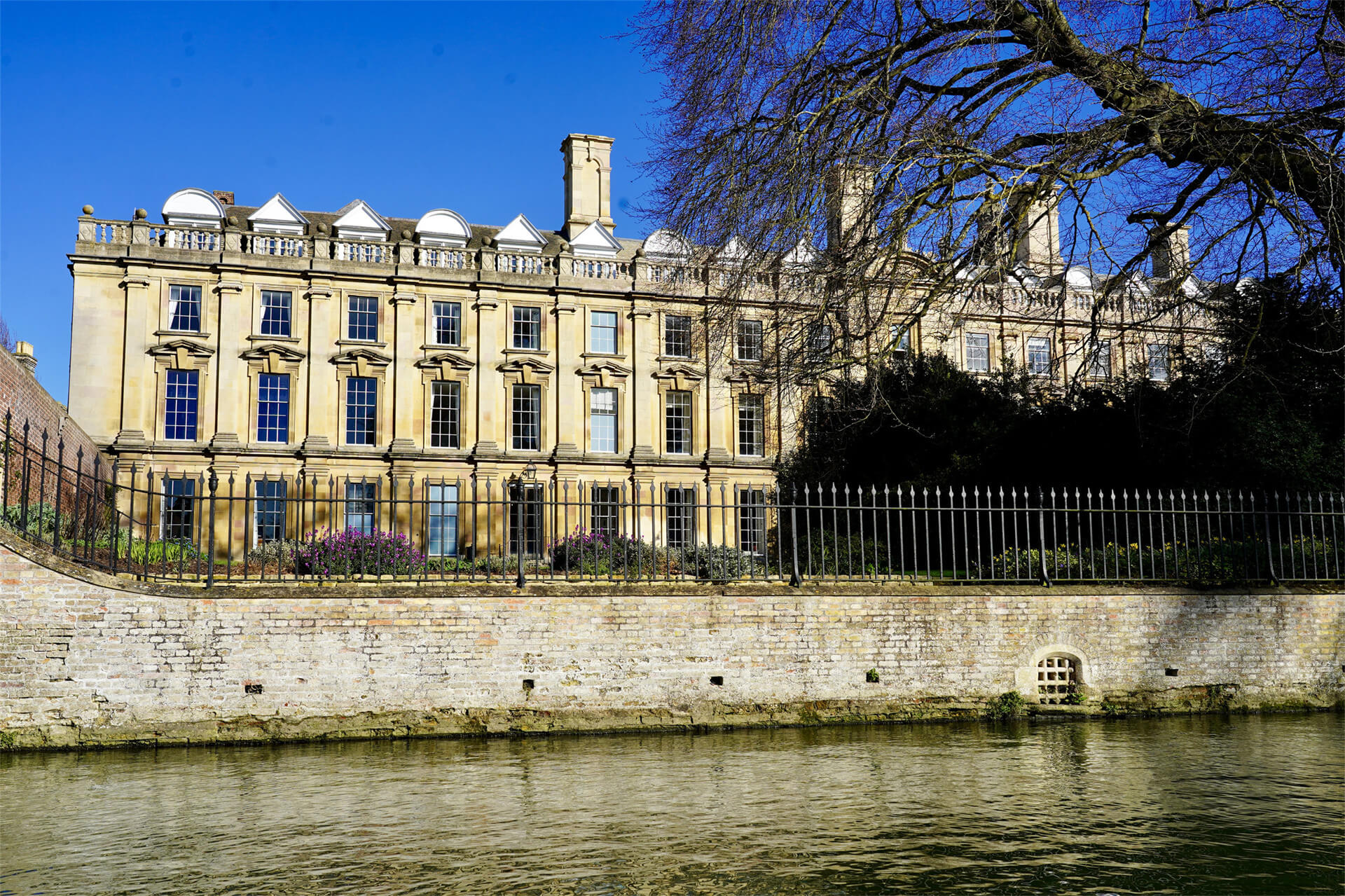
Clare College Cambridge

Founded in 1326, Clare College is Cambridge’s second-oldest surviving college and one of the prettiest stretches on the River Cam for punting in Cambridge. Its riverside gardens on the Backs feel calm and very “classic Cambridge”, with medieval courts just behind. Clare is also famous for music: the Clare College Choir has an international reputation, with roots going back to 1866 and a modern mixed-voice tradition that began in 1972. The college’s main library includes the Forbes Mellon Library, opened in 1986, giving Clare a strong academic core alongside its postcard river views. Clare also combined tradition with change early, becoming one of the first previously all-male Cambridge colleges to admit women undergraduates in 1972. Fun fact: Clare Bridge nearby is the oldest surviving bridge in Cambridge, and one stone ball has a “missing slice” that guides love to point out from the punt. 

Clare College Cambridge

Founded in 1326, Clare College is Cambridge’s second-oldest surviving college and one of the prettiest stretches on the River Cam for punting in Cambridge. Its riverside gardens on the Backs feel calm and very “classic Cambridge”, with medieval courts just behind. Clare is also famous for music: the Clare College Choir has an international reputation, with roots going back to 1866 and a modern mixed-voice tradition that began in 1972. The college’s main library includes the Forbes Mellon Library, opened in 1986, giving Clare a strong academic core alongside its postcard river views. Clare also combined tradition with change early, becoming one of the first previously all-male Cambridge colleges to admit women undergraduates in 1972. Fun fact: Clare Bridge nearby is the oldest surviving bridge in Cambridge, and one stone ball has a “missing slice” that guides love to point out from the punt. 

Clare College Cambridge
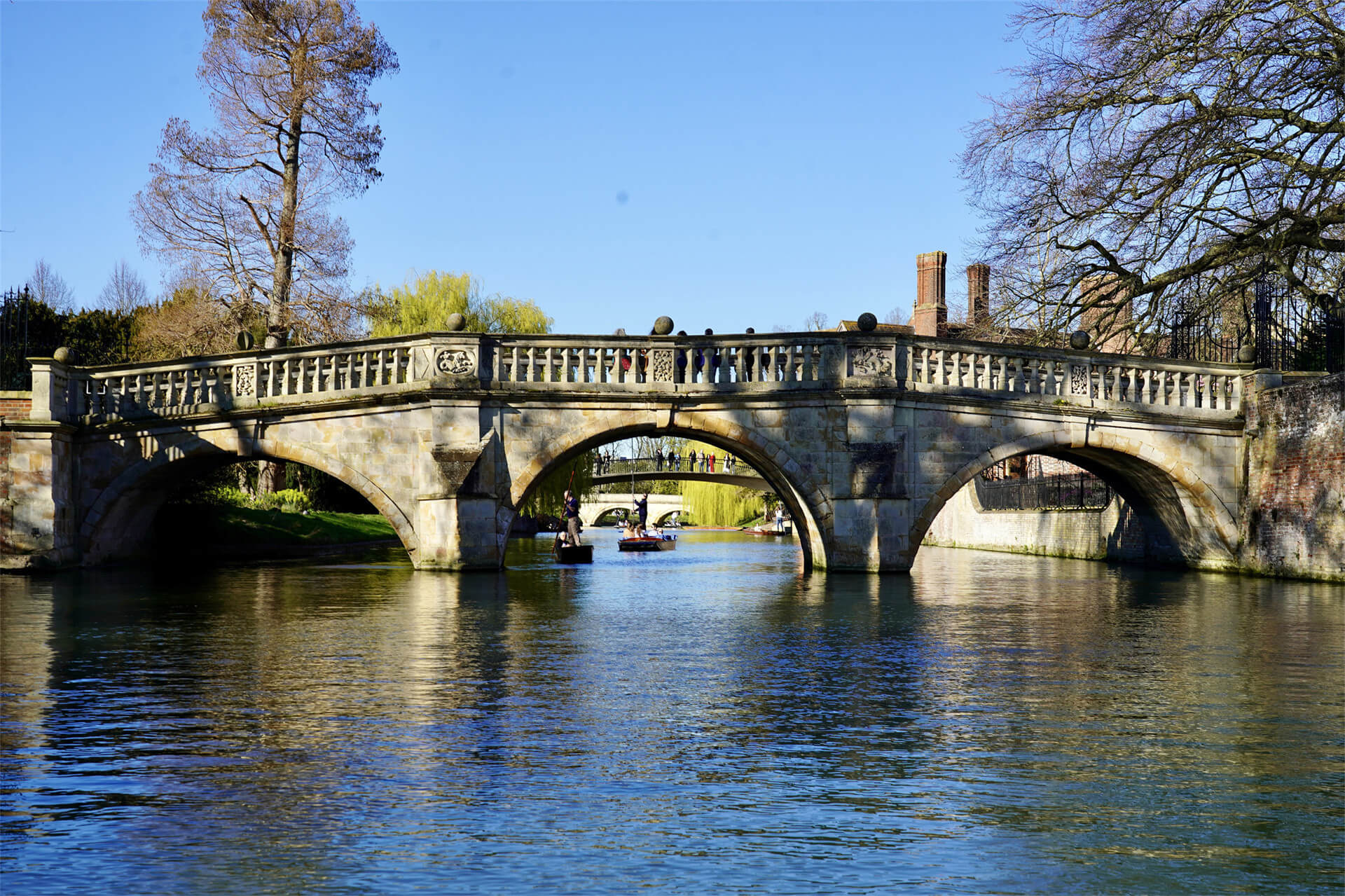
Clare Bridge Cambridge

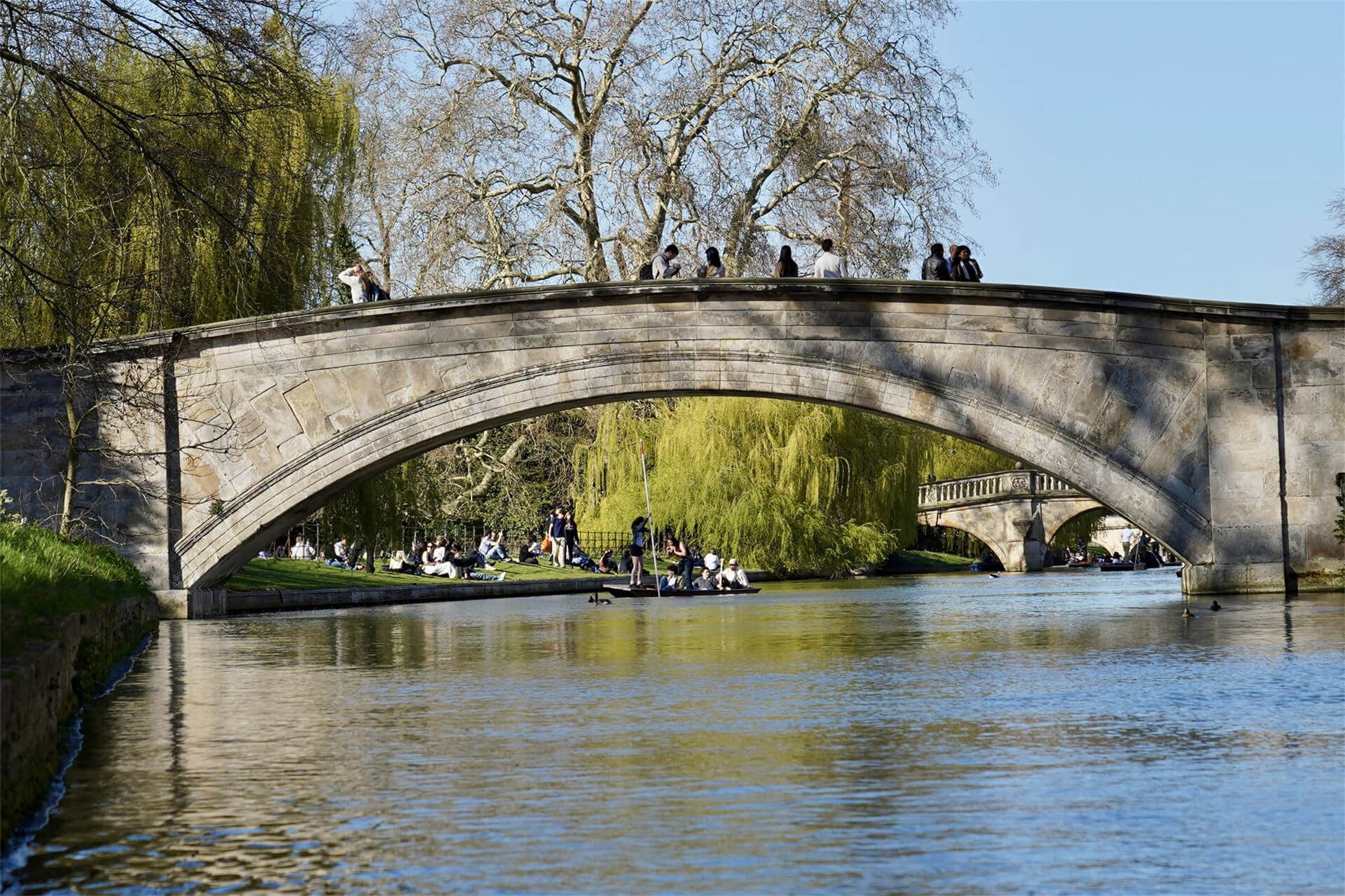
Clare Bridge (sometimes called Clare College Bridge) is the oldest surviving, still-functioning bridge in Cambridge, spanning the River Cam on the classic College Backs route. Built in 1639–1640, it’s a three-arch Early Renaissance stone bridge with carved balustrade details and a row of distinctive stone ball finials along the top. It’s also a Grade I listed landmark, so it’s protected as one of the city’s most important historic structures. From a punt, the view is pure Cambridge: low arches, calm water, and Clare’s riverside lawns framed perfectly as you drift beneath. Fun fact: Count the stone balls. One has a famous “missing slice” (second from the left on the south side), which fuels endless stories from “the builder wasn’t paid” to “a later repair fell out.”

Clare Bridge Cambridge

Clare Bridge (sometimes called Clare College Bridge) is the oldest surviving, still-functioning bridge in Cambridge, spanning the River Cam on the classic College Backs route. Built in 1639–1640, it’s a three-arch Early Renaissance stone bridge with carved balustrade details and a row of distinctive stone ball finials along the top. It’s also a Grade I listed landmark, so it’s protected as one of the city’s most important historic structures. From a punt, the view is pure Cambridge: low arches, calm water, and Clare’s riverside lawns framed perfectly as you drift beneath. Fun fact: Count the stone balls. One has a famous “missing slice” (second from the left on the south side), which fuels endless stories from “the builder wasn’t paid” to “a later repair fell out.”

Clare Bridge Cambridge
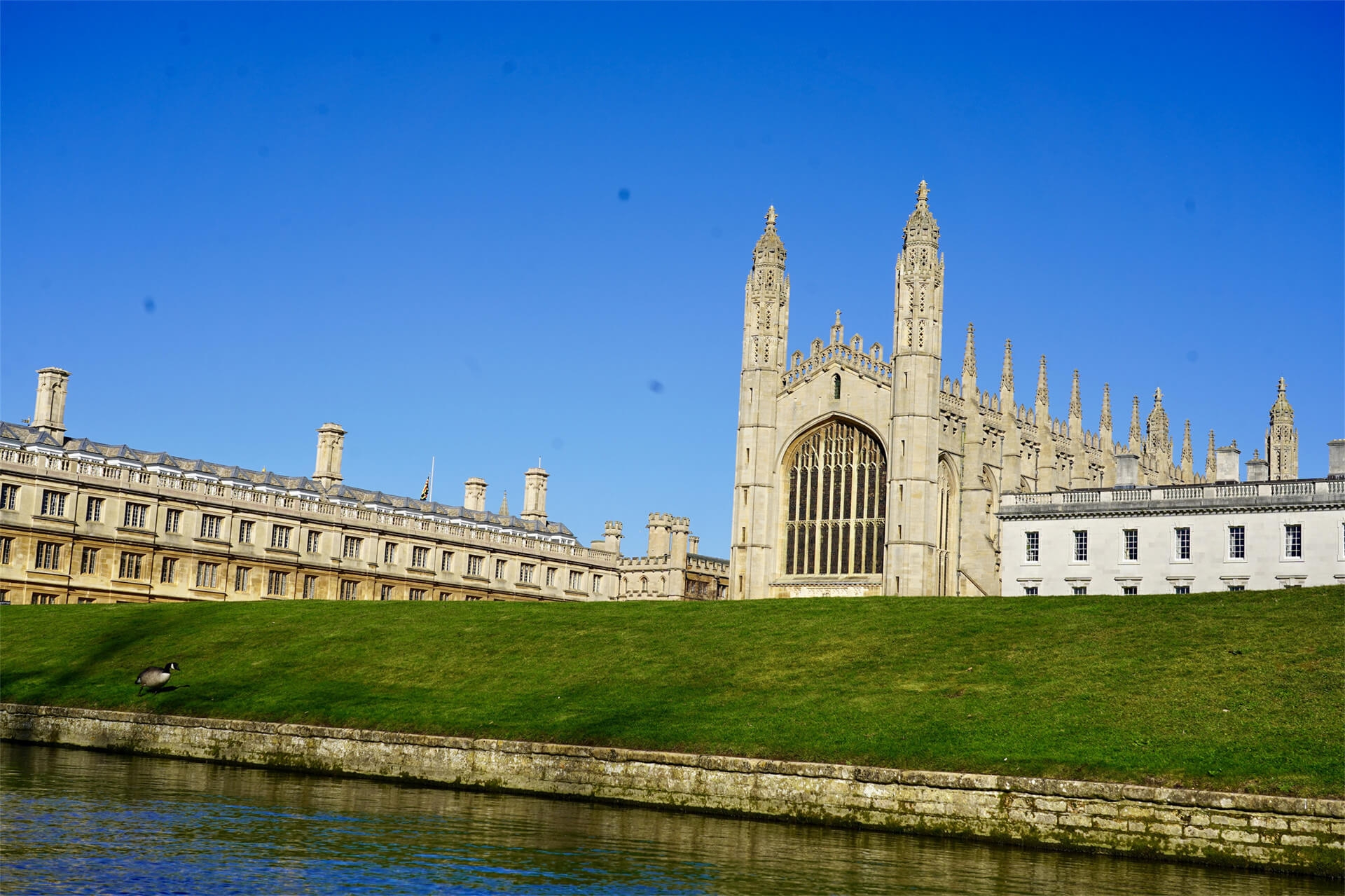
King’s College Cambridge

Founded in 1441 by Henry VI, King’s College Cambridge is the headline stop on the River Cam and the most recognisable “postcard view” on the College Backs punting route. The riverside lawns open up a clean, cinematic sightline to King’s College Chapel, a masterpiece of late Gothic architecture. Step inside and the scale hits immediately: the chapel’s fan vaulting is the largest in Europe, and the building remains one of Cambridge’s most visited landmarks. King’s is also famous for its global cultural footprint, from world-class scholarship to its choir, whose Festival of Nine Lessons and Carols is broadcast from the chapel every Christmas Eve. Notable figures linked with King’s include economist John Maynard Keynes, and it is closely associated with Alan Turing through the college’s history and archives. Fun fact: The chapel took nearly a century to complete (built in stages across the 15th–16th centuries), which is why it feels like a “best of Gothic” in one place.

King’s College Cambridge

Founded in 1441 by Henry VI, King’s College Cambridge is the headline stop on the River Cam and the most recognisable “postcard view” on the College Backs punting route. The riverside lawns open up a clean, cinematic sightline to King’s College Chapel, a masterpiece of late Gothic architecture. Step inside and the scale hits immediately: the chapel’s fan vaulting is the largest in Europe, and the building remains one of Cambridge’s most visited landmarks. King’s is also famous for its global cultural footprint, from world-class scholarship to its choir, whose Festival of Nine Lessons and Carols is broadcast from the chapel every Christmas Eve. Notable figures linked with King’s include economist John Maynard Keynes, and it is closely associated with Alan Turing through the college’s history and archives. Fun fact: The chapel took nearly a century to complete (built in stages across the 15th–16th centuries), which is why it feels like a “best of Gothic” in one place.

King’s College Cambridge
King’s Bridge Cambridge

King’s Bridge is the elegant stone crossing beside King’s College on the River Cam, and a key viewpoint on the College Backs punting route. The current bridge was completed in 1819, designed by architect William Wilkins (with construction by Francis Braidwood), and it frames the classic riverside lawns where Cambridge suddenly looks exactly like the postcards. Just steps away is what many Chinese visitors call “Xu Zhimo Corner”: a memorial stone installed on 2 July 2008 in King’s grounds, engraved with the opening and closing lines of Xu Zhimo’s poem often translated as “Second Farewell to Cambridge”. A dedicated Xu Zhimo Friendship/Memorial Garden was added beside it in August 2018, turning this stretch of river into a small cultural landmark where Cambridge meets modern Chinese literary memory. Fun fact: The 2018 garden opening was tied to the Cambridge Xu Zhimo Poetry and Art Festival, and is often described as the first Chinese-style garden created within the University’s setting near the memorial stone.

King’s Bridge Cambridge

King’s Bridge is the elegant stone crossing beside King’s College on the River Cam, and a key viewpoint on the College Backs punting route. The current bridge was completed in 1819, designed by architect William Wilkins (with construction by Francis Braidwood), and it frames the classic riverside lawns where Cambridge suddenly looks exactly like the postcards. Just steps away is what many Chinese visitors call “Xu Zhimo Corner”: a memorial stone installed on 2 July 2008 in King’s grounds, engraved with the opening and closing lines of Xu Zhimo’s poem often translated as “Second Farewell to Cambridge”. A dedicated Xu Zhimo Friendship/Memorial Garden was added beside it in August 2018, turning this stretch of river into a small cultural landmark where Cambridge meets modern Chinese literary memory. Fun fact: The 2018 garden opening was tied to the Cambridge Xu Zhimo Poetry and Art Festival, and is often described as the first Chinese-style garden created within the University’s setting near the memorial stone.

King’s Bridge Cambridge
Queens’ College Cambridge

Founded in 1448 by Margaret of Anjou (and later refounded in 1465 by Elizabeth Woodville), Queens’ College Cambridge is one of the most atmospheric stops on the River Cam. The college literally spans both banks, with routes and bridges connecting the “light side” and “dark side” of the site. Its original heart is Old Court, built from 1448–1451 and often described as one of the earliest purpose-designed “complete” college buildings in Cambridge, planned with everything a medieval college needed in one place. Inside, the historic Old Hall anchors the experience, with its timber character and heraldic tradition, including stained glass that records coats of arms and benefactors linked to the college’s story. For visitors, Queens’ is a perfect Cambridge snapshot: medieval fabric, later layers, and river views that make it feel quietly timeless. Fun fact: Queens’ spelling is deliberate. It is Queens’ (plural) because it honours two queens: its founder Margaret of Anjou and its refounder Elizabeth Woodville.

Queens’ College Cambridge

Founded in 1448 by Margaret of Anjou (and later refounded in 1465 by Elizabeth Woodville), Queens’ College Cambridge is one of the most atmospheric stops on the River Cam. The college literally spans both banks, with routes and bridges connecting the “light side” and “dark side” of the site. Its original heart is Old Court, built from 1448–1451 and often described as one of the earliest purpose-designed “complete” college buildings in Cambridge, planned with everything a medieval college needed in one place. Inside, the historic Old Hall anchors the experience, with its timber character and heraldic tradition, including stained glass that records coats of arms and benefactors linked to the college’s story. For visitors, Queens’ is a perfect Cambridge snapshot: medieval fabric, later layers, and river views that make it feel quietly timeless. Fun fact: Queens’ spelling is deliberate. It is Queens’ (plural) because it honours two queens: its founder Margaret of Anjou and its refounder Elizabeth Woodville.

Queens’ College Cambridge
Mathematical Bridge Cambridge

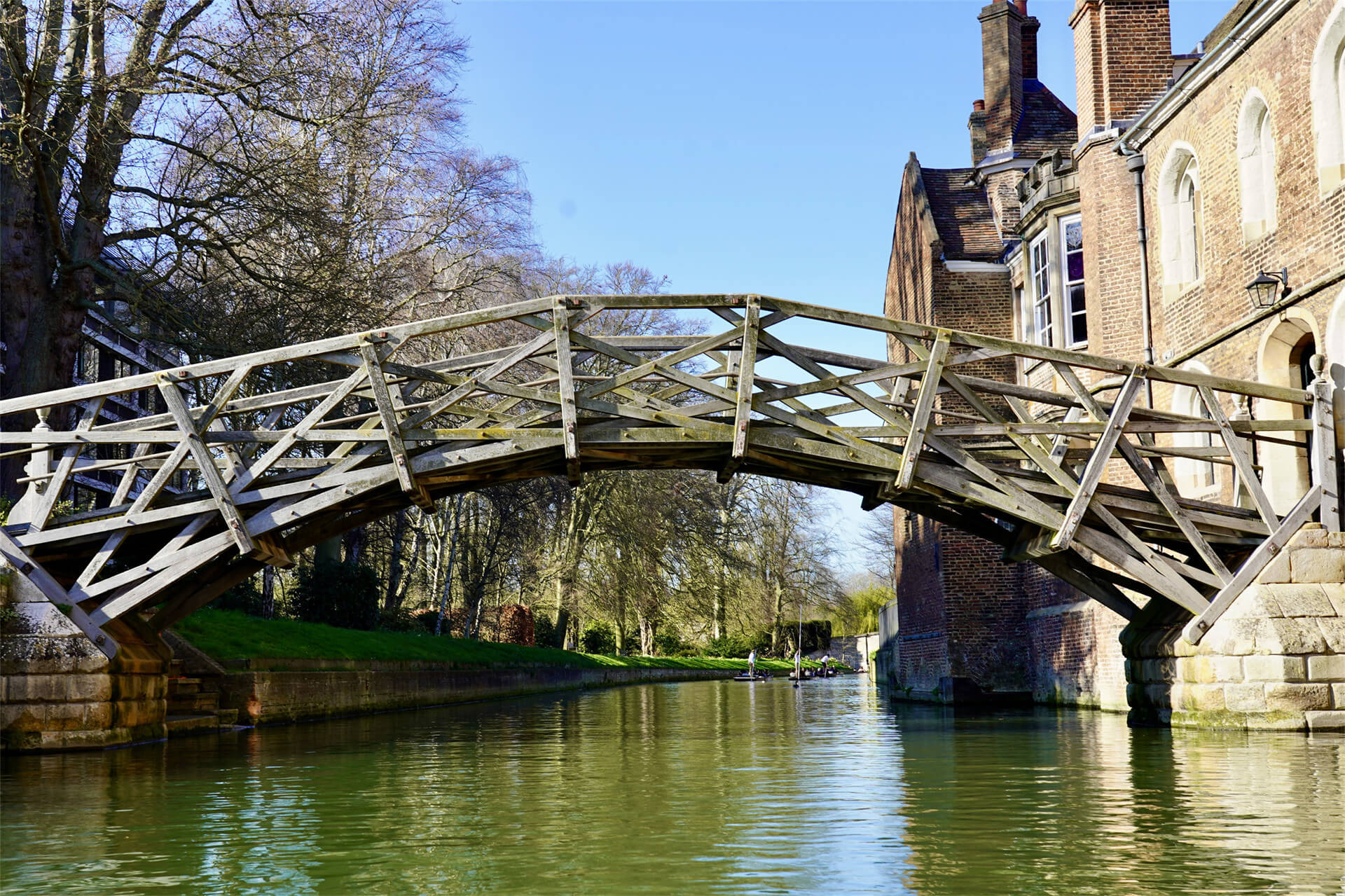
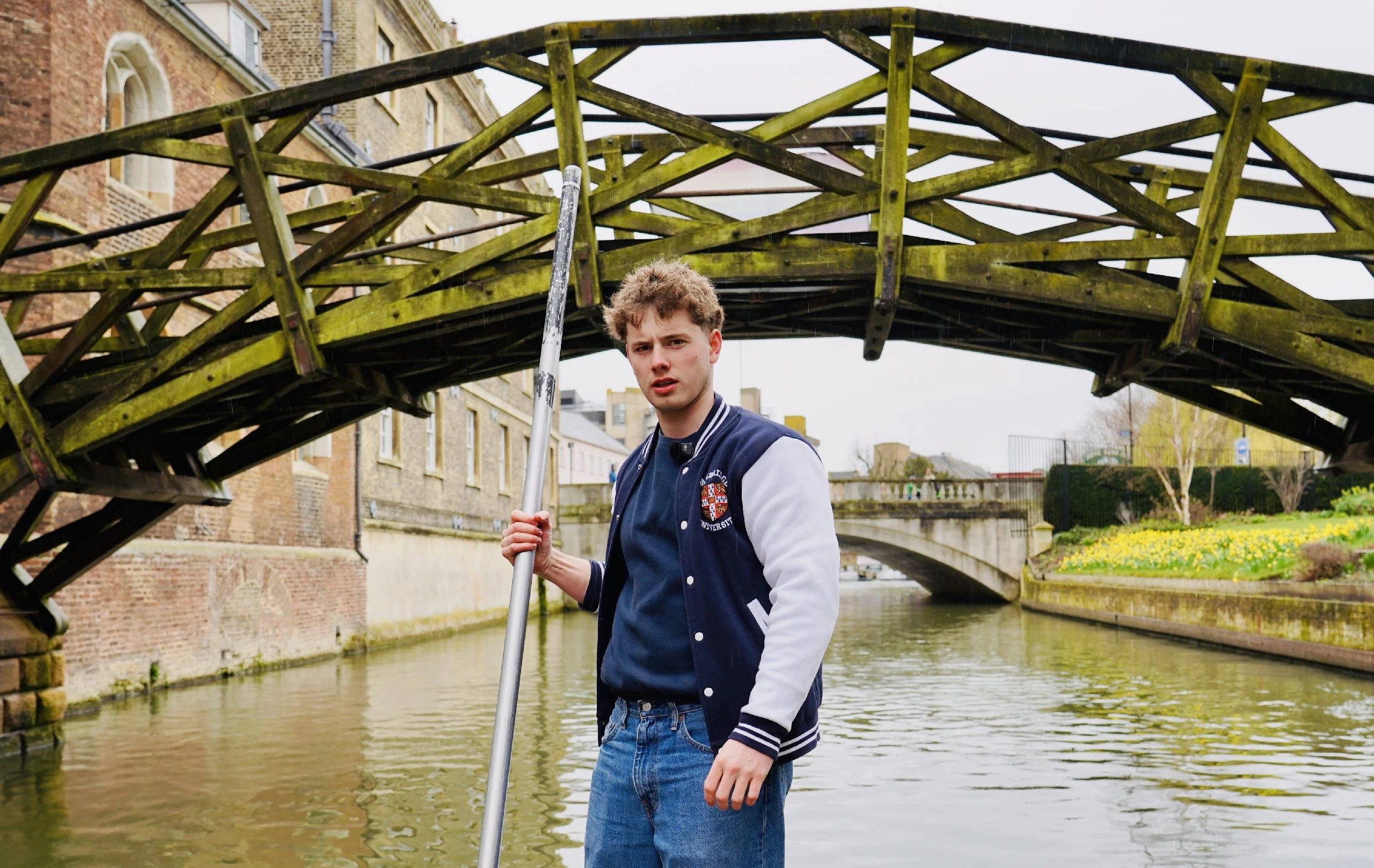
The Mathematical Bridge at Queens’ College Cambridge is one of the most photographed sights on the River Cam, especially on the classic punting in Cambridge route. Officially known as the Wooden Bridge (or Queens’ Bridge), it was designed by William Etheridge and built by James Essex in 1749. What makes it special is the engineering: it creates a smooth arch using straight timbers through tangent-and-radial trussing, a clever structure that turns geometry into strength. The bridge has been rebuilt over time, notably in 1866 and again in 1905, but it kept the same overall design, which is why it still reads as an 18th-century icon even today. From the river, it is the perfect “Cambridge moment” where elegance, maths, and tradition meet in a single view. Fun fact: The famous myth says Newton built it without bolts. In reality, Newton died in 1727, long before the bridge was constructed, and fixings were always part of the design.

Mathematical Bridge Cambridge

The Mathematical Bridge at Queens’ College Cambridge is one of the most photographed sights on the River Cam, especially on the classic punting in Cambridge route. Officially known as the Wooden Bridge (or Queens’ Bridge), it was designed by William Etheridge and built by James Essex in 1749. What makes it special is the engineering: it creates a smooth arch using straight timbers through tangent-and-radial trussing, a clever structure that turns geometry into strength. The bridge has been rebuilt over time, notably in 1866 and again in 1905, but it kept the same overall design, which is why it still reads as an 18th-century icon even today. From the river, it is the perfect “Cambridge moment” where elegance, maths, and tradition meet in a single view. Fun fact: The famous myth says Newton built it without bolts. In reality, Newton died in 1727, long before the bridge was constructed, and fixings were always part of the design.

Mathematical Bridge Cambridge
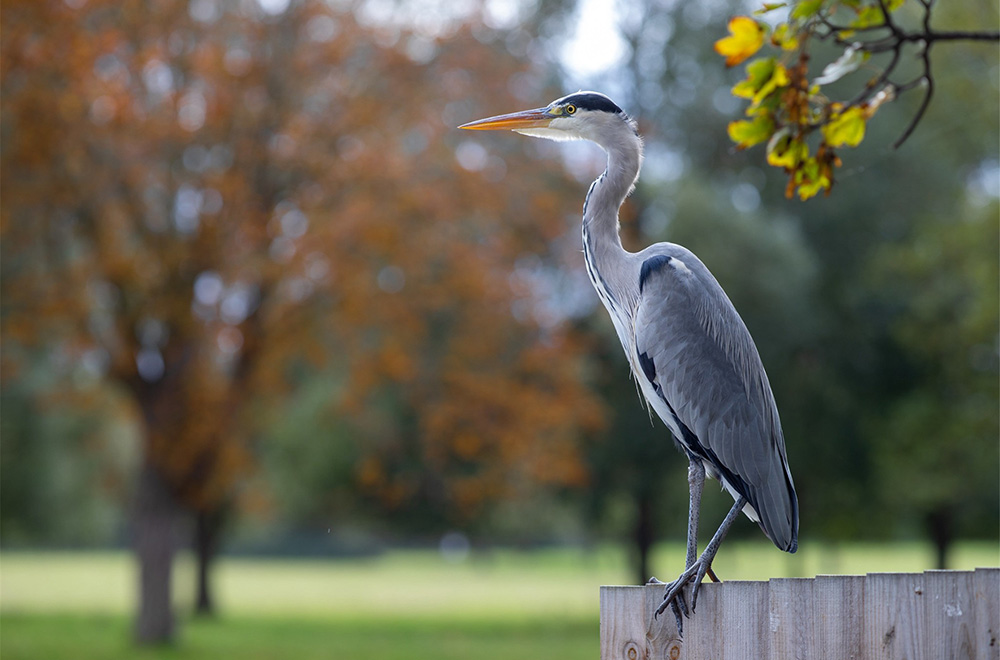
Wild animals that can be seen during the punting tour

Scan

Whatsapp

Scan

WeChat
小红书ICO
Xiaohongshu
Top