Cambridge Walking Tours Highlights

Key Landmarks on Our Guided Walking Tours

Cambridge Walking Tours Highlights

Key Landmarks on Our Guided Walking Tours

University Museum of Zoology Cambridge

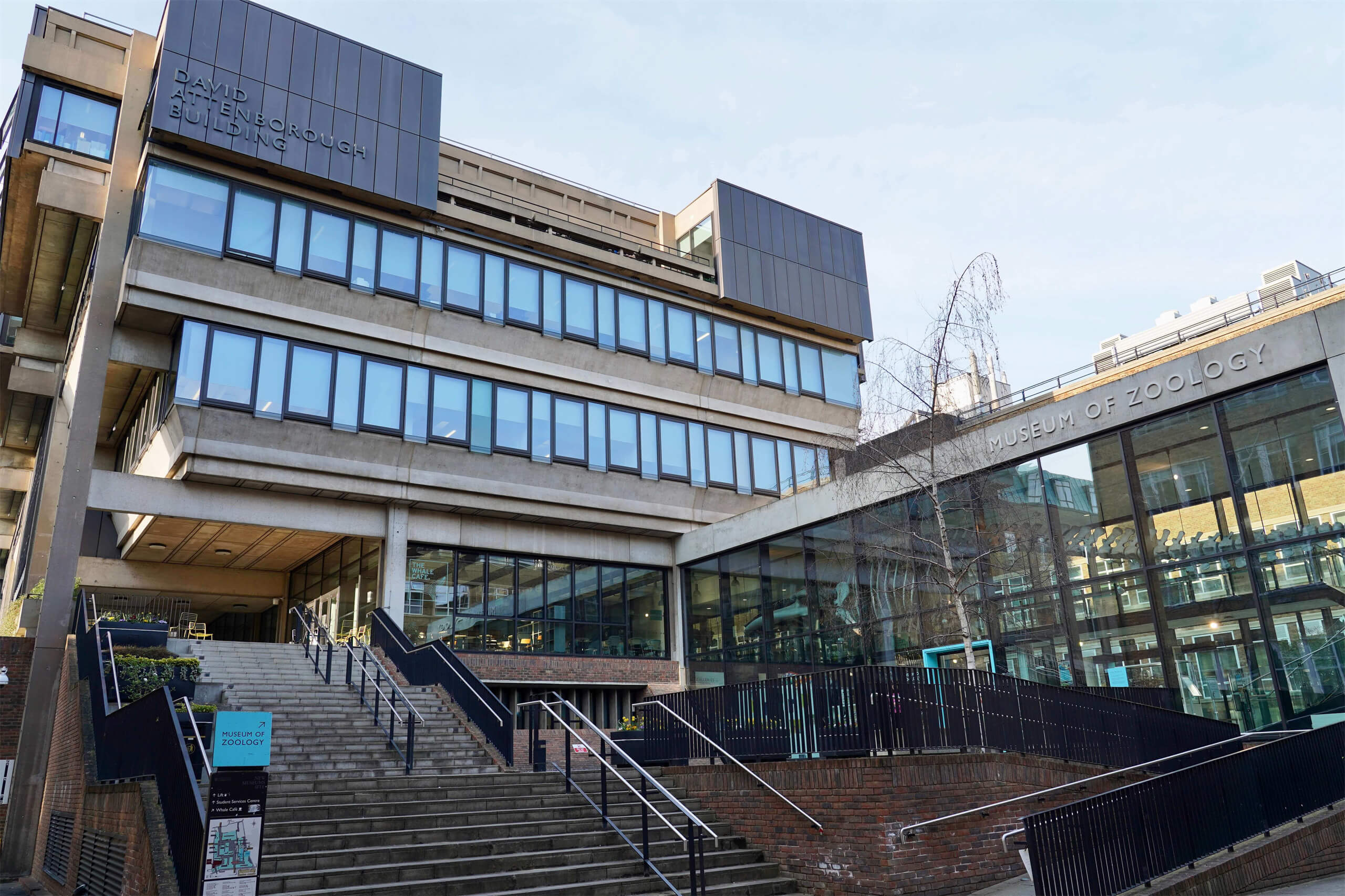
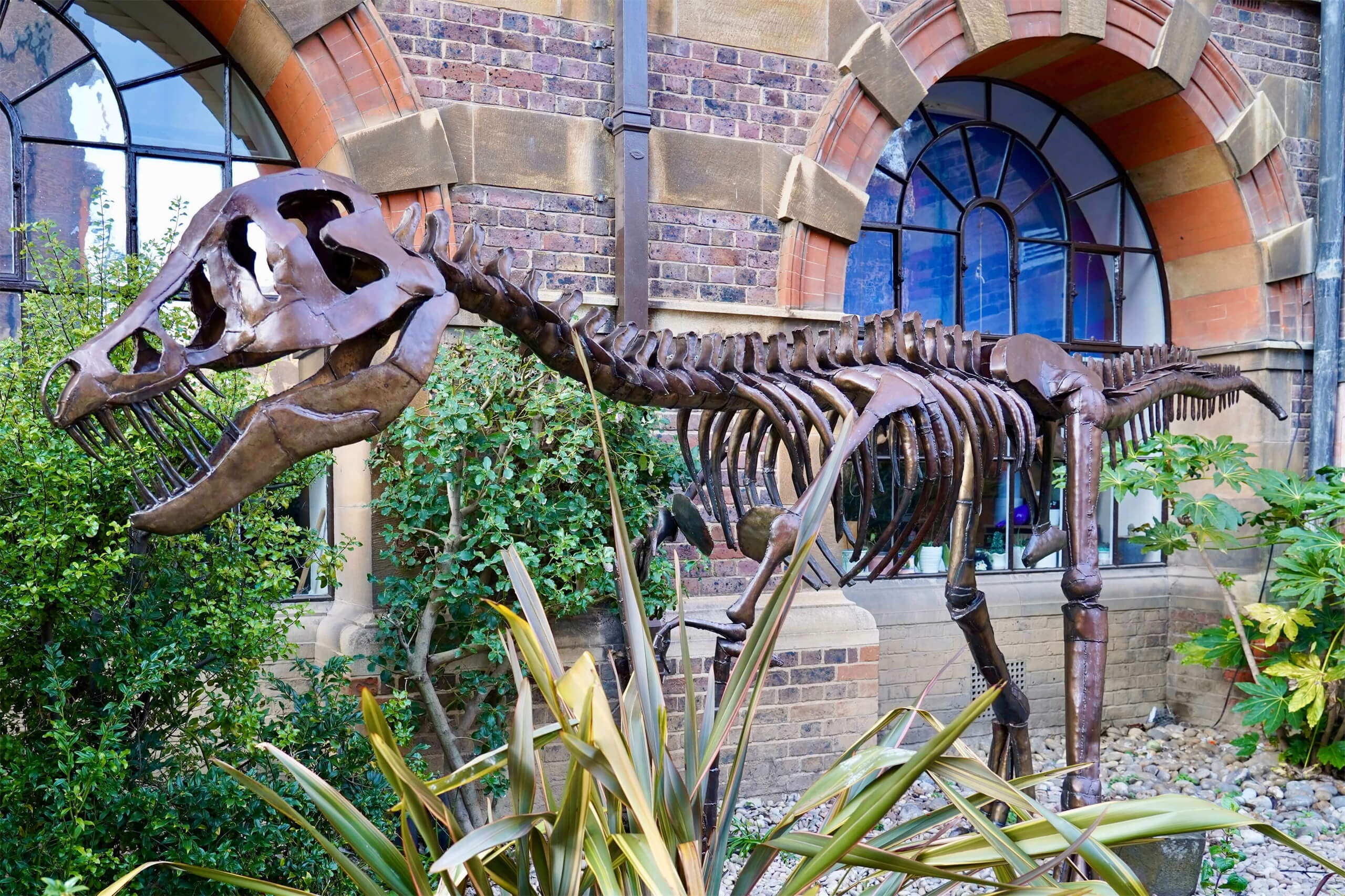
The University Museum of Zoology is one of Cambridge’s must-see stops on a city walking tour, located just north of the historic centre. Part of the University’s Department of Zoology, the museum presents the story of life on Earth through thousands of specimens, from towering elephants and giraffes to birds, reptiles, insects, and microscopic detail. Entry is free, and the museum attracts 100,000+ visitors each year, making it one of the city’s most popular cultural landmarks. Behind the scenes, the total collection runs to around two million specimens, with carefully curated galleries and rotating displays that keep repeat visits fresh. Many items were studied by pioneers of evolutionary science, including Charles Darwin and Alfred Russel Wallace, giving the space real intellectual weight as well as visual impact. Fun fact: The museum displays a dodo skeleton, assembled from rare surviving bones, making it one of the most talked-about extinct animals you can see on a Cambridge walking route.

University Museum of Zoology Cambridge

The University Museum of Zoology is one of Cambridge’s must-see stops on a city walking tour, located just north of the historic centre. Part of the University’s Department of Zoology, the museum presents the story of life on Earth through thousands of specimens, from towering elephants and giraffes to birds, reptiles, insects, and microscopic detail. Entry is free, and the museum attracts 100,000+ visitors each year, making it one of the city’s most popular cultural landmarks. Behind the scenes, the total collection runs to around two million specimens, with carefully curated galleries and rotating displays that keep repeat visits fresh. Many items were studied by pioneers of evolutionary science, including Charles Darwin and Alfred Russel Wallace, giving the space real intellectual weight as well as visual impact. Fun fact: The museum displays a dodo skeleton, assembled from rare surviving bones, making it one of the most talked-about extinct animals you can see on a Cambridge walking route.

University Museum of Zoology Cambridge
Sedgwick Museum Cambridge: Earth Sciences & Fossils

Founded in 1728, the Sedgwick Museum of Earth Sciences is Cambridge’s oldest museum and a key stop on a city walking tour near the Sidgwick Site. It takes visitors on a clear journey through 4.5 billion years of Earth’s history, from the planet’s formation to the evolution of life. The museum holds over two million geological specimens, combining dramatic fossils, minerals, and rocks with accessible storytelling that works just as well for first-time visitors as for specialists. Highlights include the historic Woodwardian Collection of around 10,000 rocks and fossils, alongside more than a million palaeontology specimens, making it both a global research centre and a public-facing museum with free admission. Fun fact: The museum is named after Adam Sedgwick, one of the founders of modern geology, who famously taught Charles Darwin while Darwin was a student in Cambridge.

Sedgwick Museum Cambridge: Earth Sciences & Fossils

Founded in 1728, the Sedgwick Museum of Earth Sciences is Cambridge’s oldest museum and a key stop on a city walking tour near the Sidgwick Site. It takes visitors on a clear journey through 4.5 billion years of Earth’s history, from the planet’s formation to the evolution of life. The museum holds over two million geological specimens, combining dramatic fossils, minerals, and rocks with accessible storytelling that works just as well for first-time visitors as for specialists. Highlights include the historic Woodwardian Collection of around 10,000 rocks and fossils, alongside more than a million palaeontology specimens, making it both a global research centre and a public-facing museum with free admission. Fun fact: The museum is named after Adam Sedgwick, one of the founders of modern geology, who famously taught Charles Darwin while Darwin was a student in Cambridge.

Sedgwick Museum Cambridge: Earth Sciences & Fossils
Museum of Archaeology and Anthropology Cambridge (MAA)

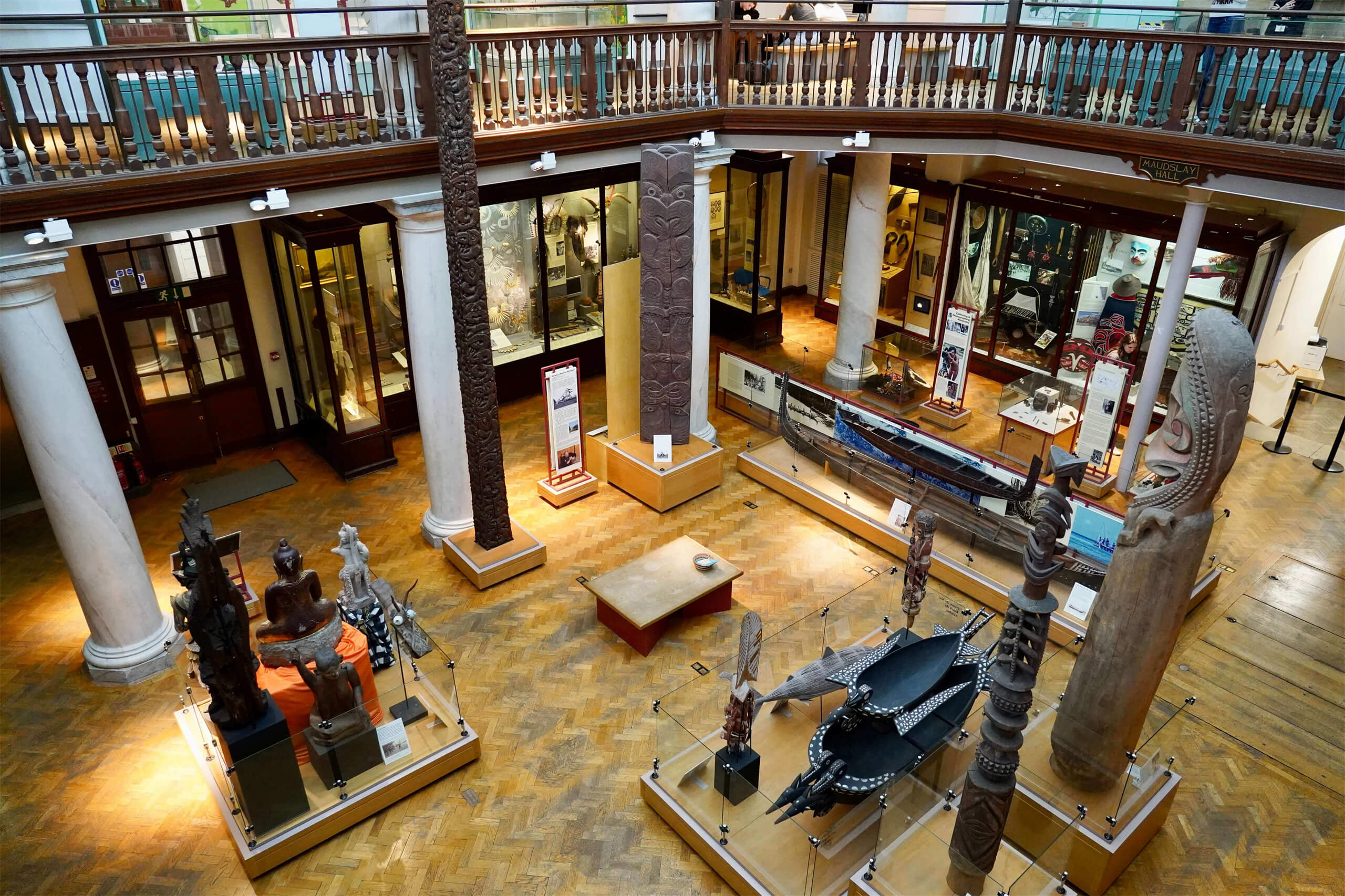
The Museum of Archaeology and Anthropology Cambridge (MAA) is a standout stop for any Cambridge walking tour, sitting on Downing Street close to several other University museums. Entry is free, and the galleries take you through human history and world cultures across huge timescales, from archaeology to living traditions and contemporary art. MAA has been collecting for nearly 140 years and is known for how it works today: many displays are shaped with community collaboration, so cultures can present their own stories rather than being spoken for. The museum also holds around one million artefacts and frames them as a conversation between past and present, including strong coverage of Indigenous life and art and modern voices that are often under-represented elsewhere. It’s the kind of museum that makes your Cambridge walk feel deeper than “nice buildings”, because it connects the city to the wider world. Fun fact: MAA describes itself as holding “One million artefacts” and telling “Two million years of human history” — basically, it’s a whole world museum hidden in plain sight in central Cambridge.

Museum of Archaeology and Anthropology Cambridge (MAA)

The Museum of Archaeology and Anthropology Cambridge (MAA) is a standout stop for any Cambridge walking tour, sitting on Downing Street close to several other University museums. Entry is free, and the galleries take you through human history and world cultures across huge timescales, from archaeology to living traditions and contemporary art. MAA has been collecting for nearly 140 years and is known for how it works today: many displays are shaped with community collaboration, so cultures can present their own stories rather than being spoken for. The museum also holds around one million artefacts and frames them as a conversation between past and present, including strong coverage of Indigenous life and art and modern voices that are often under-represented elsewhere. It’s the kind of museum that makes your Cambridge walk feel deeper than “nice buildings”, because it connects the city to the wider world. Fun fact: MAA describes itself as holding “One million artefacts” and telling “Two million years of human history” — basically, it’s a whole world museum hidden in plain sight in central Cambridge.

Museum of Archaeology and Anthropology Cambridge (MAA)
Fitzwilliam Museum Cambridge: Art, Antiquities & Conservation

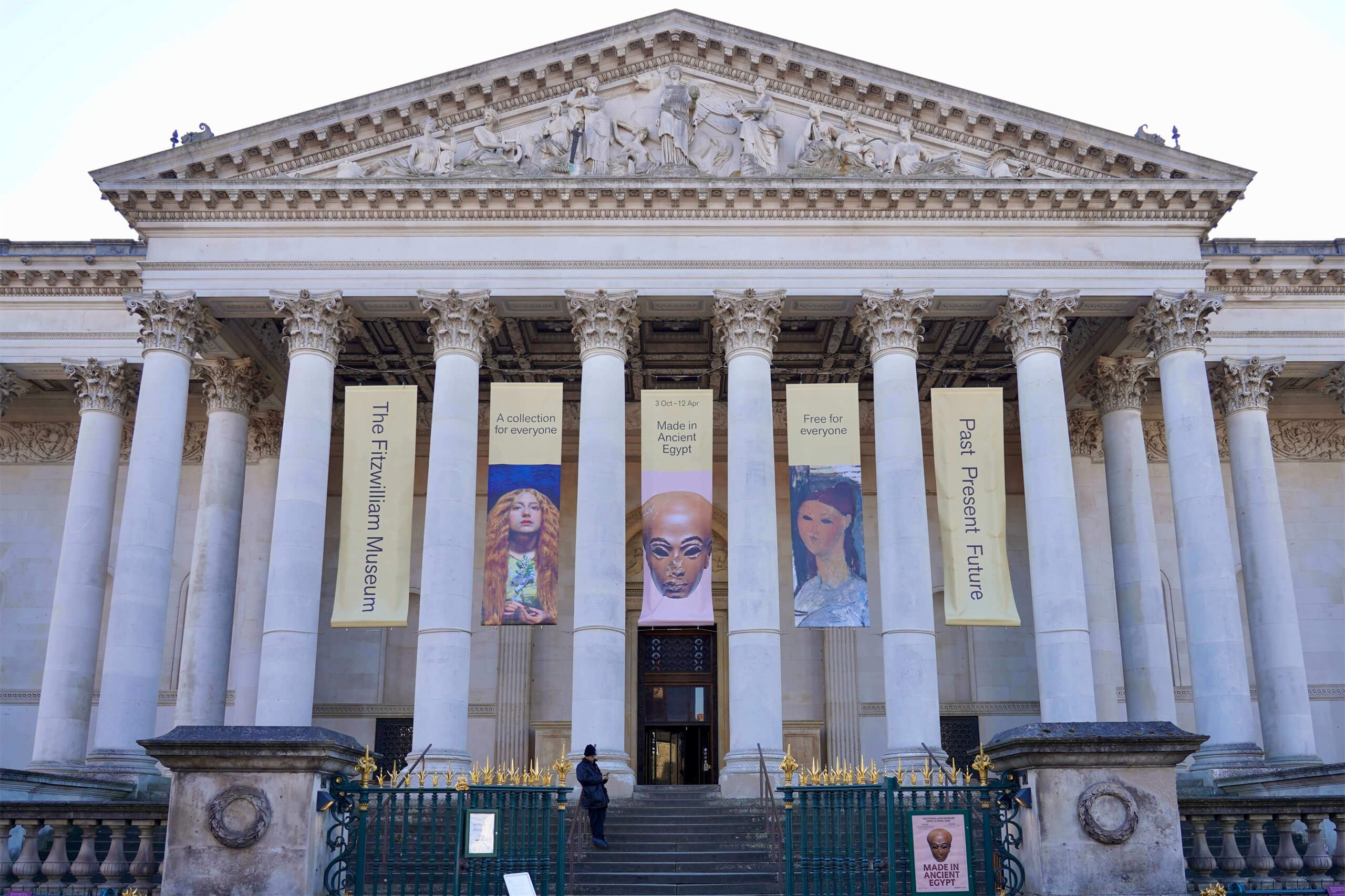
The Fitzwilliam Museum Cambridge is the city’s flagship art museum and a must-stop on any Cambridge walking tour, sitting just off Trumpington Street a few minutes from the historic centre. It was founded through the 1816 bequest of Richard Fitzwilliam, 7th Viscount Fitzwilliam of Merrion, who left the University his art collection, library, and funds to create the museum in his name.  The building’s grand Neoclassical façade sets the tone for what’s inside: world-class collections spanning ancient civilisations through Renaissance and modern art, with galleries that reward both quick visits and slow, detail-heavy browsing. The Fitz is also respected as a place where art and science meet: in 1976 it established the Hamilton Kerr Institute, a specialist centre for paintings conservation and postgraduate training, reinforcing the museum’s role as a serious research hub as well as a public attraction. Fun fact: General entry to the Fitzwilliam’s collections and displays is free, so it’s one of the best “high value, zero ticket” stops you can add to a Cambridge city walk.

Fitzwilliam Museum Cambridge: Art, Antiquities & Conservation

The Fitzwilliam Museum Cambridge is the city’s flagship art museum and a must-stop on any Cambridge walking tour, sitting just off Trumpington Street a few minutes from the historic centre. It was founded through the 1816 bequest of Richard Fitzwilliam, 7th Viscount Fitzwilliam of Merrion, who left the University his art collection, library, and funds to create the museum in his name.  The building’s grand Neoclassical façade sets the tone for what’s inside: world-class collections spanning ancient civilisations through Renaissance and modern art, with galleries that reward both quick visits and slow, detail-heavy browsing. The Fitz is also respected as a place where art and science meet: in 1976 it established the Hamilton Kerr Institute, a specialist centre for paintings conservation and postgraduate training, reinforcing the museum’s role as a serious research hub as well as a public attraction. Fun fact: General entry to the Fitzwilliam’s collections and displays is free, so it’s one of the best “high value, zero ticket” stops you can add to a Cambridge city walk.

Fitzwilliam Museum Cambridge: Art, Antiquities & Conservation
Newton’s Apple Tree Cambridge: Trinity College “Flower of Kent”

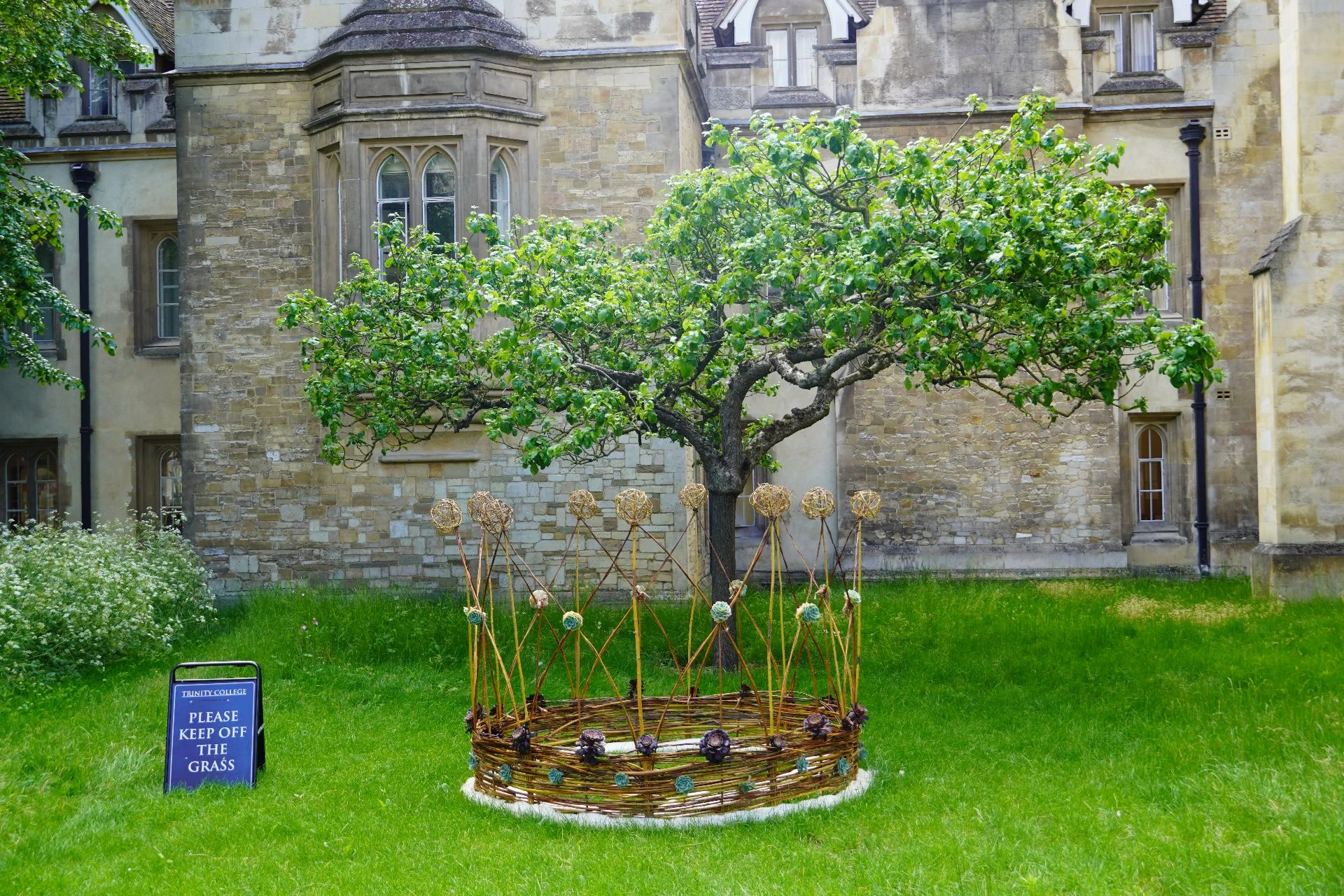
Newton’s Apple Tree in Cambridge is a quick, high-impact stop on a Cambridge walking tour, right outside Trinity College’s Great Gate on Trinity Street. The tree is a “Flower of Kent” apple and was grafted from the famous tree at Woolsthorpe Manor, Newton’s family home, which is the one linked to the gravity legend. Trinity’s Cambridge tree was planted in 1954 to honour Newton’s connection to the University and it has become a small but powerful landmark: a living symbol of scientific discovery in the middle of the city. It’s also an easy “bonus sight” to add when you’re already walking past Trinity, St John’s, and the main historic centre, so it fits naturally into most Cambridge city routes. Fun fact: Cambridge has more than one “Newton apple tree” story. The Cambridge University Botanic Garden had a Flower of Kent clone planted in 1954 too, but it was blown down in Storm Eunice (February 2022).

Newton’s Apple Tree Cambridge: Trinity College “Flower of Kent”

Newton’s Apple Tree in Cambridge is a quick, high-impact stop on a Cambridge walking tour, right outside Trinity College’s Great Gate on Trinity Street. The tree is a “Flower of Kent” apple and was grafted from the famous tree at Woolsthorpe Manor, Newton’s family home, which is the one linked to the gravity legend. Trinity’s Cambridge tree was planted in 1954 to honour Newton’s connection to the University and it has become a small but powerful landmark: a living symbol of scientific discovery in the middle of the city. It’s also an easy “bonus sight” to add when you’re already walking past Trinity, St John’s, and the main historic centre, so it fits naturally into most Cambridge city routes. Fun fact: Cambridge has more than one “Newton apple tree” story. The Cambridge University Botanic Garden had a Flower of Kent clone planted in 1954 too, but it was blown down in Storm Eunice (February 2022).

Newton’s Apple Tree Cambridge: Trinity College “Flower of Kent”
The Eagle Pub Cambridge: DNA Discovery & RAF Bar

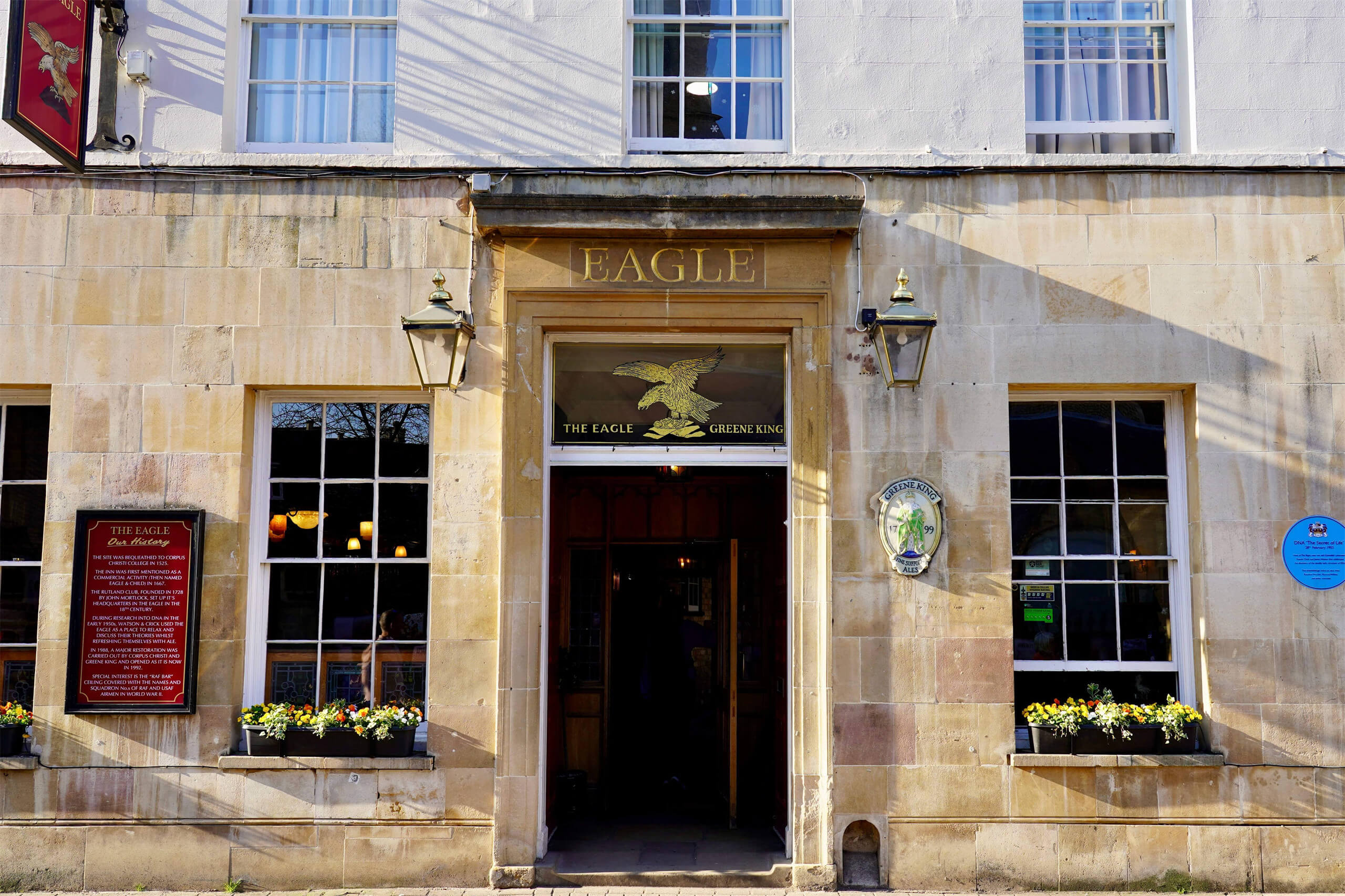
The Eagle Pub Cambridge is one of the most famous stops on a Cambridge walking tour, sitting on Bene’t Street in the historic city centre. It opened in 1667 and is widely cited as the second-oldest pub in Cambridge (after The Pickerel).  Inside, the pub is packed with stories that visitors can actually see. During World War II, Allied airmen left their names, squadron numbers, and doodles burned or written into the ceiling of what’s now known as the RAF Bar, and those markings are still preserved today.  The Eagle is also part of modern scientific folklore: on 28 February 1953, Francis Crick reportedly announced here that he and James Watson had “discovered the secret of life” after working out the structure of DNA. Fun fact: You can still order a house ale called “Eagle’s DNA” to toast that moment.

The Eagle Pub Cambridge: DNA Discovery & RAF Bar

The Eagle Pub Cambridge is one of the most famous stops on a Cambridge walking tour, sitting on Bene’t Street in the historic city centre. It opened in 1667 and is widely cited as the second-oldest pub in Cambridge (after The Pickerel).  Inside, the pub is packed with stories that visitors can actually see. During World War II, Allied airmen left their names, squadron numbers, and doodles burned or written into the ceiling of what’s now known as the RAF Bar, and those markings are still preserved today.  The Eagle is also part of modern scientific folklore: on 28 February 1953, Francis Crick reportedly announced here that he and James Watson had “discovered the secret of life” after working out the structure of DNA. Fun fact: You can still order a house ale called “Eagle’s DNA” to toast that moment.

The Eagle Pub Cambridge: DNA Discovery & RAF Bar
Corpus Clock Cambridge: Chronophage “Time-Eater”

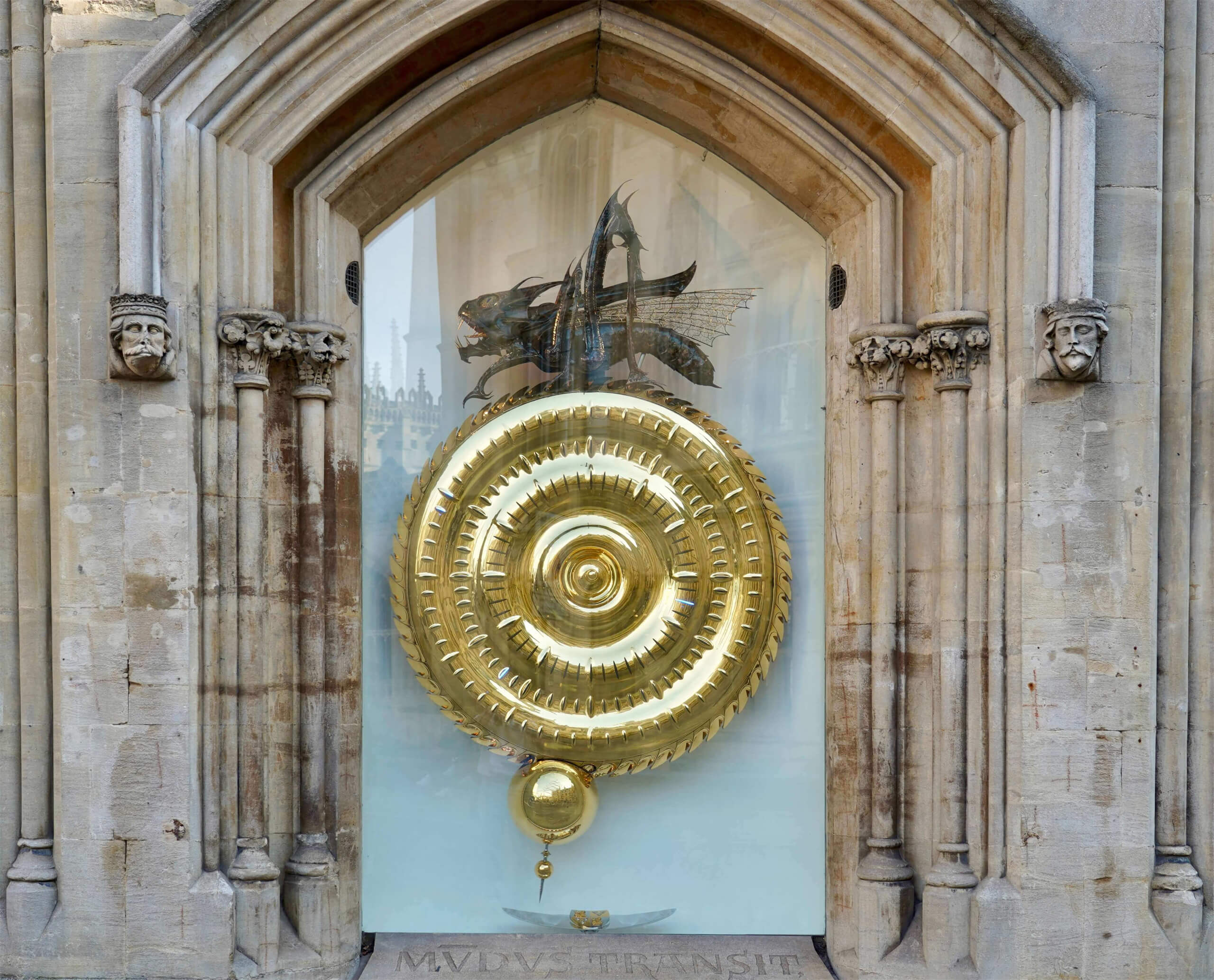
The Corpus Clock Cambridge is one of the city’s most eye-catching modern landmarks and an easy add-on for any Cambridge walking tour, sitting at street level outside Corpus Christi College at the corner of Bene’t Street and Trumpington Street. Conceived and funded by inventor Dr John C. Taylor, it was unveiled in 2008 by Stephen Hawking and quickly became a must-see stop in the city centre.  The clock’s face is deliberately unusual: instead of hands, it shows the time through backlit blue LEDs that “ripple” across a gold-plated disk in concentric rings.  Sitting on top is the famous Chronophage (“time-eater”), an insect-like mechanical escapement that appears to chew up each passing minute, turning a simple timepiece into a piece of public art that people actually stop and stare at. Fun fact: The Chronophage has a built-in “personality” — it can blink, and the mechanism is designed to behave in slightly irregular ways so time feels a bit unsettling, not perfectly smooth. 

Corpus Clock Cambridge: Chronophage “Time-Eater”

The Corpus Clock Cambridge is one of the city’s most eye-catching modern landmarks and an easy add-on for any Cambridge walking tour, sitting at street level outside Corpus Christi College at the corner of Bene’t Street and Trumpington Street. Conceived and funded by inventor Dr John C. Taylor, it was unveiled in 2008 by Stephen Hawking and quickly became a must-see stop in the city centre.  The clock’s face is deliberately unusual: instead of hands, it shows the time through backlit blue LEDs that “ripple” across a gold-plated disk in concentric rings.  Sitting on top is the famous Chronophage (“time-eater”), an insect-like mechanical escapement that appears to chew up each passing minute, turning a simple timepiece into a piece of public art that people actually stop and stare at. Fun fact: The Chronophage has a built-in “personality” — it can blink, and the mechanism is designed to behave in slightly irregular ways so time feels a bit unsettling, not perfectly smooth. 

Corpus Clock Cambridge: Chronophage “Time-Eater”
Pembroke College Cambridge: Wren Chapel (1665)

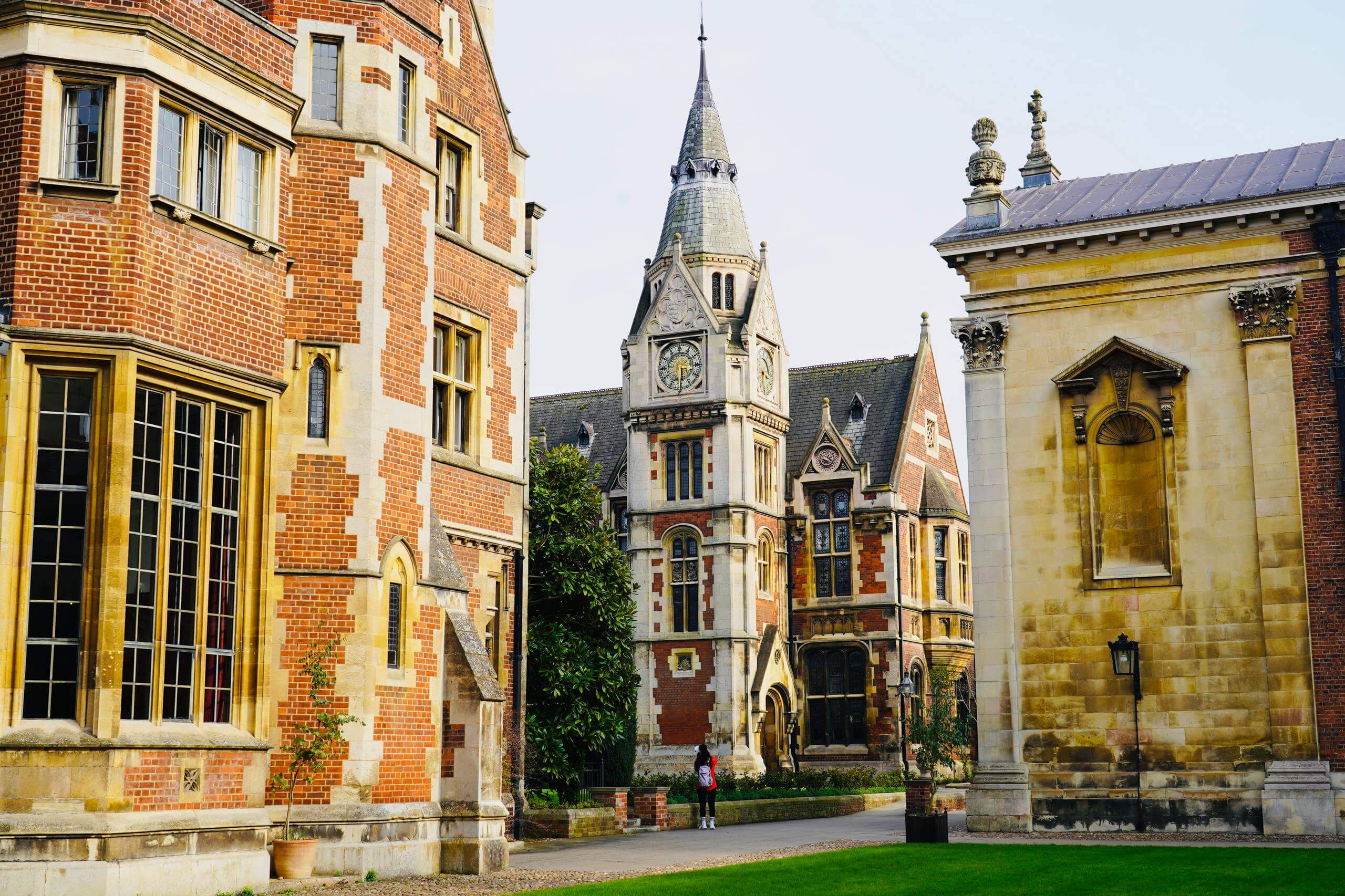
Pembroke College Cambridge is a key stop on a Cambridge walking tour, sitting on Trumpington Street close to the Fitzwilliam Museum and the city centre. The college was founded on Christmas Eve 1347 by Marie de St Pol, Countess of Pembroke, making it Cambridge’s third-oldest college.  Pembroke is best known to visitors for its chapel: the Pembroke College Chapel, consecrated in 1665, is described by the college as the first completed work of Sir Christopher Wren and the first Oxbridge chapel built in the classical style.  Inside, the atmosphere is calm and “jewel-like”, with a distinctive marble floor and fine interior detailing that feels very different from the medieval Gothic chapels nearby. Fun fact: The chapel organ was installed in 1708 and later restored to a Baroque configuration (including its double cases), which is why music in this space has such a distinctive character. 

Pembroke College Cambridge: Wren Chapel (1665)

Pembroke College Cambridge is a key stop on a Cambridge walking tour, sitting on Trumpington Street close to the Fitzwilliam Museum and the city centre. The college was founded on Christmas Eve 1347 by Marie de St Pol, Countess of Pembroke, making it Cambridge’s third-oldest college.  Pembroke is best known to visitors for its chapel: the Pembroke College Chapel, consecrated in 1665, is described by the college as the first completed work of Sir Christopher Wren and the first Oxbridge chapel built in the classical style.  Inside, the atmosphere is calm and “jewel-like”, with a distinctive marble floor and fine interior detailing that feels very different from the medieval Gothic chapels nearby. Fun fact: The chapel organ was installed in 1708 and later restored to a Baroque configuration (including its double cases), which is why music in this space has such a distinctive character. 

Pembroke College Cambridge: Wren Chapel (1665)
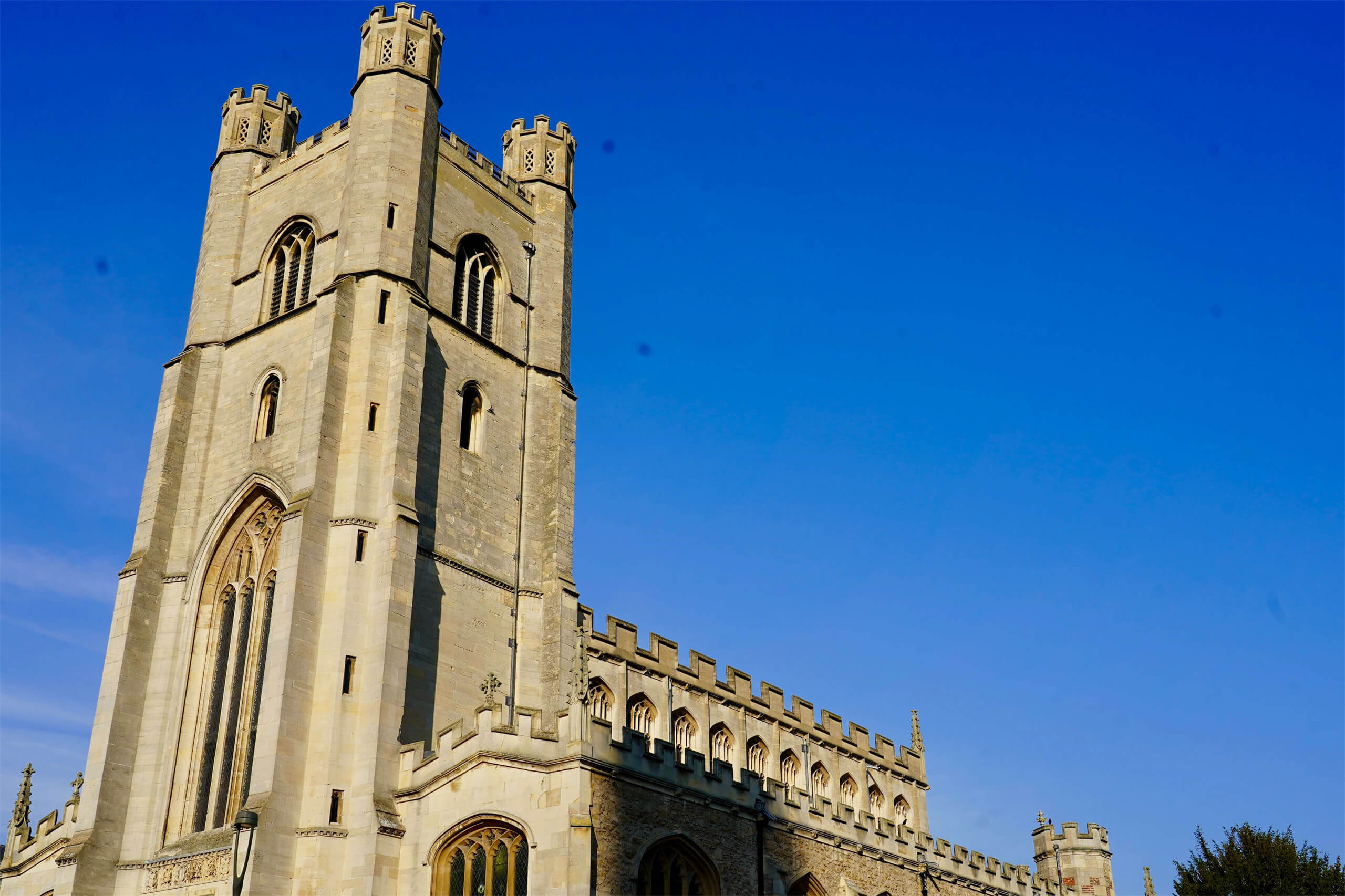
Great St Mary’s Church Cambridge: Tower Views & Cambridge Chimes

Great St Mary’s Church Cambridge sits right by Market Square and is both the University Church and a working parish church, so it naturally becomes a key stop on any Cambridge walking tour. One reason it’s famous beyond Cambridge is sound: Great St Mary’s is home to the original “Cambridge Quarters” (composed in 1793), the chime pattern later adopted at Westminster and widely known as the Westminster/Big Ben chimes.  For visitors, the must-do is the tower climb: 123 steps up to a 360° viewing platform with one of the best panoramic views of the colleges and rooftops in the city centre.  Inside, there’s more than architecture: the church hosts regular music, including free Friday lunchtime concerts, and it has a notable University organ (built 1698 by “Father” Bernard Smith) used for major University occasions. Fun fact: When you hear the quarter-hour “ding-dong” pattern in clocks around the world, you’re basically hearing a melody that started here in Cambridge. 

Great St Mary’s Church Cambridge: Tower Views & Cambridge Chimes

Great St Mary’s Church Cambridge sits right by Market Square and is both the University Church and a working parish church, so it naturally becomes a key stop on any Cambridge walking tour. One reason it’s famous beyond Cambridge is sound: Great St Mary’s is home to the original “Cambridge Quarters” (composed in 1793), the chime pattern later adopted at Westminster and widely known as the Westminster/Big Ben chimes.  For visitors, the must-do is the tower climb: 123 steps up to a 360° viewing platform with one of the best panoramic views of the colleges and rooftops in the city centre.  Inside, there’s more than architecture: the church hosts regular music, including free Friday lunchtime concerts, and it has a notable University organ (built 1698 by “Father” Bernard Smith) used for major University occasions. Fun fact: When you hear the quarter-hour “ding-dong” pattern in clocks around the world, you’re basically hearing a melody that started here in Cambridge. 

Great St Mary’s Church Cambridge: Tower Views & Cambridge Chimes
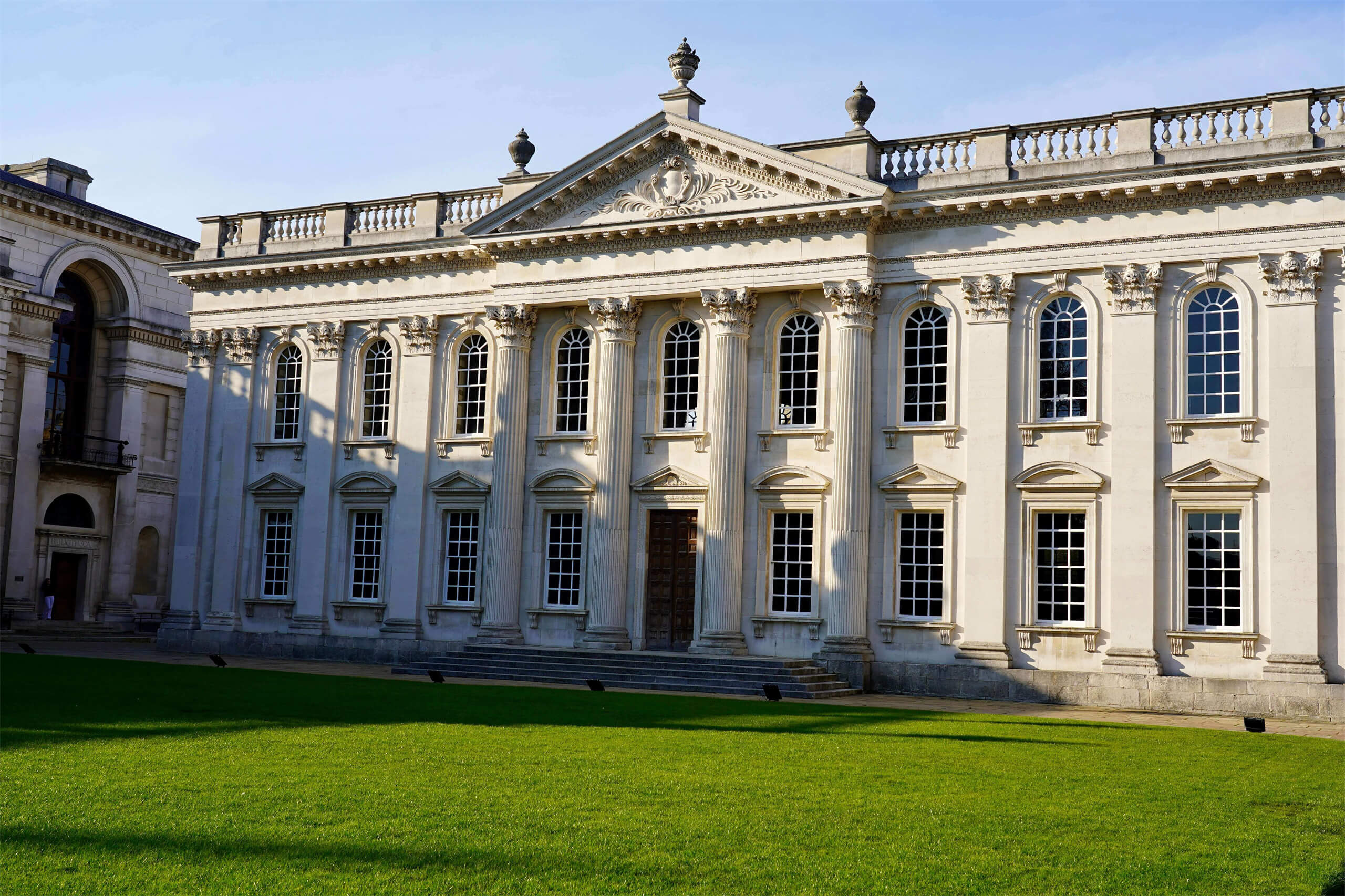
Senate House Cambridge: Graduation Hall (1730)

The Senate House Cambridge is the University’s main ceremonial hall and one of the most iconic buildings you’ll pass on a Cambridge walking tour, sitting on King’s Parade beside Great St Mary’s and the Old Schools. Built between 1722 and 1730 and completed in 1730, it was designed by architect James Gibbs in a grand Neoclassical style that instantly signals “serious University prestige.”  Today it’s best known as the place where Cambridge holds its degree congregations (graduation ceremonies), with students processing in academic dress and degrees conferred in a tradition that still runs through formal University procedure.  Inside, details like the ornate plaster ceiling underline the whole point of the building: this is the stage set for Cambridge ritual, not just another pretty facade. Fun fact: Cambridge prank culture is real. In 1958, students famously hoisted a car onto the Senate House roof, and it made national headlines. 

Senate House Cambridge: Graduation Hall (1730)

The Senate House Cambridge is the University’s main ceremonial hall and one of the most iconic buildings you’ll pass on a Cambridge walking tour, sitting on King’s Parade beside Great St Mary’s and the Old Schools. Built between 1722 and 1730 and completed in 1730, it was designed by architect James Gibbs in a grand Neoclassical style that instantly signals “serious University prestige.”  Today it’s best known as the place where Cambridge holds its degree congregations (graduation ceremonies), with students processing in academic dress and degrees conferred in a tradition that still runs through formal University procedure.  Inside, details like the ornate plaster ceiling underline the whole point of the building: this is the stage set for Cambridge ritual, not just another pretty facade. Fun fact: Cambridge prank culture is real. In 1958, students famously hoisted a car onto the Senate House roof, and it made national headlines. 

Senate House Cambridge: Graduation Hall (1730)
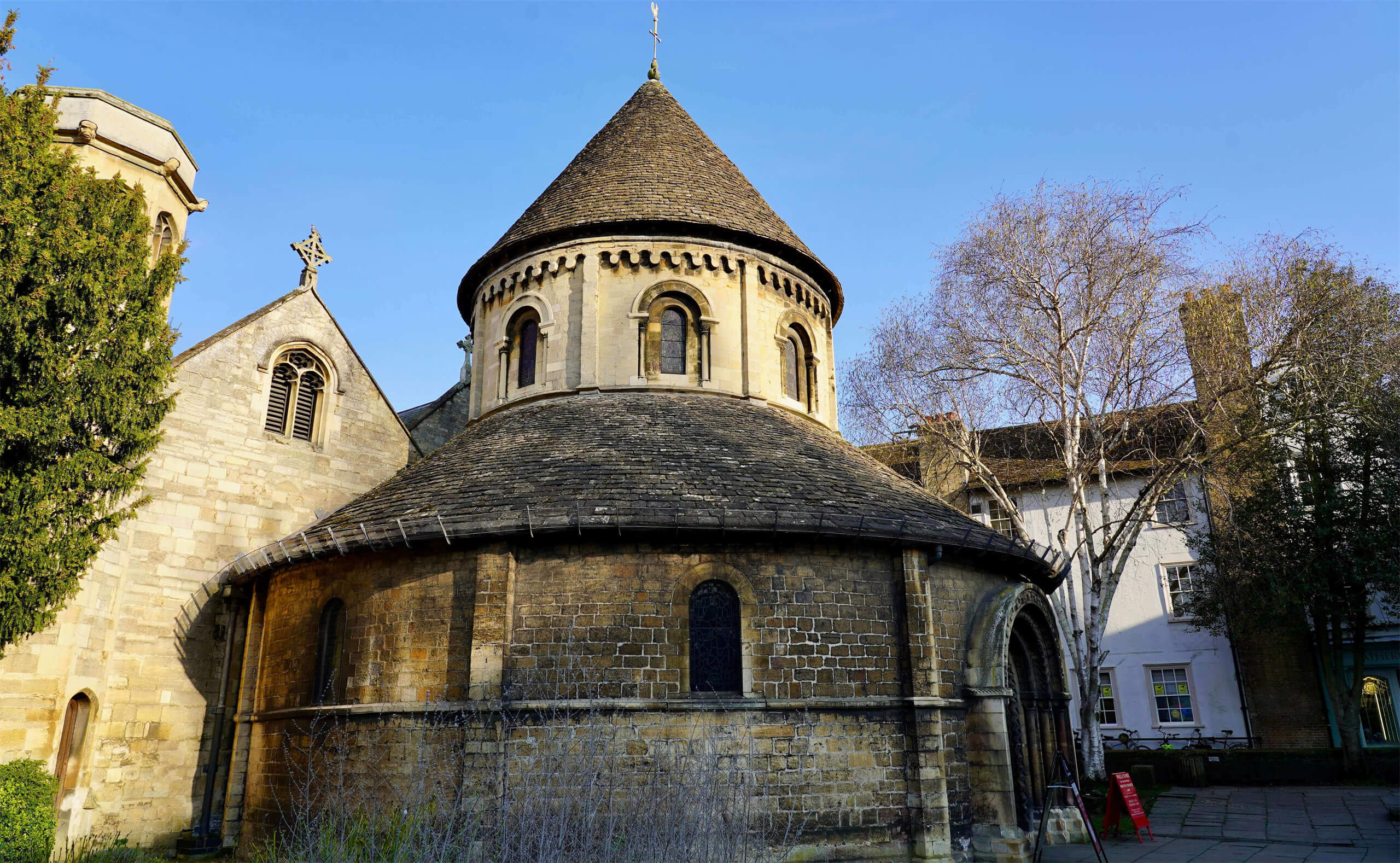
Round Church Cambridge: Church of the Holy Sepulchre (c.1130)

The Round Church Cambridge (officially the Church of the Holy Sepulchre) is one of the most distinctive landmarks on any Cambridge walking tour, sitting on Bridge Street near the city centre. Built around c.1130, it predates most of the University and is famed for its rare circular design, inspired by the Church of the Holy Sepulchre in Jerusalem.  Step inside and the architecture does the talking: a circular nave, chunky Norman columns, and classic zigzag (chevron) carving that gives you a real “early medieval Cambridge” moment in just a few minutes.  Today it also operates as the Round Church Visitor Centre, with exhibits and an introductory film that many people use as a smart “start here” stop before exploring the colleges. Fun fact: It’s one of only four surviving medieval round churches in England, which is why locals still just call it “the Round Church” like it’s the only one that matters.

Round Church Cambridge: Church of the Holy Sepulchre (c.1130)

The Round Church Cambridge (officially the Church of the Holy Sepulchre) is one of the most distinctive landmarks on any Cambridge walking tour, sitting on Bridge Street near the city centre. Built around c.1130, it predates most of the University and is famed for its rare circular design, inspired by the Church of the Holy Sepulchre in Jerusalem.  Step inside and the architecture does the talking: a circular nave, chunky Norman columns, and classic zigzag (chevron) carving that gives you a real “early medieval Cambridge” moment in just a few minutes.  Today it also operates as the Round Church Visitor Centre, with exhibits and an introductory film that many people use as a smart “start here” stop before exploring the colleges. Fun fact: It’s one of only four surviving medieval round churches in England, which is why locals still just call it “the Round Church” like it’s the only one that matters.

Round Church Cambridge: Church of the Holy Sepulchre (c.1130)
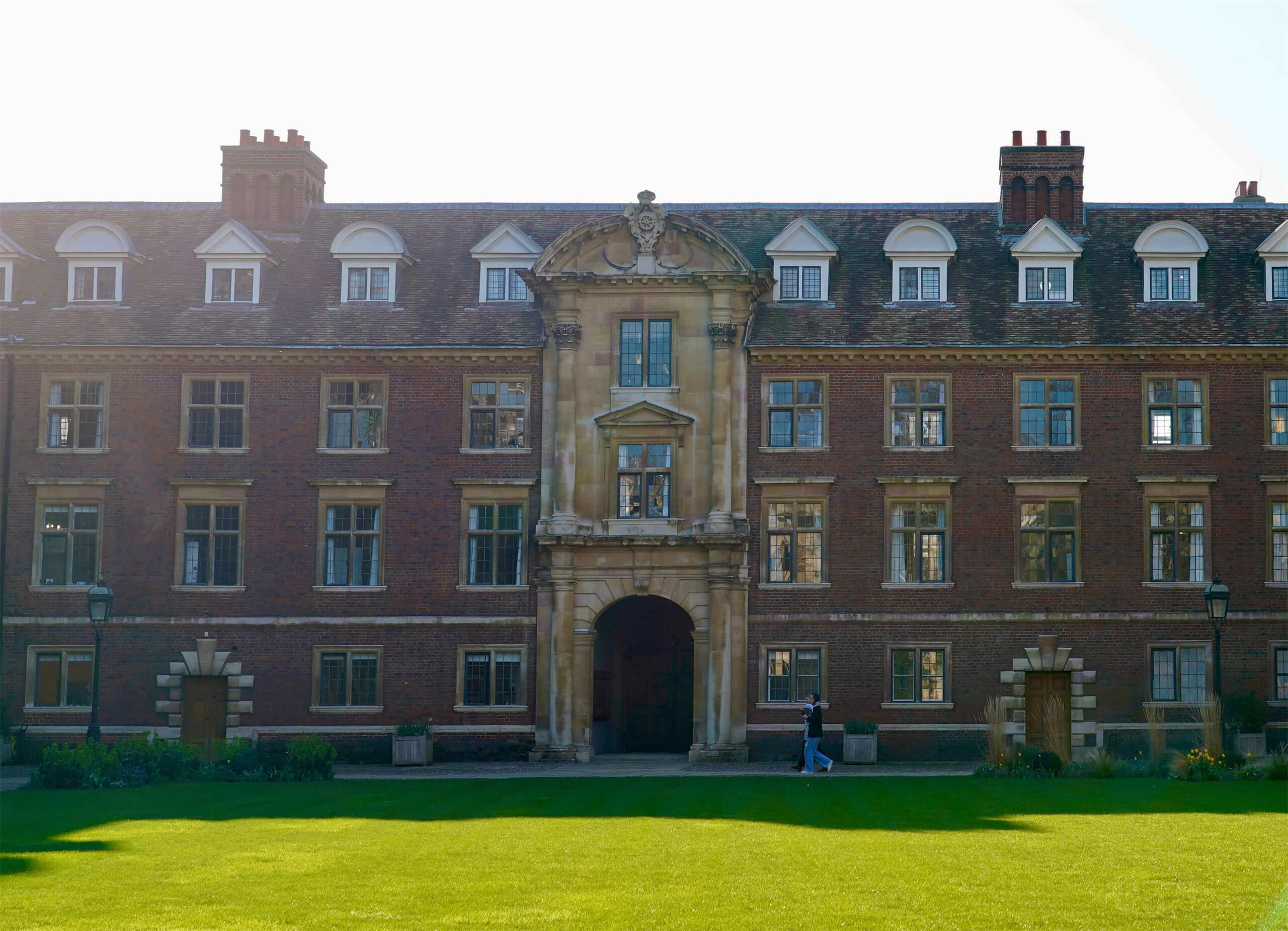
St Catharine’s College Cambridge: Three-Sided Court (1473)

St Catharine’s College Cambridge (locals call it “Catz”) is a great stop on a Cambridge walking tour because it sits right in the historic centre on Trumpington Street, close to King’s, Corpus and the main city sights. It was founded in 1473 by Robert Woodlark, Provost of King’s College, originally as Katharine Hall.  What makes St Catharine’s visually distinctive is its open, three-sided Main Court, rebuilt mainly between 1675 and 1757 and noted as one of only six three-sided courts across Oxbridge.  The layout gives it an unusually “open” feel compared with closed quadrangles, and it’s one of those places where you can feel Cambridge’s architectural timeline in minutes: late-medieval foundations, then confident 17th–18th century rebuilding, still used daily by a modern academic community. Fun fact: Cambridge students call it “Catz” so often that you’ll hear it on walking tours more than the full name.

St Catharine’s College Cambridge: Three-Sided Court (1473)

St Catharine’s College Cambridge (locals call it “Catz”) is a great stop on a Cambridge walking tour because it sits right in the historic centre on Trumpington Street, close to King’s, Corpus and the main city sights. It was founded in 1473 by Robert Woodlark, Provost of King’s College, originally as Katharine Hall.  What makes St Catharine’s visually distinctive is its open, three-sided Main Court, rebuilt mainly between 1675 and 1757 and noted as one of only six three-sided courts across Oxbridge.  The layout gives it an unusually “open” feel compared with closed quadrangles, and it’s one of those places where you can feel Cambridge’s architectural timeline in minutes: late-medieval foundations, then confident 17th–18th century rebuilding, still used daily by a modern academic community. Fun fact: Cambridge students call it “Catz” so often that you’ll hear it on walking tours more than the full name.

St Catharine’s College Cambridge: Three-Sided Court (1473)
Gonville and Caius College Cambridge: Gates of Humility, Virtue & Honour

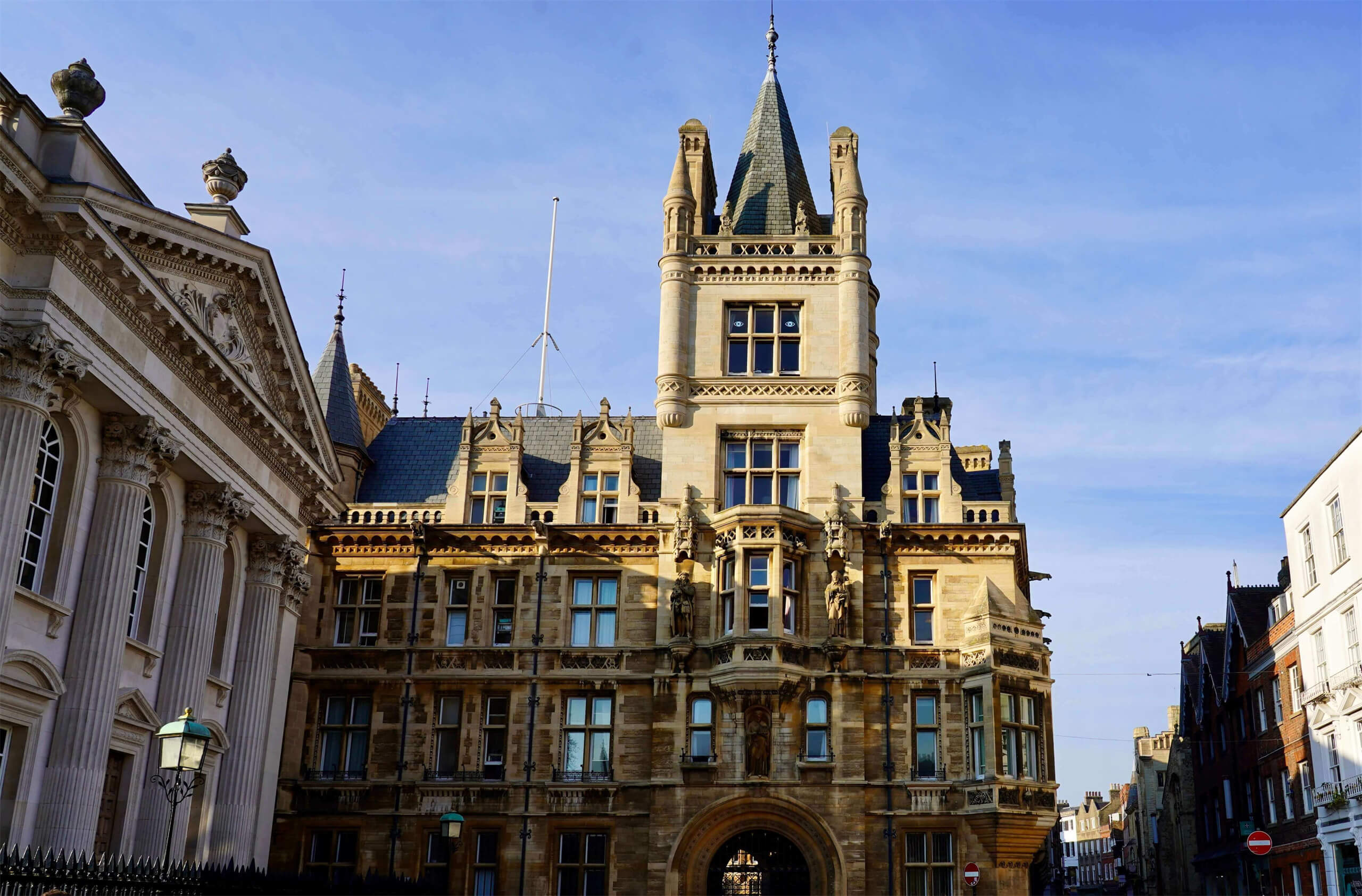
Gonville and Caius College is a highlight on any Cambridge walking tour, set right in the historic centre near Senate House and King’s Parade. Founded in 1348 and refounded in 1557 by physician John Caius, the college is best known for its three symbolic gates: the Gate of Humility (students enter at matriculation), the Gate of Virtue (daily academic life), and the Gate of Honour, which graduates pass through on their way to degree ceremonies at the Senate House. The gates turn an abstract idea into architecture, making Caius one of the most conceptually interesting colleges to explain on foot. Today, Caius is also one of Cambridge’s largest colleges and one of its most academically distinguished, with 15 Nobel laureates among its alumni, reflecting a long tradition of scientific and intellectual leadership. Fun fact: Among Caius alumni are Francis Crick (DNA), James Chadwick (the neutron), economist Joseph Stiglitz, Stephen Hawking, philosopher Alain de Botton, and comedian Jimmy Carr — proof that the Gate of Honour doesn’t lead to just one kind of success.

Gonville and Caius College Cambridge: Gates of Humility, Virtue & Honour

Gonville and Caius College is a highlight on any Cambridge walking tour, set right in the historic centre near Senate House and King’s Parade. Founded in 1348 and refounded in 1557 by physician John Caius, the college is best known for its three symbolic gates: the Gate of Humility (students enter at matriculation), the Gate of Virtue (daily academic life), and the Gate of Honour, which graduates pass through on their way to degree ceremonies at the Senate House. The gates turn an abstract idea into architecture, making Caius one of the most conceptually interesting colleges to explain on foot. Today, Caius is also one of Cambridge’s largest colleges and one of its most academically distinguished, with 15 Nobel laureates among its alumni, reflecting a long tradition of scientific and intellectual leadership. Fun fact: Among Caius alumni are Francis Crick (DNA), James Chadwick (the neutron), economist Joseph Stiglitz, Stephen Hawking, philosopher Alain de Botton, and comedian Jimmy Carr — proof that the Gate of Honour doesn’t lead to just one kind of success.

Gonville and Caius College Cambridge: Gates of Humility, Virtue & Honour
Mathematical Bridge Cambridge: Queens’ College Wooden Bridge

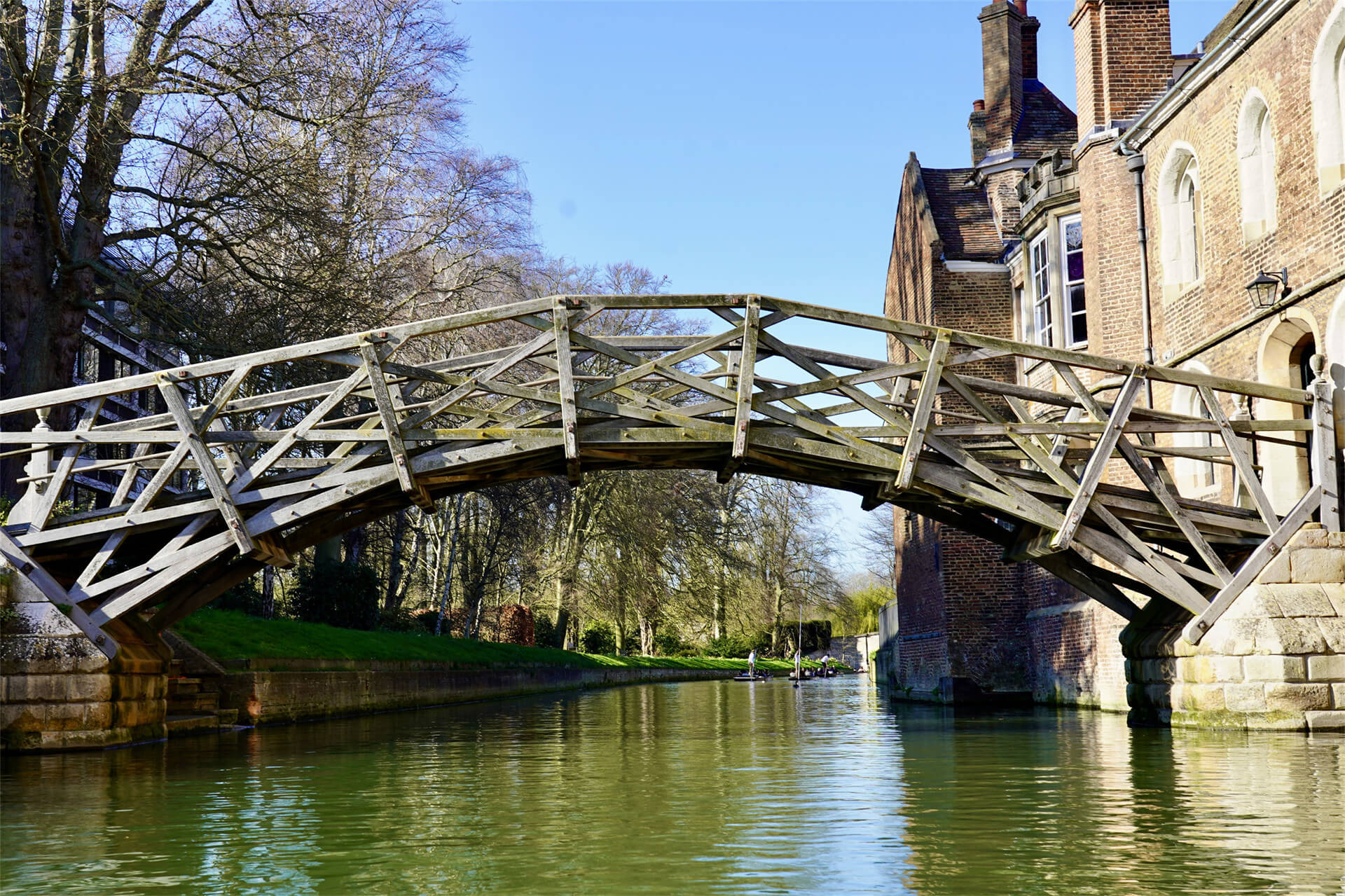
The Mathematical Bridge in Cambridge is one of the best quick photo-stops on a Cambridge walking tour, sitting at Queens’ College beside the River Cam near Silver Street. The bridge was designed by William Etheridge and built in 1749 by James Essex, using a clever tangent-and-radial truss system that creates a smooth arch from straight timbers.  It has been rebuilt over time (including 1866 and 1905), but the shape and engineering logic stayed the same, which is why it still feels like an 18th-century design icon even today.  On a walking route, it’s a great “Cambridge in one glance” moment: classic college buildings, river reflections, and a bridge that is genuinely interesting even if you’re not an engineering person. Fun fact: The famous story that Newton built it without bolts is impossible. Newton died in 1727, decades before the bridge was constructed. 

Mathematical Bridge Cambridge: Queens’ College Wooden Bridge

The Mathematical Bridge in Cambridge is one of the best quick photo-stops on a Cambridge walking tour, sitting at Queens’ College beside the River Cam near Silver Street. The bridge was designed by William Etheridge and built in 1749 by James Essex, using a clever tangent-and-radial truss system that creates a smooth arch from straight timbers.  It has been rebuilt over time (including 1866 and 1905), but the shape and engineering logic stayed the same, which is why it still feels like an 18th-century design icon even today.  On a walking route, it’s a great “Cambridge in one glance” moment: classic college buildings, river reflections, and a bridge that is genuinely interesting even if you’re not an engineering person. Fun fact: The famous story that Newton built it without bolts is impossible. Newton died in 1727, decades before the bridge was constructed. 

Mathematical Bridge Cambridge: Queens’ College Wooden Bridge
Cambridge Market Square: Historic City Centre Market

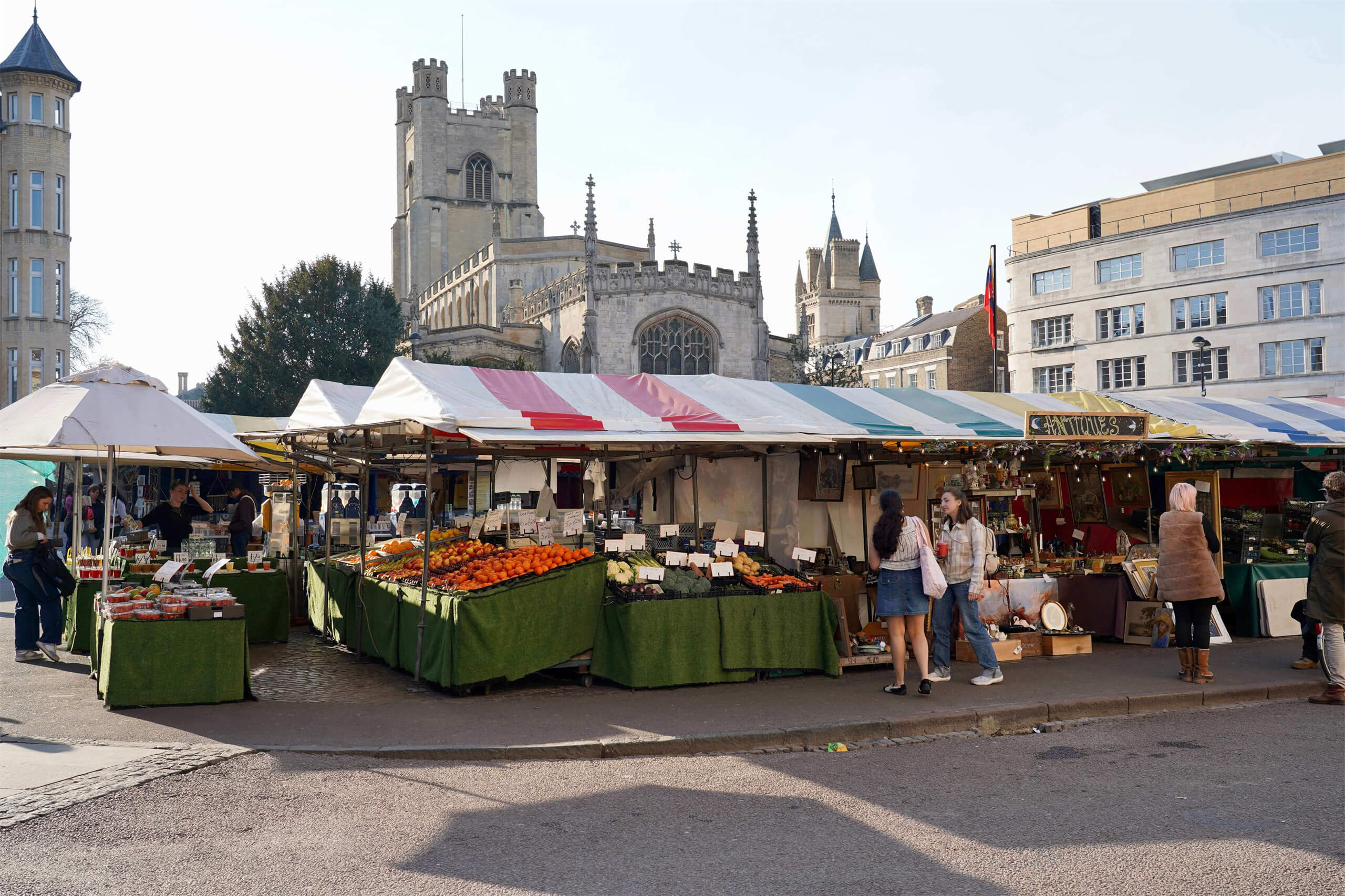
Cambridge Market Square is the natural centre-point on a Cambridge walking tour, sitting between Great St Mary’s Church, King’s Parade and the old streets of the city centre. Markets have operated here since the Middle Ages and the square grew into Cambridge’s main hub for trade and everyday life, with goods arriving from the surrounding countryside and along the river routes that connected Cambridge to wider markets. Over time it became a place not just for buying and selling, but for announcements, debate, and public order, which is why so many historic Cambridge stories end up circling back here. Today, the market still runs regularly with stalls selling fresh food, coffee, local crafts, souvenirs and street snacks, making it one of the best “feel the city” stops on foot; especially if you want a break between colleges without leaving the historic core. Fun fact: The market sits under the shadow of Great St Mary’s, and that pairing is not random: medieval market squares were often anchored by the most important church, so trade and civic life literally happened at the church’s doorstep.

Cambridge Market Square: Historic City Centre Market

Cambridge Market Square is the natural centre-point on a Cambridge walking tour, sitting between Great St Mary’s Church, King’s Parade and the old streets of the city centre. Markets have operated here since the Middle Ages and the square grew into Cambridge’s main hub for trade and everyday life, with goods arriving from the surrounding countryside and along the river routes that connected Cambridge to wider markets. Over time it became a place not just for buying and selling, but for announcements, debate, and public order, which is why so many historic Cambridge stories end up circling back here. Today, the market still runs regularly with stalls selling fresh food, coffee, local crafts, souvenirs and street snacks, making it one of the best “feel the city” stops on foot; especially if you want a break between colleges without leaving the historic core. Fun fact: The market sits under the shadow of Great St Mary’s, and that pairing is not random: medieval market squares were often anchored by the most important church, so trade and civic life literally happened at the church’s doorstep.

Cambridge Market Square: Historic City Centre Market

Scan

Whatsapp

Scan

WeChat
小红书ICO
Xiaohongshu
Top