If you search online for how to visit Cambridge, you'll quickly find countless lists of attractions.
King's College.
Trinity College.
The Bridge of Sighs.
The Mathematical Bridge.
The River Cam.
While all of these places deserve their reputation, there's one important detail that many travel guides overlook: Cambridge is not a city designed to be experienced as a collection of landmarks.
It's designed to be understood as a living university.
That distinction changes almost everything about how visitors experience the city.
Cambridge Was Never Built for Tourists
Unlike many famous European destinations, Cambridge did not develop around tourism.
It grew around education.
For more than 800 years, colleges were established one by one, each with its own traditions, governance, architecture, and academic identity. Streets were created to connect colleges rather than entertain visitors, and many of today's famous courtyards, libraries, and gardens were built for students and scholars—not sightseeing.
This explains why first-time visitors sometimes leave Cambridge feeling that they've seen everything, yet somehow understood very little.
The buildings are impressive.
The atmosphere is unforgettable.
But without understanding why everything exists, the city can feel like a beautiful puzzle with missing pieces.
The Difference Between Looking and Understanding
Many visitors spend hours walking through Cambridge's historic centre.
They admire King's College Chapel, pause outside Trinity College, photograph St John's College, and cross the city's famous bridges.
By the end of the afternoon, they've visited nearly every location recommended online.
Yet one question often remains unanswered:
"What actually makes Cambridge different from every other university?"
The answer isn't visible in the architecture alone.
It lies in the collegiate system, the supervision model, centuries of academic traditions, and the remarkable way education continues to shape everyday life across the city.
That's why so many visitors choose to begin their visit with a Private Cambridge Student-Led Walking Tour . Rather than simply identifying buildings, the experience connects them together, explaining how the colleges relate to one another and why Cambridge continues to influence research, science, literature, politics, and innovation around the world.
The River Explains Cambridge in a Different Way
One of the most remarkable things about Cambridge is that the city tells two different stories.
The streets tell one.
The river tells another.
Walking through the city introduces visitors to college entrances, historic marketplaces, chapels, and hidden lanes. The River Cam, however, reveals something completely different.
From the water, the famous College Backs stretch quietly behind the colleges, creating views that have remained largely unchanged for generations.
King's College, Clare College, Trinity Hall, Trinity College, and St John's College appear connected by landscape rather than roads.
This perspective helps explain why punting has become such an enduring Cambridge tradition.
A Shared Cambridge Punting Tour allows visitors to experience these iconic riverside views alongside travellers from around the world, while a Private Cambridge Punting Tour offers a more personal experience for families, couples, and small groups who prefer to explore at their own pace.
Neither experience is simply about sightseeing.
Both reveal a side of Cambridge that cannot be appreciated from street level.
Why Families Experience Cambridge Differently
Educational travel has evolved significantly in recent years.
Families are no longer visiting Cambridge simply to admire historic architecture. Increasingly, they want their children to understand what studying here actually feels like.
Parents ask questions about college life.
Students ask about admissions.
Teenagers wonder what a normal day at Cambridge looks like.
These conversations have become just as important as visiting famous landmarks.
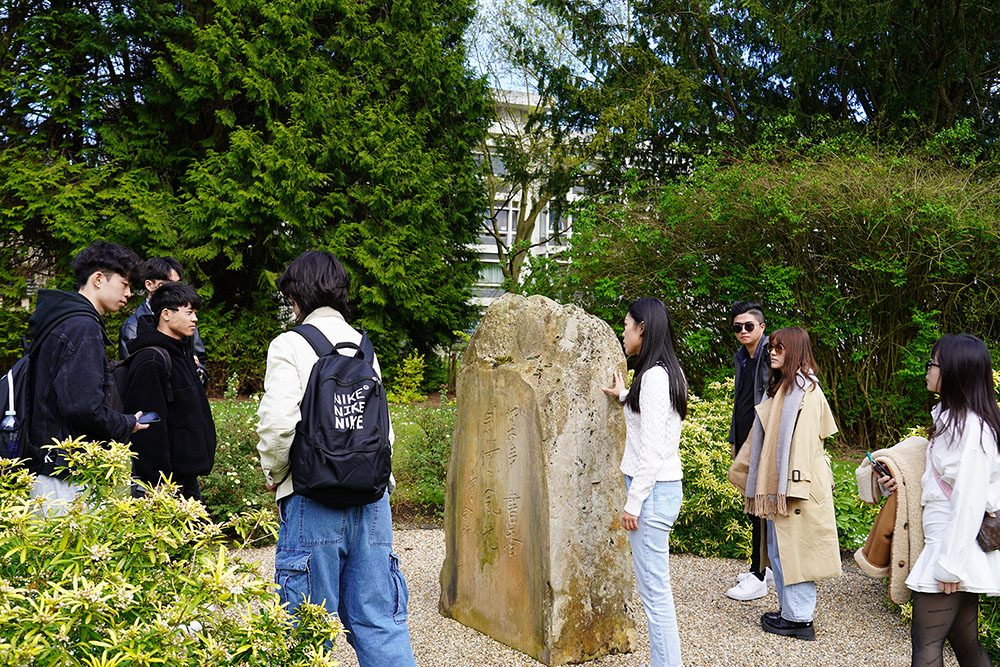
For this reason, many education-focused visitors choose the Private Cambridge Student-Led Walking Tour. Hearing directly from current or recent Cambridge students offers something guidebooks cannot provide: authentic insight into academic life, college traditions, student experiences, and the realities of studying at one of the world's leading universities.
It's not unusual for families to say that these conversations become the highlight of their entire visit.
Cambridge Rewards Curiosity
Some destinations are designed to impress immediately.
Cambridge works differently.
The more questions visitors ask, the more rewarding the city becomes.
Why does each college have its own identity?
Why are some courtyards open while others remain private?
Why do bicycles outnumber cars?
Why do students wear academic gowns on certain evenings?
Each answer reveals another layer of Cambridge that many visitors never discover on their own.
Perhaps that's why so many people return.
Not because they failed to see enough during their first visit.
But because they realised Cambridge isn't a city that can be fully appreciated in a single afternoon.
It's a place where every visit reveals something new.
And in a world where information is available everywhere, places that continue to inspire genuine curiosity have become more valuable than ever.
Written by the local team at We Are Cambridge, offering authentic experiences through our 90-Minute Cambridge Walking Tour, 2.5-Hour Student-Led Cambridge Tour, Shared Cambridge Punting Tour, and Private Cambridge Punting Tour.



![[slide:title]](/static/upload/image/20260701/1782845817960741.webp "[slide:title]")



 Book Shared Punting