How to Explore Cambridge for the First Time: Why Seeing the Bigger Picture Matters
Cambridge looks compact on a map. Most of its famous university landmarks sit within a relatively small historic centre, and it is easy to assume that a few hours of walking will reveal everything.
In reality, Cambridge is more complicated—and far more interesting.
There is no single Cambridge University campus, no main university entrance and no clear boundary separating academic life from the rest of the city. Instead, colleges, churches, libraries, shops, museums, residential streets and university departments have developed alongside one another for more than 800 years.
This unusual structure is one of the reasons Cambridge is so rewarding to explore. It is also why first-time visitors can easily walk past historically important places without understanding how they connect.
One of the most effective ways to begin a Cambridge visit is therefore to establish the bigger picture first. A panoramic journey through the city, followed by exploration on foot and from the River Cam, reveals three very different versions of Cambridge—and helps explain how they fit together.
Why Cambridge Can Be Confusing for First-Time Visitors
Many universities around the world are built around a clearly defined campus. Cambridge is different.
The University was founded in the early thirteenth century and developed gradually within an existing town. Individual colleges were established at different periods, acquired land independently and constructed their own chapels, dining halls, libraries, accommodation and gardens.
As the University expanded, academic buildings appeared throughout the city rather than inside one enclosed area.
That history is still visible today.
Walk through central Cambridge and you can move from a shopping street to a medieval college entrance within minutes. Continue around the corner and you may find a university building, a historic church, a café filled with students and then another college.
For residents and students, this mixture feels completely normal. For visitors, however, it can make Cambridge difficult to interpret.
Start by Understanding the Shape of the City
An open-top sightseeing bus provides something that walking alone cannot easily offer: perspective.
From the upper deck, visitors can observe how the historic centre connects with the wider city and how Cambridge's architecture changes as the route moves between different districts.
Historic college buildings sit beside later university developments. Medieval streets lead towards modern academic areas. Residential neighbourhoods, museums, green spaces and commercial districts become part of the same picture.
This wider view is particularly useful at the beginning of a visit because it provides geographical context.
Instead of immediately trying to remember dozens of college names, visitors can first understand the overall structure of Cambridge. Once that mental map has been established, exploring individual areas becomes considerably easier.
But Cambridge Cannot Be Fully Understood From a Bus
The panoramic view is an introduction rather than the complete experience.
Many of Cambridge's most important details exist at pedestrian level.
College entrances are often relatively discreet. Historic lanes are too narrow for large vehicles. Architectural details can be hidden above doorways or behind walls. Some of the University's most interesting stories relate to spaces that appear surprisingly ordinary until someone explains their significance.
This is where walking becomes essential.
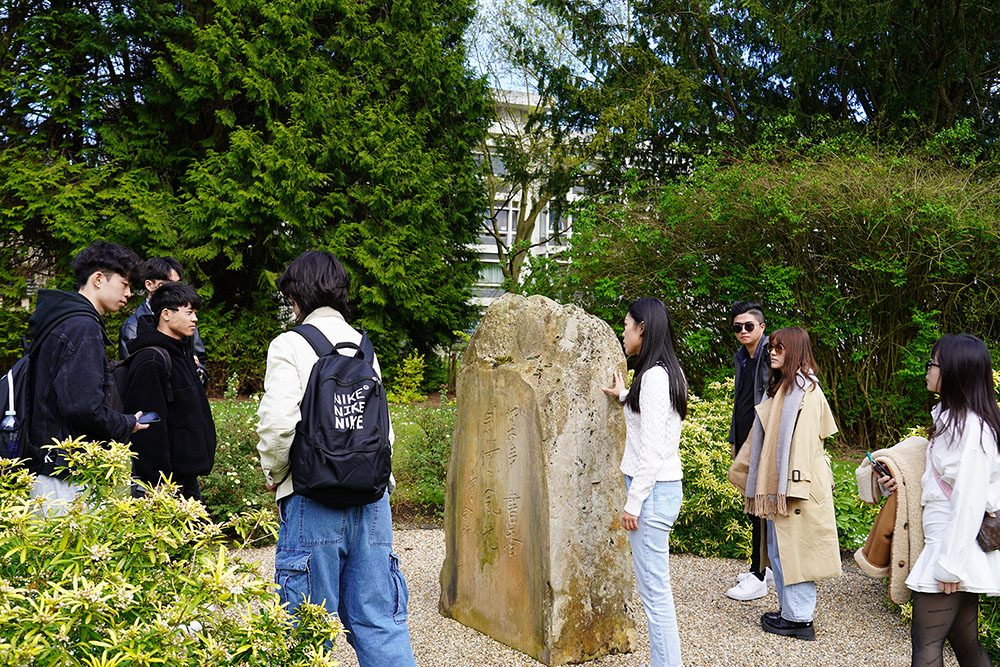
A 90-Minute Shared Cambridge Walking Tour allows visitors to move through the historic university quarter while understanding how the colleges, streets and academic institutions developed together.
Rather than simply identifying landmarks, the experience provides context: how the collegiate system works, why Cambridge University has no conventional campus, how individual colleges differ and why centuries-old buildings continue to play an active role in university life.
For families, private groups or visitors with particular interests, the 90-Minute Private Cambridge Walking Tour offers greater flexibility. Discussions can focus more closely on architecture, university history, scientific discoveries, literature, local culture or the development of Cambridge itself.
Look Behind the College Walls
One of the most common mistakes visitors make is judging a Cambridge college entirely by what they can see from the street.
In many cases, the public façade represents only a small part of the institution.
Behind a single gateway may be several historic courts, gardens, accommodation, a chapel, dining facilities and a library. Some colleges extend considerable distances away from the main street, while others reach towards the River Cam.
This explains why Cambridge often feels smaller than expected when visitors first arrive.
The city reveals itself gradually.
A building that appears relatively modest from one street may open into an enormous sequence of courts. A narrow lane may lead towards one of the University's most significant historical sites. A stone wall may conceal acres of landscaped college grounds.
Understanding Cambridge therefore requires curiosity about what exists beyond the obvious view.
Then See the University From the River
After seeing Cambridge from above and exploring it at street level, the River Cam introduces another perspective entirely.
The famous College Backs reveal the rear landscapes of several historic colleges, where lawns, gardens, bridges and university architecture meet the water.
This is one reason the Shared Cambridge Punting Tour remains such an important Cambridge experience. The river does not simply provide attractive scenery; it helps visitors understand the physical relationship between colleges that can appear disconnected when viewed from the streets.
As the punt travels along the River Cam, professional commentary explains the colleges, bridges and architectural features along the route, providing historical context for the landscape.
For couples, families and private groups, the Private Cambridge Punting Tour provides the same riverside perspective with the additional privacy of an individual punt.
Walking reveals the front of Cambridge. Punting reveals much of what exists behind it.
Together, they provide a far more complete understanding of the city.
Cambridge Is Still a Working University
Another reason Cambridge should not be approached simply as a collection of tourist attractions is that its historic buildings remain in active use.
The students cycling through the city are travelling between lectures, libraries, laboratories and colleges. Historic dining halls continue to host college meals and Formal Halls. Chapels remain active places of worship and music. Libraries housed within centuries-old buildings continue to support modern scholarship.
This creates an unusual relationship between heritage and everyday life.
Cambridge has not preserved its university history by turning it into a museum. Much of that history survives because the original institutions continue to use the spaces.
For visitors, recognising this changes the experience considerably.
A college courtyard is no longer simply beautiful architecture. It becomes part of a living academic community.
See Cambridge Through the People Who Study Here
Architecture explains where Cambridge came from. Students help explain what Cambridge is today.
Questions about university life are often among the most interesting ones visitors have. How do supervisions work? What is the relationship between a college and an academic department? What does a typical week look like? How important are traditional events such as Formal Hall?
These questions are difficult to answer through sightseeing alone.
The 2.5-Hour Shared Student-Led Cambridge Tour offers a deeper introduction to the University through the experiences of current Cambridge students, combining historic context with insights into contemporary academic and college life.
For families, prospective students and visitors seeking a more individual conversation, the 2.5-Hour Private Student-Led Cambridge Tour allows greater opportunity to discuss education, college culture, student routines and the realities of studying at Cambridge.
This student perspective is particularly valuable because it connects the famous image of Cambridge with the institution that exists today.
A Better Way to Plan One Day in Cambridge
Visitors trying to see Cambridge in a single day often make the mistake of creating a long checklist.
King's College. Trinity College. St John's College. Mathematical Bridge. The River Cam. Market Square.
Technically, it is possible to pass all of them.
But passing a landmark and understanding it are very different experiences.
A more effective Cambridge itinerary is built around perspectives rather than quantity.
Begin with a wider overview of the city, particularly if this is your first visit. Then explore the historic centre on foot, where the collegiate structure becomes clearer. Later, travel along the River Cam and see how the colleges connect through the College Backs.
Visitors particularly interested in Cambridge University can dedicate additional time to a student-led experience.
This approach may involve fewer rushed stops, but it usually produces a much stronger understanding of the city.
Why Cambridge Rewards Visitors Who Look Beyond the Landmarks
Cambridge contains some of Britain's most recognisable university architecture, but its greatest strength is not any single building.
It is the relationship between everything around it.
Historic colleges exist beside modern research institutions. Students use medieval streets as everyday routes between classes. Local residents share public spaces with academics and visitors. The River Cam passes through landscapes shaped by centuries of college development, while commercial streets continue to operate only metres from ancient university courts.
That mixture is Cambridge.
An open-top bus can reveal the scale of the city. Walking can uncover the details. Punting can reveal the hidden riverside landscape. Students can explain how the University functions behind the historic façades.
The best Cambridge visit does not simply answer the question, "What did I see?"
It answers something much more interesting:
"How does this extraordinary university city actually work?"
Written by a Cambridge guide at We Are Cambridge.



![[slide:title]](/static/upload/image/20260829/1787944938369446.webp "[slide:title]")



 Book Shared Punting