Beyond King’s College: How to Discover the Cambridge Most Visitors Never Really See
Ask a first-time visitor to name a Cambridge college and there is a good chance King’s College will be the first answer.
That is understandable. King’s College Chapel has become one of the defining images of Cambridge, while Trinity College and St John’s College are also firmly established on most visitor itineraries. For someone spending only a few hours in the city, these famous names can easily become Cambridge University itself.
But they are only part of the story.
The University of Cambridge is made up of 31 colleges, founded at different moments and for different purposes. Some have histories stretching back many centuries; others represent much more recent chapters in the development of the University. Their architecture, communities and traditions can therefore be remarkably different.
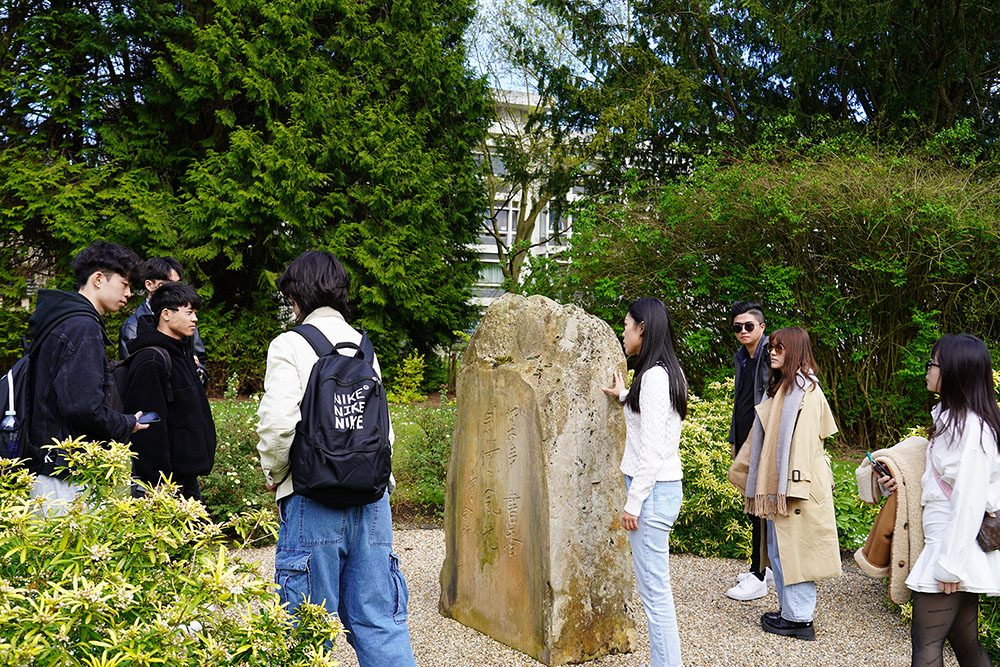
The photograph accompanying this article was taken beside Darwin College while travelling through Cambridge on the upper deck of a sightseeing bus. It captures an important idea for visitors: sometimes the best way to understand Cambridge is to stop thinking of it as a short list of famous attractions.
Cambridge becomes much more interesting when you begin asking what exists beyond them.
1. Cambridge University Is Not a Single Historic Campus
One of the biggest misconceptions among first-time visitors is that Cambridge University occupies one clearly defined campus.
It does not.
Colleges, academic buildings, libraries, museums, churches, shops, residential streets and public spaces are woven together throughout Cambridge. In some places, the boundary between “university” and “city” can be surprisingly difficult for a visitor to identify.
This is one reason Cambridge can initially feel confusing.
You might walk past a college, turn into a shopping street, continue for several minutes and suddenly find yourself beside another important university building. There is no single university gate through which every student enters each morning.
Instead, Cambridge developed gradually over more than 800 years.
Understanding that structure can completely change a first visit.
Our 90-Minute Shared Cambridge Walking Tour is designed to provide that foundation. Rather than treating every building as an isolated attraction, professional interpretation can help visitors understand how colleges relate to the wider University and how academic life became integrated into the city around it.
For families, friends or small groups wanting more opportunity to ask questions, the 90-Minute Private Cambridge Walking Tour provides a more flexible way to explore the same university landscape.
The objective is not simply to learn more facts.
It is to understand what kind of place Cambridge actually is.
2. Why Visitors Should Look Beyond the Most Famous Cambridge Colleges
King’s College deserves its reputation. Trinity College and St John’s College are equally significant parts of Cambridge’s history.
But concentrating exclusively on the biggest names creates an incomplete picture.
The colleges were established in different centuries and developed under different circumstances. Their architecture reflects changing periods, while their communities and identities have evolved over time.
This variety is one of Cambridge’s greatest strengths as a destination.
Darwin College, visible in the photograph, offers a particularly useful contrast to the medieval image many visitors associate with Cambridge.
Founded in 1964, Darwin is a graduate college. Its relatively recent foundation reminds us that the collegiate system did not simply reach a final form several centuries ago and then stop changing.
Cambridge has continued to evolve.
That matters because it changes how we interpret the city. Instead of seeing Cambridge as a perfectly preserved historic environment, visitors begin to recognise it as an institution that has repeatedly adapted while retaining many older traditions.
A Private Bespoke Cambridge Tour can be particularly useful for returning visitors or groups with specialist interests who want to move beyond a conventional first-time itinerary. The most famous locations remain important, but they do not have to be the entire experience.
Sometimes the less expected parts of Cambridge produce the most interesting questions.
3. A Wider View Helps Explain How Cambridge Fits Together
There is a reason the open-top sightseeing bus provides an interesting perspective for this photograph.
The sightseeing bus is not operated by We Are Cambridge, but travelling above street level can reveal something that is difficult to appreciate while moving through the historic centre on foot: the scale and distribution of the university city.
From a higher position, Cambridge begins to look less like a collection of individual landmarks.
You notice how older and newer architecture sit beside each other. Green spaces interrupt dense streets. University buildings extend beyond the small area around King’s Parade. Colleges that rarely appear on a first-time visitor’s checklist become part of a much larger academic landscape.
This wider orientation can be useful at the beginning of a visit.
But seeing the geography and understanding it are different things.
Once back at street level, the 90-Minute Shared Cambridge Walking Tour allows visitors to explore details that disappear from a moving vehicle: gateways, inscriptions, courtyards, architectural changes and the small streets that reveal how closely university and city life overlap.
The 90-Minute Private Cambridge Walking Tour can take that process further by giving groups more freedom to focus on their own interests.
A panoramic view provides context.
Walking provides interpretation.
Together, they demonstrate why Cambridge rewards visitors who explore it from more than one perspective.
4. The Most Interesting Cambridge Story Is Not Only About the Past
Historic architecture naturally dominates photographs of Cambridge.
But one of the responsibilities of a good guide is to remind visitors that Cambridge University is not a museum.
People still study here.
Students still belong to colleges. They use libraries, eat in college dining halls, attend teaching and academic activities, join societies and build their everyday lives within an institution that happens to have more than eight centuries of history behind it.
That contemporary perspective is particularly important for younger visitors.
Someone interested in university education may enjoy hearing about famous alumni and historical discoveries, but they are often equally curious about much simpler questions.
What is the difference between a college and a department? What does belonging to a college actually mean? What is everyday student life like? How do centuries-old traditions fit into a modern university?
Our 2.5-Hour Shared Student-Led Cambridge Tour gives visitors more time to explore Cambridge from this perspective.
For families, prospective students or private groups wanting more direct conversation, the 2.5-Hour Private Student-Led Cambridge Tour offers a more personalised environment for questions.
These experiences are different from conventional sightseeing because they connect physical Cambridge with living Cambridge.
A building becomes more interesting when you understand not only who used it hundreds of years ago, but also why university spaces still matter today.
5. Cambridge Changes Again When You Leave the Streets
Looking beyond the famous colleges does not necessarily mean travelling farther away.
Sometimes it simply means changing your viewpoint.
One of the clearest examples is the River Cam.
From the street, visitors encounter Cambridge through gateways, façades, walls and narrow historic routes. Once on the river, the College Backs reveal another relationship between architecture and landscape.
Lawns, trees, bridges and college buildings begin to connect in ways that are much harder to understand from the street.
A Shared Cambridge Punting Tour therefore works particularly well for visitors who have already spent time exploring on foot. Places that previously appeared as separate landmarks begin to form part of one continuous riverside environment.
A Private Cambridge Punting Tour provides the same change of perspective in a more personal setting for families, couples, friends or private groups.
This is why We Are Cambridge does not think of walking and punting as two versions of the same sightseeing experience.
They reveal different information.
Walking helps explain how Cambridge developed around its streets.
Punting reveals the landscape behind some of its historic colleges.
Student-led experiences introduce the people who continue to make the University a living institution.
The strongest Cambridge itineraries use these perspectives to complement one another rather than simply repeating the same landmarks.
6. The Best Cambridge Itinerary Depends on What You Want to Understand
There is no need to see all 31 colleges during one visit.
Trying to do so would probably make Cambridge less enjoyable rather than more meaningful.
Instead, first-time visitors should think about what they want from their time in the city.
If you have only a few hours, a90-Minute Shared Cambridge Walking Tour can establish the essential historical and university context, while a Shared Cambridge Punting Tour provides a contrasting view from the River Cam.
Families or small groups who value flexibility might combine a 90-Minute Private Cambridge Walking Tour with a Private Cambridge Punting Tour, leaving enough free time between experiences to explore independently.
Visitors particularly interested in education and contemporary university life may find a 2.5-Hour Shared Student-Led Cambridge Tour or 2.5-Hour Private Student-Led Cambridge Tour more valuable than trying to visit as many buildings as possible.
Returning visitors can go further still: explore a museum, walk beyond the busiest streets, investigate a less familiar part of the University or spend time understanding colleges that did not feature on their first trip.
The important thing is to stop treating Cambridge as a checklist.
At We Are Cambridge, our role is not simply to point towards famous buildings. Professional guiding should provide context: why a place matters, how it connects to the wider University and what its story tells us about Cambridge today.
King’s College may provide the photograph that first makes somebody want to visit Cambridge.
But it should not necessarily be the only Cambridge they remember.
From medieval foundations to colleges established in the modern era, from historic streets to the River Cam, and from centuries-old traditions to contemporary student life, Cambridge becomes far richer when visitors recognise that its story has never belonged to one building, one college or one period of history.
The famous landmarks introduce you to Cambridge. Looking beyond them is how you begin to understand it.
Written by We Are Cambridge.



![[slide:title]](/static/upload/image/20260906/1788624888791065.webp "[slide:title]")



 Book Shared Punting