Cambridge Sightseeing Bus: Discover the University City from a Different Perspective
Cambridge is famous for its ancient university colleges, beautiful riverside scenery and remarkable academic history. Most visitors explore the city on foot or take a traditional punting tour along the River Cam. But there is another enjoyable way to discover Cambridge: from the upper deck of an open-top sightseeing bus.
Imagine sitting above the busy streets, watching historic buildings, university colleges and everyday city life pass by. Instead of concentrating on directions or navigating unfamiliar roads, you can relax and enjoy a different perspective on one of England's most fascinating cities.
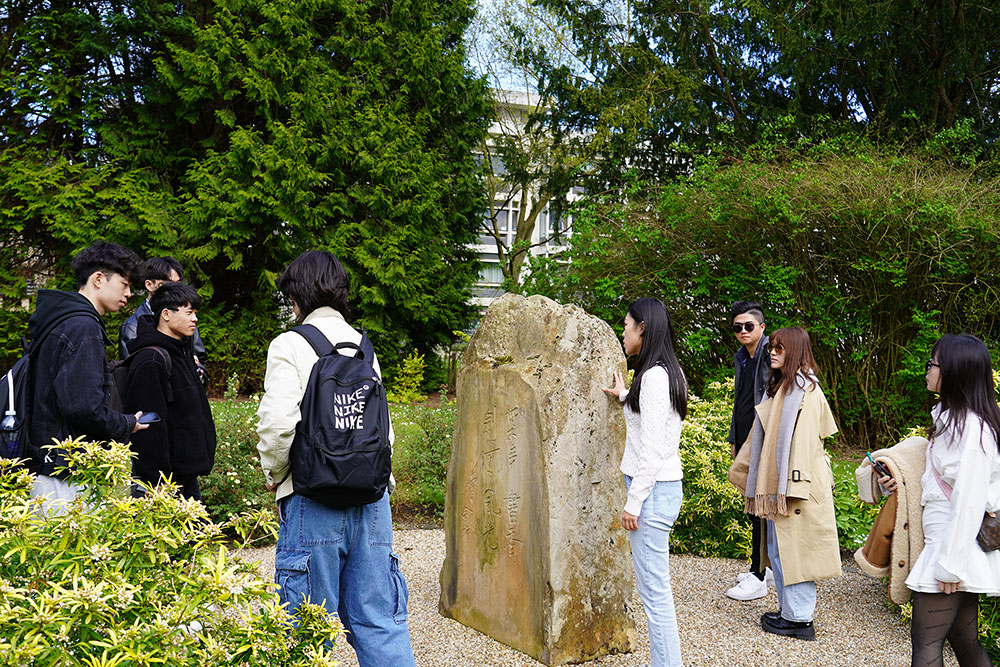
One particularly interesting landmark along Cambridge's sightseeing routes is Darwin College, a university college whose modern facilities and historic surroundings reflect the changing character of Cambridge.
For visitors who want to see more of the city, especially beyond the compact historic centre, a sightseeing bus can be a useful addition to a Cambridge itinerary.
At We Are Cambridge, we believe that exploring the city is about more than visiting famous landmarks. It is about understanding the stories, people and traditions that make Cambridge extraordinary.
And sometimes, seeing the city from a different height reveals details you might otherwise miss.
Why Explore Cambridge on an Open-Top Sightseeing Bus?
Cambridge is widely recognised as a walking-friendly city. Many of its best-known attractions are located within a relatively small historic centre, making it possible to explore several university colleges in a single morning.
However, Cambridge is larger and more varied than its most photographed streets suggest.
Beyond King's Parade and Trinity Street, visitors can discover museums, university departments, green spaces, residential neighbourhoods and areas associated with the city's modern scientific development.
An open-top sightseeing bus provides a convenient introduction to this wider landscape.
From the upper deck, passengers can enjoy elevated views of historic architecture, busy streets and the city's changing urban character.
This is particularly appealing for visitors who enjoy photography or prefer a more relaxed sightseeing experience.
A bus journey can also help first-time visitors understand how different parts of Cambridge connect geographically.
Rather than seeing individual attractions as isolated destinations, you begin to appreciate how the university, historic town and modern city have developed alongside one another.
Sightseeing bus routes, stops, ticket conditions and operating schedules can change, so it is always worth checking the current service information before travelling.
One important point is that an open-top bus experience is different from a guided walking tour.
The bus provides a broader overview of the city, while walking allows you to explore smaller streets, historic entrances and architectural details at a more personal pace.
For that reason, the two experiences complement each other particularly well.
Darwin College: A Different Chapter in Cambridge University History
One of the most interesting things about Cambridge is that its colleges do not all belong to the medieval period.
Some are centuries old, while others were established much more recently to meet the university's changing educational needs.
Darwin College is a wonderful example.
Founded in 1964, Darwin College became Cambridge's first graduate-only college.
Unlike the older colleges that accommodate both undergraduate and postgraduate students, Darwin College was established specifically for graduate students.
Its foundation reflected the growing importance of postgraduate education and research during the twentieth century.
The college is named in honour of the Darwin family, which has strong historical connections with Cambridge.
Charles Darwin, whose work on evolution transformed modern biology, studied at Christ's College rather than Darwin College.
This distinction is worth remembering because visitors sometimes assume the college bearing his name was where he studied.
In fact, Darwin College was established long after his death.
Its name commemorates the family's contribution to Cambridge's intellectual and scientific heritage.
Darwin College is situated near the River Cam, close to the historic city centre.
Its buildings include a combination of older properties and more modern architectural elements.
This mixture makes it an interesting contrast to Cambridge's better-known medieval and Tudor colleges.
While King's College and Trinity College are celebrated for their historic courtyards and monumental architecture, Darwin College represents a later stage in the university's development.
It reminds visitors that Cambridge's academic story did not end with Newton, Darwin or the great discoveries of earlier centuries.
The university continues to evolve, welcoming new generations of researchers and scholars from around the world.
Cambridge Is Not Just a Medieval University City
When people imagine Cambridge, they often picture ancient stone buildings, Gothic chapels and students wearing academic gowns.
Those images are certainly part of the city's identity.
The University of Cambridge traces its origins to 1209, and many of its colleges have histories stretching back hundreds of years.
Peterhouse, founded in 1284, is the university's oldest college.
Trinity College was established by King Henry VIII in 1546.
King's College, founded in 1441, is famous for its extraordinary chapel.
But Cambridge's academic history is not confined to the distant past.
The nineteenth and twentieth centuries brought major developments in science, medicine, engineering and mathematics.
The university expanded its research activities, developed new departments and established additional colleges.
Institutions such as Darwin College reflect the growing importance of advanced study and international academic collaboration.
Today, Cambridge remains an important centre for scientific research, technology and innovation.
The city is associated with the wider Cambridge technology cluster, sometimes called Silicon Fen, which includes businesses and research organisations working in fields such as biotechnology, software, engineering and artificial intelligence.
This combination of historic scholarship and contemporary innovation is one of Cambridge's defining characteristics.
A sightseeing bus can help visitors appreciate that contrast.
As you travel through the city, historic streets give way to more modern buildings and neighbourhoods, illustrating how Cambridge has grown beyond its medieval origins.
For visitors who want to understand this development in greater detail, a Shared 2.5-Hour In-Depth Cambridge Tour offers the opportunity to explore the university's history, academic traditions and changing relationship with the city.
The Famous Cambridge Landmarks Every Visitor Should Know
Although an open-top sightseeing bus provides a broader overview, no first visit to Cambridge would be complete without exploring its historic centre.
Several landmarks deserve particular attention.
King's College Chapel
King's College Chapel is one of the most recognisable buildings in Cambridge.
Construction began in the fifteenth century, and the chapel is celebrated for its magnificent late Gothic architecture.
Inside, visitors can admire an extraordinary fan-vaulted ceiling, beautiful stained-glass windows and remarkable craftsmanship.
The chapel has become an enduring symbol of the University of Cambridge.
Even from outside, its soaring architecture makes a powerful impression.
Trinity College
Trinity College is another essential landmark.
Founded in 1546 by Henry VIII, it is closely associated with Sir Isaac Newton and numerous other influential scholars.
Its magnificent Great Court is one of the most impressive college courtyards in Cambridge.
The college's historic Great Gate, located on Trinity Street, is a particularly memorable sight.
Public access to the college's interior is subject to its opening arrangements, so visitors should check current information before planning a visit.
The Round Church
The Church of the Holy Sepulchre, commonly known as the Round Church, is one of Cambridge's oldest surviving buildings.
Built around 1130, it predates the university itself.
Its distinctive circular design makes it one of only four surviving medieval round churches in England.
The Round Church is a fascinating reminder that Cambridge existed as a settlement long before it became internationally famous for academic excellence.
The Fitzwilliam Museum
For visitors interested in art and culture, the Fitzwilliam Museum is another highlight.
The museum houses collections of paintings, antiquities, manuscripts and decorative arts from different historical periods and cultures.
Its grand neoclassical entrance is an architectural attraction in its own right.
Visitors who want to understand the museum's collections can explore them through a Shared Fitzwilliam Museum Tour.
For those with specific artistic or historical interests, a Private Fitzwilliam Museum Tour provides a more personalised experience.
These landmarks demonstrate why Cambridge is best explored through a combination of different activities rather than a single sightseeing method.
Why Walking Tours Are Still Essential in Cambridge
A sightseeing bus can introduce visitors to the city's wider geography, but many of Cambridge's most fascinating stories are found in places that buses cannot reach.
Narrow medieval streets, historic college gateways and small architectural details are best appreciated on foot.
Walking also allows visitors to stop, ask questions and explore the university's traditions in greater depth.
For example, you might pass Trinity College's Great Gate and learn about Henry VIII's role in founding the college.
A few minutes later, you could discover the story of Isaac Newton and the scientific revolution.
Elsewhere, you might encounter the Mathematical Bridge and hear why the popular claim that Newton designed it is historically incorrect.
These are the kinds of details that turn a sightseeing visit into a memorable learning experience.
At We Are Cambridge, our Shared 90-Minute Cambridge Walking Tour is designed to introduce visitors to the city's most important university landmarks and historical stories.
It is particularly suitable for first-time visitors who want an engaging overview of Cambridge.
For families, couples and small groups who prefer a more flexible experience, our Private 90-Minute Cambridge Walking Tour allows the guide to adapt the visit to particular interests.
Some visitors are fascinated by science and famous Cambridge scholars.
Others prefer architecture, student traditions or the history of British university education.
A private experience can place greater emphasis on the subjects that matter most to your group.
For those who have more time available, our Private 2.5-Hour In-Depth Cambridge Tour provides additional opportunities to explore Cambridge's academic heritage and lesser-known stories.
The greatest advantage of a walking tour is the personal connection it creates with the city.
Instead of simply recognising a famous building, you begin to understand why it matters.
Discover Another Side of Cambridge on the River Cam
After exploring Cambridge by bus and on foot, there is one more perspective that visitors should not miss: the view from the River Cam.
Traditional punting is one of the city's most famous experiences.
A punt is a flat-bottomed wooden boat propelled by a long pole.
An experienced punter stands at the rear of the boat and guides it along the river, allowing passengers to relax and admire the scenery.
The most famous sightseeing stretch passes through the College Backs, where several historic university colleges border the River Cam.
From the water, visitors can enjoy views of beautiful college gardens, elegant bridges and remarkable architecture.
Highlights include the Bridge of Sighs at St John's College, Clare Bridge, King's College Chapel and the Mathematical Bridge at Queens' College.
These landmarks look quite different from the river compared with their appearance from the surrounding streets.
A Shared Cambridge Punting Tour is an excellent option for individuals, couples and smaller groups who are happy to enjoy the experience alongside other visitors.
For families, friendship groups and special occasions, a Private Cambridge Punting Tour offers exclusive use of the boat.
Our traditional chauffeured punting experiences generally last approximately 45–50 minutes, making them easy to combine with other Cambridge activities.
One of the most enjoyable itineraries is to explore the historic city on foot in the morning and relax on a punting tour in the afternoon.
A sightseeing bus can be added when you want to discover more of Cambridge beyond the central university district.
Is the Cambridge Sightseeing Bus Suitable for Families?
Cambridge is a popular destination for family holidays, educational trips and multigenerational travel.
An open-top sightseeing bus can be an enjoyable activity for families because it offers a different way to explore the city without requiring continuous walking.
Children often enjoy sitting on the upper deck, watching the streets below and spotting interesting buildings along the route.
For older visitors, a bus journey can also provide a comfortable way to appreciate the city.
However, accessibility arrangements vary by operator and vehicle.
Visitors travelling with wheelchairs, pushchairs or other mobility requirements should check the relevant service information before booking.
Weather is another consideration.
The upper deck of an open-top bus is particularly enjoyable on sunny days, but it can feel exposed during windy or rainy conditions.
Bringing suitable clothing can make the experience more comfortable.
For families who want to combine sightseeing with education, a guided walking tour can add another dimension.
Learning about Newton, Darwin, Cambridge's college system and the university's scientific discoveries can turn a family holiday into an engaging cultural experience.
A Private Bespoke Cambridge Tour can be particularly useful for educational groups and families who want to organise a visit around specific interests, ages or available time.
How to Plan a Cambridge Day Trip from London
Cambridge is a popular day-trip destination for visitors staying in London.
Direct train services operate from London King's Cross and London Liverpool Street, with journey times depending on the service.
Once you arrive in Cambridge, the historic city centre is accessible on foot or by local transport.
If you are visiting for a single day, it is worth planning your activities carefully.
A relaxed itinerary might begin with a guided walking tour through the historic university district.
This allows you to discover King's College, Trinity College and other important landmarks while learning about the city's history.
Afterwards, enjoy lunch in the city centre.
Cambridge Market Square and the surrounding streets offer a variety of cafés, restaurants and casual dining options.
In the afternoon, you could enjoy a traditional punting tour along the River Cam.
If you are particularly interested in seeing more of the city beyond the historic centre, consider adding an open-top sightseeing bus experience, subject to the current route and timetable.
Visitors who prefer a slower pace may wish to spread these activities across two days.
Cambridge is a wonderful city for an overnight stay, particularly if you enjoy museums, historic architecture and relaxed riverside walks.
There is no need to rush from one attraction to another.
Some of the city's most memorable experiences happen when you allow yourself time to explore.
The Best Time to Explore Cambridge
Cambridge is an attractive destination throughout the year.
Spring brings fresh greenery, blossoming trees and a lively atmosphere as the days become longer.
Summer is particularly popular for punting, outdoor sightseeing and photography.
The city's historic buildings look beautiful in bright sunshine, and an open-top bus can be an enjoyable way to experience the warm weather.
Autumn offers colourful foliage and the distinctive atmosphere of a university city welcoming students back for the academic year.
Winter can be quieter, with historic streets and college buildings taking on a different character.
However, weather conditions should always be considered when planning outdoor activities.
Punting operations may be affected by strong winds, heavy rain or other unsuitable conditions.
Similarly, sightseeing bus services may operate different schedules depending on the season.
Checking the relevant booking information and weather forecast before travelling is recommended.
What Makes Cambridge Such a Special Place to Visit?
Cambridge is often described as one of the world's most famous university cities.
But its appeal goes far beyond academic reputation.
The city combines historic architecture, scientific achievement, literary heritage, beautiful natural scenery and a vibrant modern community.
You can stand outside a college founded centuries ago, walk through streets once used by famous scholars and then visit neighbourhoods associated with contemporary research and innovation.
You can admire a medieval church in the morning and enjoy a traditional wooden punt along the river in the afternoon.
Or you can sit on the upper deck of a sightseeing bus and watch these different parts of the city unfold around you.
Every perspective reveals something new.
This is what makes Cambridge such a rewarding destination.
It is not simply a place where important history happened.
It is a city where historic institutions continue to shape everyday life.
Experience Cambridge with We Are Cambridge
At We Are Cambridge, we believe the best travel experiences combine beautiful surroundings with meaningful stories.
Our guided walking tours introduce visitors to the history, traditions and remarkable personalities of the University of Cambridge.
Our traditional punting experiences reveal the elegance of the College Backs and the River Cam.
And for visitors who want to explore the wider city, an open-top sightseeing bus can provide another enjoyable perspective on Cambridge's distinctive character.
Whether you are travelling as a couple, visiting with family or organising an educational group, Cambridge offers a wonderful variety of ways to explore.
Start with the historic colleges, discover the stories behind their famous names and take time to appreciate the city's beautiful surroundings.
Then look at Cambridge from a different angle.
You may be surprised by how much more there is to discover.
Because Cambridge is not simply a city to see. It is a city to experience, understand and remember.
Written by a Cambridge guide at We Are Cambridge.






 Book Shared Punting