The Round Church Cambridge: Discover 900 Years of History on a Cambridge Walking Tour
When people think of Cambridge, they often picture the magnificent King's College Chapel, the beautiful River Cam or the historic courtyards of its world-famous university colleges. Yet some of Cambridge's most fascinating landmarks are found just a short walk away from these familiar attractions.
One of our favourites is the Round Church, officially known as the Church of the Holy Sepulchre.
Standing at the junction of Bridge Street and Round Church Street, this remarkable medieval building has witnessed almost nine centuries of Cambridge history. Its unusual circular shape makes it instantly recognisable, while its fascinating connection to medieval Christianity offers a glimpse into a very different period of English life.
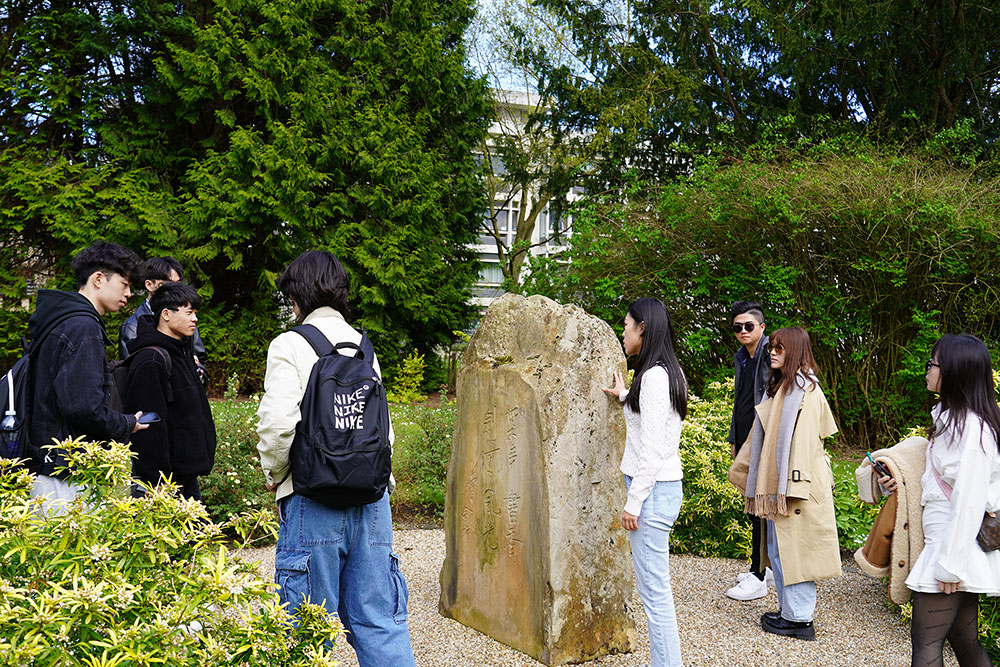
In our latest photograph, a We Are Cambridge student guide is chatting with a visitor outside the Round Church. It captures something we love about introducing people to Cambridge: the opportunity to discover extraordinary history through relaxed, personal conversations in the places where that history actually happened.
The Round Church is not simply a beautiful backdrop for photographs. It is one of the oldest surviving buildings in Cambridge and an excellent starting point for understanding the city's medieval past.
Whether you are planning your first Cambridge day trip from London, exploring the University of Cambridge or looking for lesser-known historic attractions, this distinctive church deserves a place on your itinerary
.
What Is the Round Church in Cambridge?
<text color="secondary" italic>One of England's rare surviving medieval round churches</text>
The Round Church was built around 1130, making it considerably older than the University of Cambridge, which dates its foundation to 1209.
Its official name, the Church of the Holy Sepulchre, reflects its association with the Church of the Holy Sepulchre in Jerusalem, traditionally believed to stand at the site of Jesus Christ's burial and resurrection.
The Cambridge church was founded in the 12th century and is traditionally associated with the Fraternity of the Holy Sepulchre. Its circular design reflects the architectural influence of Jerusalem's holy sites, which held enormous significance for medieval Christians.
Today, the Round Church is one of only four surviving medieval round churches in England.
That rarity alone makes it an important architectural landmark.
Unlike the rectangular layouts commonly associated with English parish churches, the Round Church features a distinctive circular nave surrounded by thick stone columns and rounded arches.
Its appearance is unmistakably Norman, reflecting the architectural traditions that spread throughout England following the Norman Conquest of 1066.
The church's circular central structure, conical roof and Romanesque entrance create an appearance quite different from the Gothic college buildings for which Cambridge is generally known.
Standing outside, visitors can appreciate the contrast between the church's solid medieval stonework and the lively modern city surrounding it.
Bicycles pass along Bridge Street, students hurry between lectures, and visitors stop to admire a building that has stood here since long before Cambridge became an internationally celebrated university city.
It is this extraordinary connection between past and present that makes the Round Church so memorable.
Why Is the Round Church Circular?
One of the first questions visitors ask when they see the Round Church is simple: why was it built in a circle?
Most traditional English churches follow a rectangular or cruciform layout, with a long nave leading towards the altar. The Round Church, however, was designed around a central circular space.
The inspiration came from the Church of the Holy Sepulchre in Jerusalem.
During the medieval period, Jerusalem occupied a central place in Christian religious imagination. Pilgrimages to the Holy Land were important expressions of faith, and the Crusades brought further attention to its sacred buildings.
Circular churches built in Western Europe sometimes drew inspiration from the rotunda surrounding Christ's traditional tomb in Jerusalem.
The Cambridge Round Church reflects this architectural tradition.
Its design also reveals the skills of medieval builders, who created a durable stone structure using techniques developed centuries before modern engineering.
Visitors looking closely at the building can observe the characteristic rounded Norman arches, heavy columns and carefully arranged stonework.
These details tell us something about the architectural priorities of the period. Norman churches often emphasised solidity, symmetry and monumental forms, creating spaces intended to inspire reverence.
Later medieval architecture developed increasingly elaborate Gothic features, including pointed arches, ribbed vaulting and larger windows.
Cambridge offers wonderful examples of both traditions.
The Round Church provides an introduction to the Norman period, while buildings such as King's College Chapel demonstrate the extraordinary development of English Gothic architecture several centuries later.
Exploring these landmarks together helps visitors appreciate how architectural styles changed across the city's long history.
The Round Church and the Origins of Cambridge
The Round Church is especially interesting because it predates the university itself.
Although Cambridge is now internationally recognised as an academic centre, the settlement existed long before the arrival of university scholars.
The River Cam and its surrounding landscape encouraged trade and settlement, while the town developed around important routes connecting different parts of eastern England.
By the medieval period, Cambridge had become an established market town.
The construction of the Round Church around 1130 reflects the religious and social life of this earlier community.
When scholars began gathering in Cambridge in 1209, the church was already approximately eighty years old.
This is an important reminder that Cambridge's history is not exclusively the history of its university.
The town and the university developed alongside one another, sometimes cooperatively and sometimes through disputes over local rights, privileges and responsibilities.
Today, visitors can still see traces of this complicated relationship throughout the historic centre.
Medieval churches stand near university colleges, old market streets lead towards academic buildings, and centuries of architectural development are visible within a remarkably compact area.
One of the advantages of joining a Shared 90-Minute Cambridge Walking Tour is the opportunity to understand how these different parts of the city's history fit together.
Rather than simply admiring individual buildings, visitors can discover why they were constructed, who used them and how Cambridge changed over time.
Our student-led guides introduce the city through stories that connect its historic landmarks with the people who lived, studied and worked here.
For visitors who prefer a more personal experience, our Private 90-Minute Cambridge Walking Tour offers the opportunity to explore Cambridge with a dedicated guide and ask questions about the subjects that interest them most.
What Can You See at the Round Church Today?
The Round Church is an appealing destination for anyone interested in medieval architecture, religious history or unusual historic buildings.
Its most striking feature is undoubtedly the circular Norman nave.
From the outside, the conical roof rises above the surrounding stone structure, creating the silhouette that has made the church one of Cambridge's most recognisable landmarks.
The Romanesque doorway is another detail worth examining.
Its rounded arches and decorative stonework reflect the craftsmanship of medieval masons, while the building's thick walls and relatively small windows reveal its early architectural origins.
The church also has an interesting later history.
During the 19th century, it underwent significant restoration, including work associated with the architect Anthony Salvin. As a result, the building visitors see today combines important surviving medieval elements with later alterations.
This is true of many historic buildings in Cambridge.
Rather than remaining completely unchanged, churches and colleges were adapted, repaired and extended by successive generations.
Understanding these changes is part of appreciating their history.
The Round Church has also been used as a visitor and interpretation centre, helping people learn about the development of Christianity and Cambridge's historical heritage.
Visitors interested in entering the building should check current admission arrangements and opening times before travelling, as these can change.
Even when viewed only from outside, the Round Church is well worth visiting.
Its unusual design, central location and fascinating history make it an excellent stop during a walking tour of Cambridge.
Exploring Cambridge With a Student Guide
Cambridge is a city where almost every street has a story.
However, many of its most interesting details are easy to overlook if you are exploring without local knowledge.
A medieval church might appear to be simply an attractive old building until someone explains its relationship with Jerusalem, the Norman period and the early history of Cambridge.
Likewise, a college gateway becomes much more meaningful when you understand the traditions and people associated with it.
This is why we believe student-led walking tours offer such a rewarding way to experience Cambridge.
At We Are Cambridge, our guides help visitors connect the university's famous landmarks with the broader history of the city.
The experience is not just about memorising dates or listing famous graduates.
It is about understanding how Cambridge developed, what makes its collegiate system distinctive and why its architecture continues to attract visitors from around the world.
The photograph outside the Round Church reflects the kind of experience we aim to create: an approachable conversation between a knowledgeable guide and someone who is genuinely curious about the city.
Visitors are encouraged to ask questions, explore different interests and discover details they might otherwise miss.
For travellers who want to spend more time understanding Cambridge's academic heritage, our Shared 2.5-Hour In-Depth Cambridge Tour provides an opportunity to explore the city's history in greater detail.
Families, educational groups and visitors with particular interests in architecture, science or university traditions may prefer our Private 2.5-Hour In-Depth Cambridge Tour, which offers a more tailored experience.
A deeper guided visit can be particularly rewarding for those considering studying in Cambridge or introducing younger family members to the history of British higher education.
From the Round Church to Cambridge's Famous Colleges
One of the best things about the Round Church is its location.
Situated in the historic city centre, it is within walking distance of several of Cambridge's best-known landmarks.
A visit can easily be combined with exploring the surrounding streets and university colleges.
Just a short walk away is Trinity College, founded by Henry VIII in 1546.
Trinity has connections with some of the most influential figures in academic history, including Sir Isaac Newton, who studied and worked there.
Nearby St John's College is another important part of Cambridge's collegiate landscape. Founded in 1511, it is particularly celebrated for its beautiful architecture and its famous Bridge of Sighs across the River Cam.
Continue towards King's Parade and you will reach King's College, founded by Henry VI in 1441.
Its magnificent chapel, begun in 1446, is one of England's most outstanding examples of late Gothic architecture.
These colleges demonstrate how dramatically Cambridge changed between the 12th and 16th centuries.
When the Round Church was built, the university did not yet exist. By the time King's College Chapel was under construction, Cambridge had already developed into an important centre of scholarship.
Walking between these buildings is therefore almost like travelling through several centuries of English history.
Visitors should remember that individual colleges may restrict access during examinations, ceremonies or university events.
Checking current visitor arrangements is recommended if you are hoping to enter particular college grounds or buildings.
For groups who would like an itinerary focused on specific colleges, architectural periods or historical themes, our Private Bespoke Cambridge Tour offers the flexibility to plan an experience around those interests.
Combine Your Cambridge Walking Tour With Traditional Punting
After exploring Cambridge's historic streets, there is another experience we always recommend: traditional punting on the River Cam.
Walking tours and punting complement each other beautifully.
On foot, you discover the university's streets, college entrances, churches and hidden architectural details.
From the river, you experience a different perspective, with historic buildings, gardens and bridges appearing against the peaceful landscape of the College Backs.
Our Shared Cambridge Punting Tour allows visitors to relax aboard a traditional wooden punt while an experienced punter guides the boat along the river.
The journey typically lasts around 45–50 minutes and offers views of several celebrated riverside landmarks, including the Mathematical Bridge, Clare Bridge and the Bridge of Sighs.
For couples, families and groups of friends, our Private Cambridge Punting Tour provides an exclusive boat and a more personal atmosphere.
It is an excellent option for special occasions or simply enjoying time together away from the busy streets.
Visitors who want to experience both sides of Cambridge can choose our 90-Minute Cambridge Walking Tour and Punting Combination.
This brings together an introduction to the university's history with the relaxing experience of traditional river sightseeing.
For many first-time visitors, it is one of the most enjoyable ways to discover Cambridge in a single day.
More Historic and Cultural Attractions in Cambridge
Although the university colleges and the Round Church are among Cambridge's best-known attractions, the city has much more to offer.
One particularly rewarding destination is the Fitzwilliam Museum.
Founded in 1816, the museum houses an internationally important collection of art and antiquities, including paintings, sculpture, ceramics, manuscripts and objects from ancient civilisations.
Its collections offer an opportunity to explore cultural history far beyond Cambridge itself.
Our Shared Fitzwilliam Museum Tour introduces visitors to selected highlights of the museum, while the Private Fitzwilliam Museum Tour is suitable for those who prefer a more personalised introduction to its collections.
The historic Market Square is another enjoyable place to explore.
Markets have been part of Cambridge's commercial life for centuries, and the modern square remains a lively destination for food, shopping and everyday city life.
Visitors who enjoy discovering places at their own pace may also appreciate spending time around the narrow streets between King's Parade, Trinity Street and Bridge Street.
Here, independent shops, historic churches and university buildings create the atmosphere that makes central Cambridge so distinctive.
For travellers seeking a broader introduction to the city without walking for the entire day, the Cambridge Sightseeing Bus Tour offers an alternative way to explore its different neighbourhoods and attractions.
Planning a Cambridge Day Trip From London
Cambridge is an excellent destination for visitors staying in London.
Direct trains operate from London King's Cross and Liverpool Street, with journey times depending on the service.
A well-planned day trip provides enough time to experience several of the city's most memorable attractions without feeling rushed.
We recommend beginning with a student-led walking tour in the morning.
This is an ideal opportunity to discover the Round Church, learn about the university's origins and explore the historic streets surrounding its famous colleges.
Afterwards, enjoy lunch in the city centre.
The area around Market Square offers a variety of cafés, restaurants and food stalls, making it convenient for visitors who want to experience Cambridge's everyday atmosphere.
In the afternoon, take a traditional chauffeured punt along the River Cam.
After spending the morning walking through centuries of history, sitting on a wooden boat and enjoying the scenery offers a welcome change of pace.
If you have additional time, visit the Fitzwilliam Museum, browse independent shops or simply enjoy a coffee while watching Cambridge life unfold.
For families and groups, combining different activities can make the day more enjoyable.
Children may particularly appreciate the contrast between discovering historical stories on foot and relaxing aboard a traditional boat.
Whatever your interests, it is worth leaving some flexibility in your itinerary.
Cambridge is a compact and walkable city, and some of its most memorable moments come from unexpected discoveries rather than carefully scheduled attractions.
Why the Round Church Deserves a Place on Your Cambridge Itinerary
The Round Church may not be as internationally famous as King's College Chapel, but it tells an equally valuable part of Cambridge's story.
It reminds us that the city existed long before the university became one of the world's leading academic institutions.
It reveals the influence of medieval Christianity, the architectural achievements of Norman builders and the remarkable continuity of Cambridge's historic landscape.
Most importantly, it encourages visitors to look beyond the obvious attractions.
A visit to Cambridge should certainly include its celebrated colleges and beautiful river scenery. But taking time to discover places such as the Round Church adds depth and character to the experience.
At We Are Cambridge, this is what we enjoy sharing with our guests.
Our student guides bring together university history, local knowledge and engaging stories to help visitors appreciate both the famous landmarks and the lesser-known corners of the city.
Whether you are visiting Cambridge for the first time, returning to explore more deeply or planning a special trip with family and friends, we would love to help you discover what makes this historic city so extraordinary.
Cambridge is more than a collection of beautiful buildings. It is a living city where nearly nine centuries of history can be discovered around almost every corner.
Explore our student-led Cambridge walking tours, traditional punting experiences and private guided visits at www.weareoxbridge.com.
Written by a Cambridge guide at We Are Cambridge.
Tighten the article for stronger SEOMake the Round Church focus more prominent






 Book Shared Punting